

Read in: English | Pidgin English
🩺 Medically reviewed by the Health Decoded Guide Editorial Team · Last reviewed: July 2026
🔍 Quick Summary
Joint pain is discomfort in areas where two bones meet. It can be temporary or long-term depending on the cause.
1️⃣ Introduction
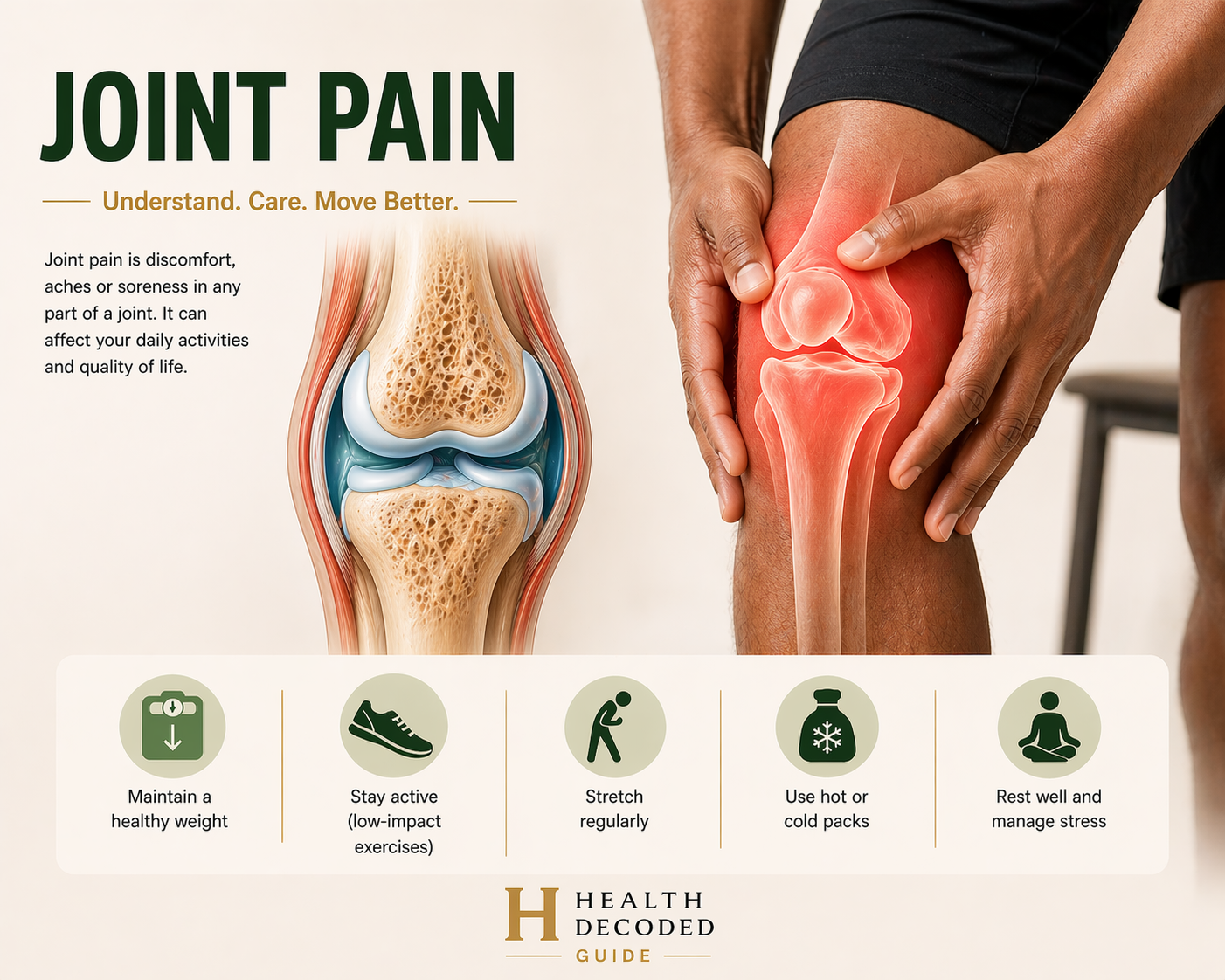
Joint pain refers to discomfort in the joints.
• joints connect bones and allow movement
• pain can affect any joint (knee, shoulder, fingers)
• causes range from mild to serious
👉 Joint pain is a symptom—not a disease itself.
2️⃣ How it happens
Pain occurs when joint structures are affected.
• inflammation of the joint
• wear and tear of cartilage
• injury or strain
👉 Different causes lead to similar symptoms.
3️⃣ Classifictaion
• Acute joint pain
- sudden onset
- often due to injury
• Chronic joint pain
- lasts weeks to months
- often linked to conditions like arthritis
👉 Duration helps guide the cause.
4️⃣ Common causes
• Mechanical causes
- injury or overuse
- strain
• Medical causes
- arthritis
- infections
- autoimmune conditions
- cancer
5️⃣ Symptoms
• pain with movement
• stiffness
• swelling
👉 These occur due to inflammation or joint damage.
6️⃣ Associated symptoms
• reduced range of motion
• warmth around the joint
• redness
• weakness
👉 These signs help identify underlying causes.
7️⃣🩺 When it becomes dangerous 🚨
• severe pain
• inability to move the joint
• fever with joint pain
• swelling that worsens
👉 These may indicate:
• infection or serious inflammation
• need for urgent evaluation
8️⃣ Management / treatment
• rest and joint protection
• pain relief medications
• physiotherapy
9️⃣ Diagnosis
• medical history and examination
• imaging (X-ray, MRI if needed)
• blood tests (if inflammatory cause suspected)
👉 Diagnosis depends on pattern and associated symptoms.
🟢Important message
Joint pain is common but should not be ignored if persistent.
👉 Early care helps prevent long-term damage.
FAQ
• Is joint pain always arthritis?
No—many causes exist.
• Can exercise help?
Yes—appropriate movement improves joint health.
• Why do my joints hurt more in the morning?
Morning stiffness can occur with arthritis and other inflammatory joint conditions.
• Why does my joint pain come and go?
Joint pain can fluctuate depending on the cause, activity level and inflammation.
• When should I worry about joint pain?
Seek medical advice for persistent pain, significant swelling, redness, fever or difficulty using the joint.
🔗 Related Health Topics
• Arthritis
• Chronic Pain Conditions
• Healthy Diet Basics
• Healthy Lifestyle and Weight Management
• Exercise and health
📚 Medical References
• World Health Organization (WHO). Musculoskeletal health.
• National Health Service (NHS). Joint pain.
• Mayo Clinic. Joint pain: Causes.
• National Institute for Health and Care Excellence (NICE). Osteoarthritis in over 16s: diagnosis and management.
• MedlinePlus. Joint Disorders.
⚠️ Medical Disclaimer
This article is for educational purposes only and does not replace professional medical advice.
If joint pain persists or worsens, consult a healthcare professional.