Read in: English | Pidgin English
🔍 Quick Summary
A seizure is a sudden loss of control of movement or awareness.
It can look frightening—but many seizures in children are short and manageable.
1️⃣ Introduction
A seizure happens when there is abnormal electrical activity in the brain.
• can affect movement, awareness, or behavior
• may last seconds to minutes
• common in children, especially with fever
👉 Not all seizures mean epilepsy or long-term disease.
2️⃣ How it happens
The brain sends signals to control the body.
• during a seizure, signals become disorganized
• muscles may contract suddenly
• awareness may be lost temporarily
👉 This causes the shaking or unresponsiveness seen during a seizure.
3️⃣ Types
• Febrile seizures
- triggered by fever
- common in young children
• Non-febrile seizures
- not related to fever
- may need further evaluation
👉 The cause helps guide the level of concern.
4️⃣ Common causes
• Fever
- most common in children
- rapid rise in temperature
• Other causes
- infections
- head injury or neurological conditions
5️⃣ Symptom explanation
• body shaking (convulsions)
• stiffening of the body
• loss of awareness
👉 These occur due to abnormal brain signal activity.
6️⃣ Associated symptoms
• eye rolling
• drooling
• confusion after seizure
• temporary sleepiness
👉 Post-seizure drowsiness is common and usually temporary.
7️⃣🩺 When it becomes dangerous 🚨
• seizure lasting more than 5 minutes
• difficulty breathing
• child not waking after seizure
👉 These may indicate:
• prolonged seizure (status epilepticus)
• need for emergency care
8️⃣ Management / treatment
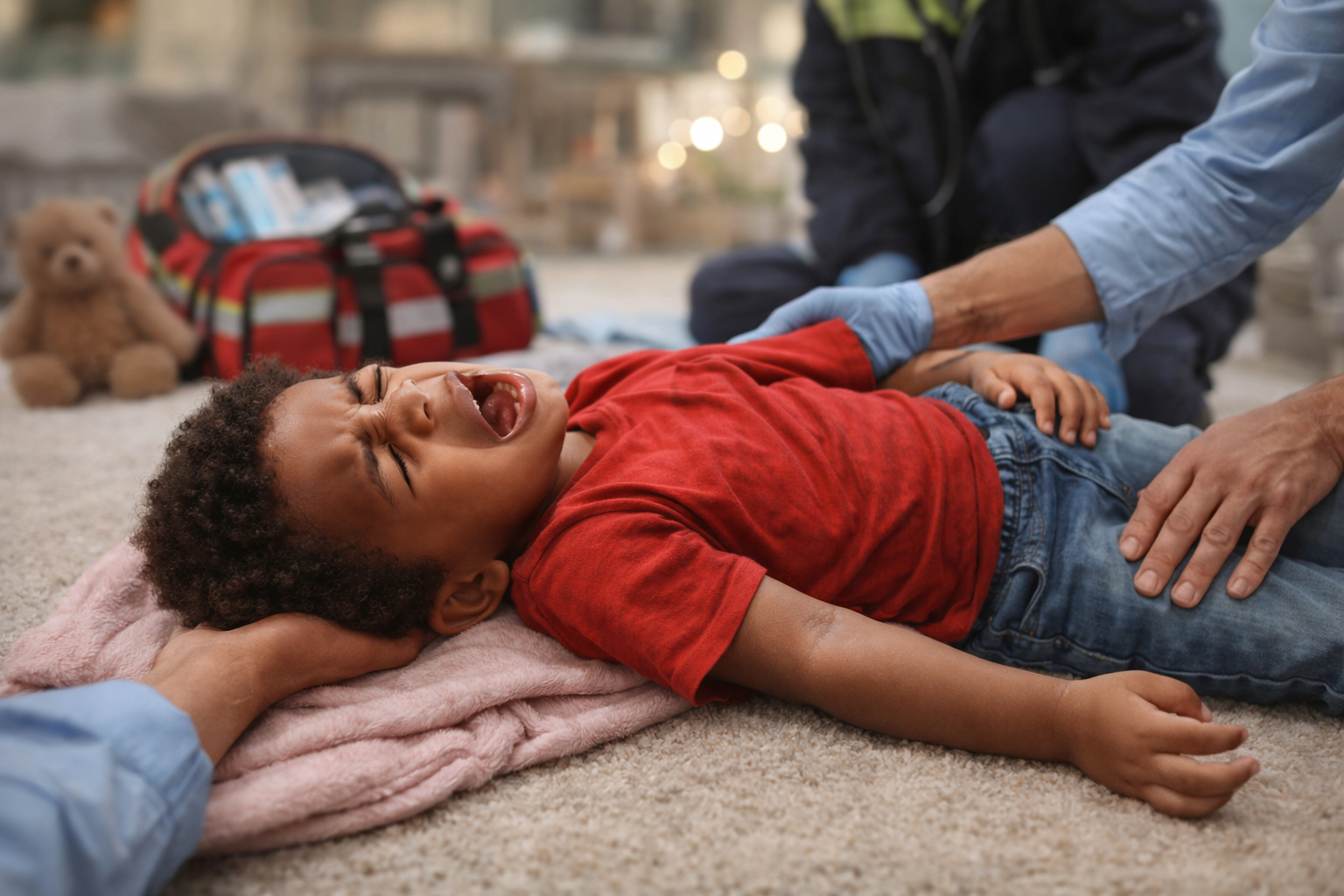
• stay calm and ensure safety
• place child on their side
• do not restrain or put anything in the mouth
9️⃣ Diagnosis
• medical history and event description
• physical examination
• further tests if needed
👉 First-time seizures are usually evaluated carefully.
🟢 Important message
Seizures can be frightening—but many are brief and manageable.
👉 Knowing what to do helps protect the child and reduce panic.
FAQ
• Do all seizures mean epilepsy?
No, many are due to fever or temporary causes.
• Should I hold the child during a seizure?
No—focus on safety, not restraint.
🔗 Related Health Topics
• Concussion
• Fever in children
• Vomiting in children
• Diarrhea in children
• Ear infection in Children
📚 Medical References
• World Health Organization (WHO). Epilepsy and seizures.
• Centers for Disease Control and Prevention (CDC). Seizure first aid.
• National Health Service (NHS). Seizures in children.
• Mayo Clinic. Seizure overview.
• American Academy of Pediatrics (AAP). Febrile seizures.
• International League Against Epilepsy (ILAE). Seizure guidelines.
⚠️ Medical Disclaimer
This article is for educational purposes only and does not replace professional medical advice.
If a child has a seizure, especially for the first time, seek medical care.