Read in: English | Pidgin
Children grow at different rates, but consistent growth is an important sign of good health.
Poor growth occurs when a child grows slower than expected for their age.
Sometimes poor growth may simply reflect family genetics, but in other cases it may signal an underlying health problem.
Recognizing warning signs helps parents seek timely medical evaluation.
Possible Causes of Poor Growth
1️⃣ Poor Nutrition
Children who do not receive enough nutrients may have difficulty growing normally.
Balanced meals with adequate protein, vitamins, and calories are important.
2️⃣ Chronic Illness
Certain medical conditions can affect growth, including:
• chronic infections
• heart disease
• kidney disease
• digestive disorders
3️⃣ Hormonal Problems
Growth hormones produced by the body help regulate height and development.
Hormonal imbalances may slow growth.
4️⃣ Genetic Factors
Some children naturally grow slower because of family genetics.
Parents’ height often influences a child’s growth pattern.
Signs Parents May Notice
Possible signs include:
• the child appears significantly smaller than peers
• slow or minimal weight gain
• delayed physical development
• frequent illness or fatigue
• poor appetite
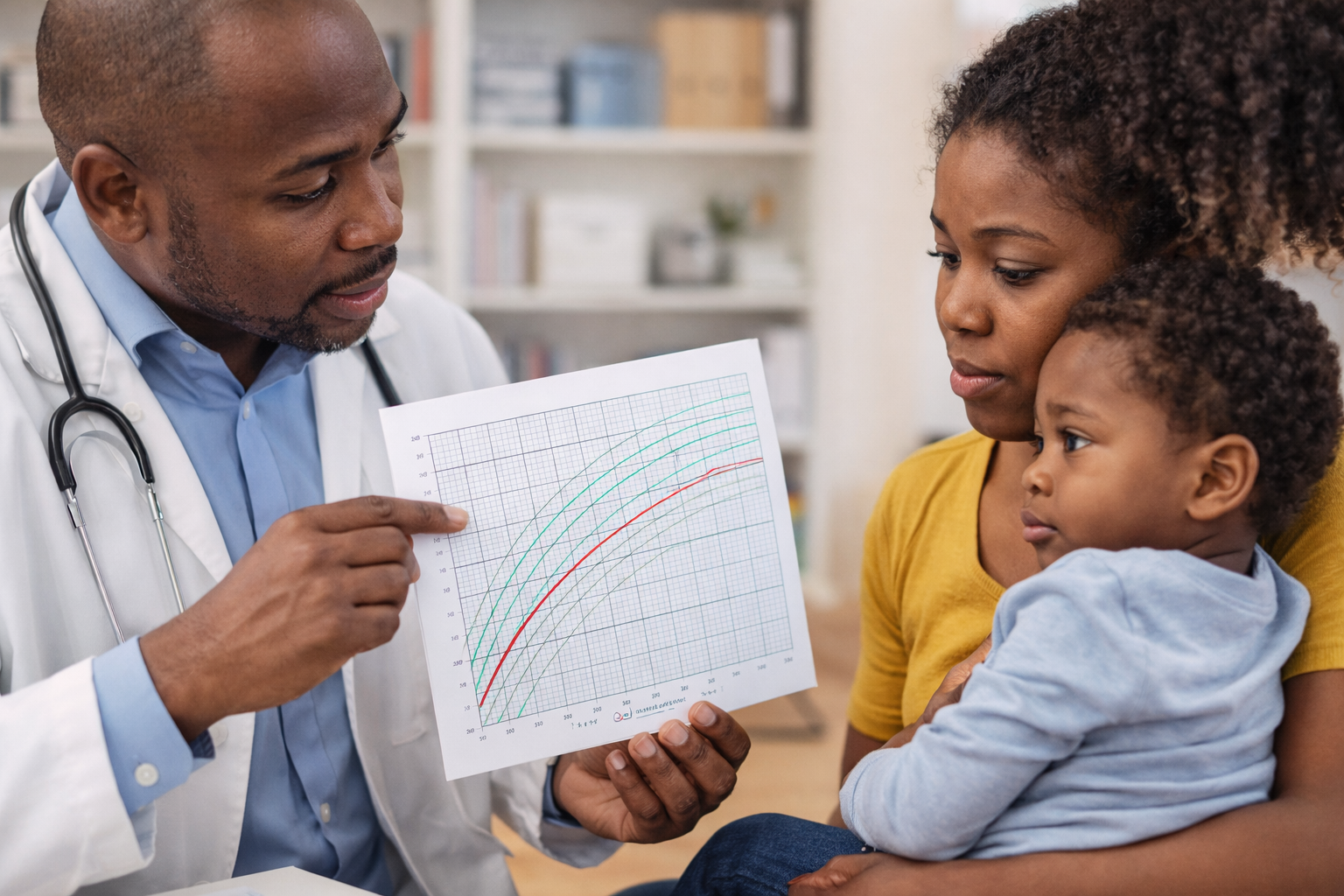
Growth charts used during pediatric check-ups help monitor development.
When Should Parents Seek Medical Advice?
Parents should consider evaluation if:
• the child is not gaining weight or height over time
• the child appears much smaller than children the same age
• the child has persistent fatigue or illness
• appetite remains poor
A pediatrician can assess growth patterns and determine whether further tests are needed.
Final Advice
Many causes of poor growth are manageable when detected early.
Regular medical check-ups help monitor healthy development.
Parents should seek advice if they have concerns about their child’s growth.
Medical References
• World Health Organization – Child Growth Standards
• CDC – Child Growth and Development
• American Academy of Pediatrics – Child Growth Monitoring
Medical Disclaimer
This article is for educational purposes only and does not replace professional medical advice, diagnosis, or treatment.
Parents should consult a qualified healthcare professional regarding concerns about their child’s growth.