

Read in: English | Pidgin
🔎 Quick Summary
Gynecomastia is the enlargement of male breast tissue due to hormonal imbalance, and it is different from simple fat accumulation.
1️⃣ Introduction
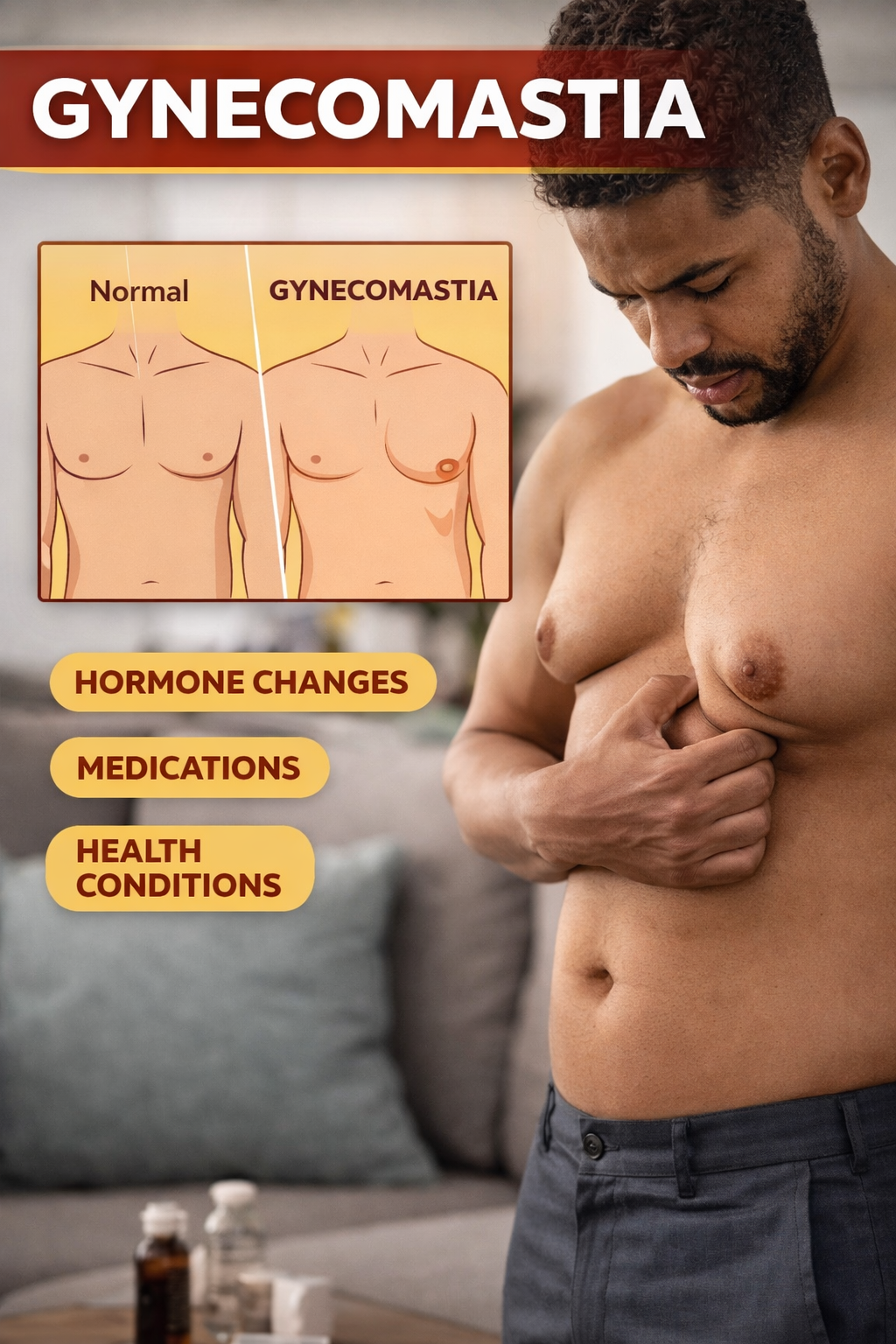
Gynecomastia refers to the enlargement of breast tissue in males.
It can affect one or both sides and may cause concern or embarrassment.
👉 It is important to understand that gynecomastia is a medical condition and is often related to hormone balance.
2️⃣ How it happens
Breast tissue growth in males is influenced by hormones:
• testosterone (male hormone)
• estrogen (present in small amounts in men)
Gynecomastia occurs when:
• testosterone levels decrease
• or estrogen levels increase
👉 This imbalance allows breast tissue to grow.
3️⃣ Common symptoms
• swelling or enlargement of breast tissue
• tenderness or sensitivity
• a firm or rubbery lump under the nipple
• may affect one or both sides
👉 The lump is usually located beneath the nipple.
4️⃣ Symptom explanation
The condition develops because:
• hormonal imbalance stimulates breast tissue growth
👉 This is different from fat accumulation, which is softer and more widespread.
5️⃣ Common causes
🔹 Hormonal changes
• puberty
• aging
🔹 Medical conditions
• low testosterone
• liver or kidney disease
• thyroid disorders
🔹 Medications and substances
• certain medications
• anabolic steroids
• alcohol
👉 Often, the cause is reversible.
6️⃣ Key difference (VERY IMPORTANT)
Gynecomastia
• firm tissue under the nipple
• hormone-related
Chest fat (pseudogynecomastia)
• soft fat tissue
• related to weight
👉 This distinction is important for management.
7️⃣ When to seek help
🚨 Seek medical advice if:
• sudden breast enlargement
• pain or significant discomfort
• one-sided growth
• nipple discharge
• persistent swelling
⚠️ These may require further evaluation.
8️⃣ Management / support
🔹 Observation
• may resolve on its own (especially during puberty)
🔹 Lifestyle changes
• weight management
• reduce alcohol
🔹 Medical treatment
• treat underlying cause
• hormone therapy (in selected cases)
🔹 Surgical option
• considered in persistent or severe cases
9️⃣ Diagnosis
Doctors may assess:
• physical examination
• medical history
• hormone tests
• imaging (if needed)
🔟 Important message
Gynecomastia is common and often treatable.
👉 It is not a sign of weakness or failure.
👉 Seeking help can provide clarity and options.
🔹 FAQ
🔹 Is gynecomastia common?
Yes, especially during puberty and aging.
🔹 Can it go away?
Sometimes, especially in younger individuals.
🔹 Is it the same as fat?
No.
🔹 Can it be treated?
Yes.
🔹 When should I worry?
If symptoms are unusual or persistent.
Related Health Topics
🔹 Low Testosterone
🔹 Male Hormonal Imbalance
🔹 Obesity
🔹 Fatigue – Causes
Medical References
• World Health Organization
• Endocrine Society
• Mayo Clinic
• National Health Service
• American Urological Association
• Peer-reviewed endocrinology literature
Medical Disclaimer
This article is for educational purposes only and does not replace professional medical advice, diagnosis or treatment.
If you notice unusual breast changes, seek medical evaluation.