Read in: English | Pidgin English
🩺 Medically reviewed by the Health Decoded Guide Editorial Team· Last reviewed: July 2026
🔍 Quick Summary
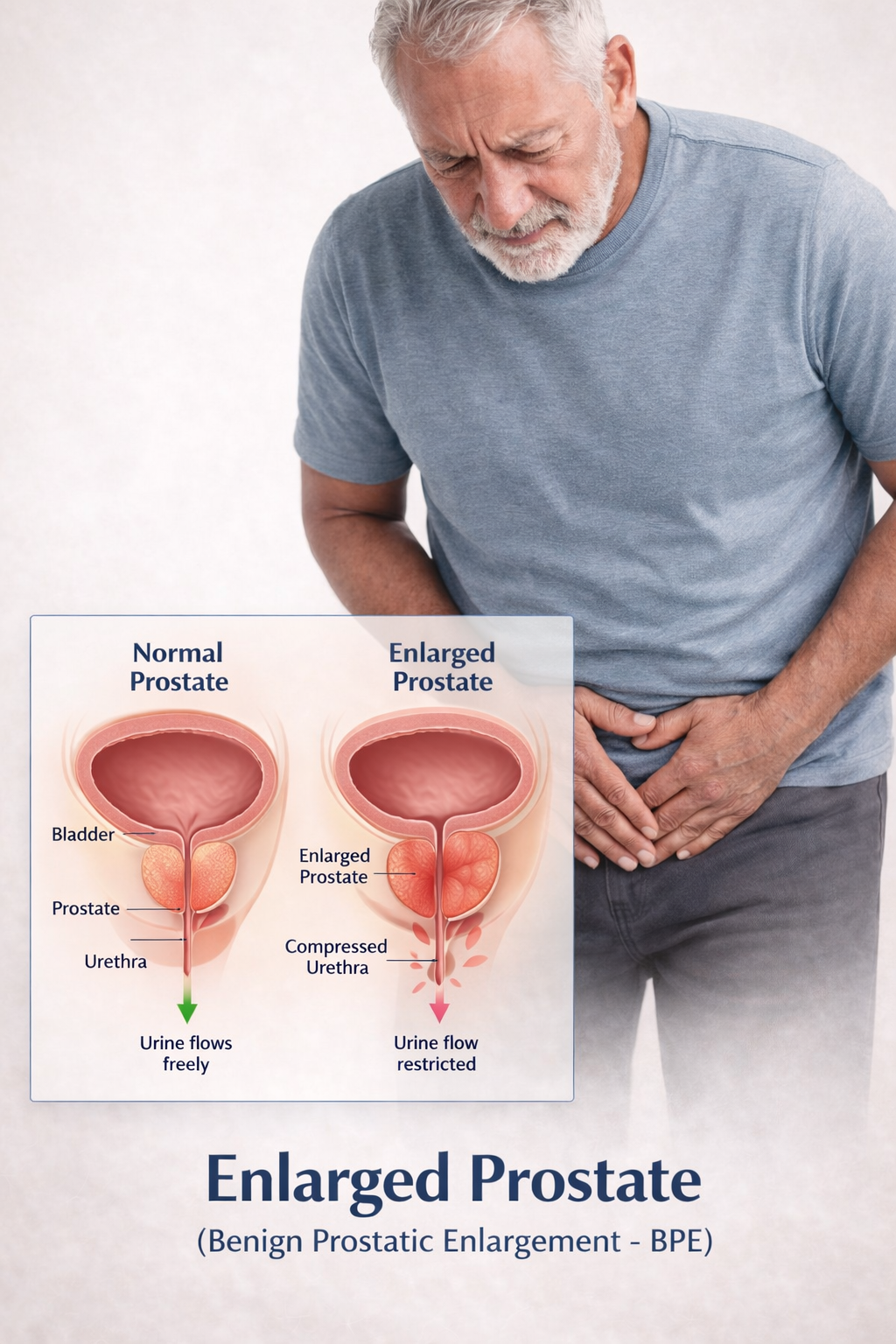
Benign prostatic hyperplasia (BPH), also called an enlarged prostate, is a common condition in older men.
As the prostate grows, it can press on the tube that carries urine out of the body, causing urinary symptoms such as a weak urine stream,
difficulty starting urination and frequent trips to the toilet.
1️⃣ Introduction
The prostate is a small gland found only in men.
It sits just below the bladder and surrounds the urethra—the tube that carries urine from the bladder out through the penis.
As many men get older, the prostate gradually becomes larger.
This enlargement is called benign prostatic hyperplasia (BPH).
Benign means it is not cancer.
• BPH becomes more common with increasing age
• it is one of the most common causes of urinary symptoms in older men
• many men develop mild enlargement without needing treatment
• symptoms may gradually worsen over several years
👉 An enlarged prostate is common, but it is not the same as prostate cancer.
2️⃣ How it happens
Because the prostate surrounds the urethra, enlargement of the gland can gradually squeeze the urethra.
This makes it harder for urine to flow normally.
Over time:
• the bladder has to work harder to push urine out
• the bladder muscle may become thicker
• the bladder may not empty completely
• urine may remain inside after passing urine
This explains why many men notice urinary symptoms long before they develop pain.
👉 Most symptoms happen because urine cannot flow as freely—not because the prostate itself is painful.
3️⃣ Common symptoms
Symptoms are often called lower urinary tract symptoms (LUTS).
These may include:
• difficulty starting urination
• weak urine stream
• interrupted or stop-start urine flow
• straining to pass urine
• dribbling after finishing
• feeling that the bladder has not emptied completely
• needing to pass urine more often
• waking several times at night to urinate (nocturia)
• sudden strong urge to urinate
• urgency with occasional leakage
👉 Symptoms do not always match the size of the prostate. Some men with only mild enlargement have troublesome symptoms, while others with larger prostates may have few symptoms.
4️⃣ What causes BPH?
The exact cause is not fully understood.
It is thought to be related to normal ageing and changes in male hormones over time.
Risk factors include:
• increasing age
• family history
• obesity
• diabetes
• heart disease
• lack of physical activity
BPH is not caused by:
• sexual activity
• masturbation
• prostate infection
• prostate cancer
👉 Growing older is the biggest risk factor for developing BPH.
5️⃣ Possible complications
If left untreated, severe BPH may lead to:
• inability to pass urine (urinary retention)
• repeated urinary tract infections
• bladder stones
• blood in the urine
• bladder damage
• kidney damage in severe long-standing cases
👉 Most men never develop these complications, especially when symptoms are recognised and treated early.
6️⃣ When to seek medical advice 🚨
Arrange a medical review if you notice:
• difficulty passing urine
• weak urine stream
• frequent urination, especially at night
• sudden urgency to urinate
• blood in the urine
• urinary symptoms affecting your quality of life
Seek urgent medical attention if:
• you cannot pass urine at all
• you develop severe lower abdominal pain with a full bladder
• you have fever with urinary symptoms
• you notice large amounts of blood or blood clots in your urine
👉 These may indicate:
• acute urinary retention
• urinary tract infection
• bladder obstruction
• another serious urinary condition
7️⃣ Management and treatment
Treatment depends on how severe the symptoms are.
Mild symptoms
Doctors may recommend:
• reducing evening fluids
• limiting caffeine and alcohol
• bladder training
• maintaining a healthy weight
• regular physical activity
Medicines
Treatment may include:
• alpha-blockers to relax the prostate and bladder neck muscles
• 5-alpha reductase inhibitors to gradually shrink the prostate in selected men
• combination therapy when appropriate
Surgery or procedures
Some men may benefit from procedures if:
• medicines do not help
• symptoms become severe
• complications develop
Several minimally invasive procedures and surgical options are available.
👉 Not every man with BPH needs surgery. Many improve with medication and lifestyle changes.
8️⃣ Diagnosis
A healthcare professional may recommend:
• discussion of your urinary symptoms
• physical examination
• digital rectal examination (DRE)
• urine test
• blood tests, including kidney function when needed
• prostate-specific antigen (PSA) blood test in selected men
• bladder scan to measure urine left after urination
• ultrasound or other imaging if indicated
👉 PSA does not diagnose BPH. It is one of several tests that may help assess prostate health.
9️⃣ BPH and prostate cancer
Many men worry that an enlarged prostate means cancer.
This is not true.
Although BPH and prostate cancer can occur at the same time because both become more common with age:
• BPH does not turn into prostate cancer
• having BPH does not mean you will develop prostate cancer
• both conditions may cause similar urinary symptoms
👉 Because the symptoms can overlap, your healthcare professional may recommend further tests to rule out prostate cancer when appropriate.
🟢 Important Message
An enlarged prostate is a common part of ageing for many men, but troublesome urinary symptoms should never be ignored.
Effective treatments are available, and early assessment can improve symptoms while preventing complications.
👉 If urinary symptoms begin affecting your daily life or sleep, speak with a healthcare professional rather than assuming it is "just old age."
FAQ
• Is BPH the same as prostate cancer?
No. BPH is a non-cancerous enlargement of the prostate.
• Can BPH become prostate cancer?
No. BPH does not turn into prostate cancer.
• Does every enlarged prostate need surgery?
No. Many men improve with lifestyle changes or medication.
• Can BPH affect sexual function?
Some men experience changes in ejaculation or erections, although these may also be related to ageing, medicines or other health conditions.
• Why do I wake up several times at night to urinate?
An enlarged prostate can prevent the bladder from emptying completely, making you need to urinate more often, especially at night.
🧠 Why We Delay
Many men believe waking up several times each night to urinate is simply part of getting older. Others feel embarrassed discussing urinary problems or worry that any prostate problem must be cancer.
As a result, they may live with bothersome symptoms for years before seeking help.
👉 Difficulty passing urine is common, but it should never be ignored. Early treatment can greatly improve quality of life.
🔗 Related Health Topics
• Prostate Cancer
• Blood in the Urine
• Urinary Tract Infection (UTI) in Men
• Erectile Dysfunction
• Nocturia (Frequent Night-time Urination)
📚 Medical References
• National Health Service (NHS). Benign prostate enlargement.
• National Institute for Health and Care Excellence (NICE). Lower urinary tract symptoms in men: management (CG97).
• Mayo Clinic. Benign prostatic hyperplasia (BPH).
• European Association of Urology (EAU). Guidelines on the Management of Non-neurogenic Male Lower Urinary Tract Symptoms (LUTS), including Benign Prostatic Obstruction (BPO).
⚠️ Medical Disclaimer
This article is for educational purposes only and does not replace professional medical advice.
If you have symptoms or concerns, please consult a qualified healthcare professional.