

Read in: English | Pidgin English
🩺 Medically reviewed by the Health Decoded Guide Editorial Team · Last reviewed: July 2026
🔍 Quick Summary
Allergies occur when the immune system overreacts to harmless substances.
They can be mild—or occasionally severe and life-threatening.
1️⃣ Introduction
Allergies are immune reactions to substances that are usually harmless.
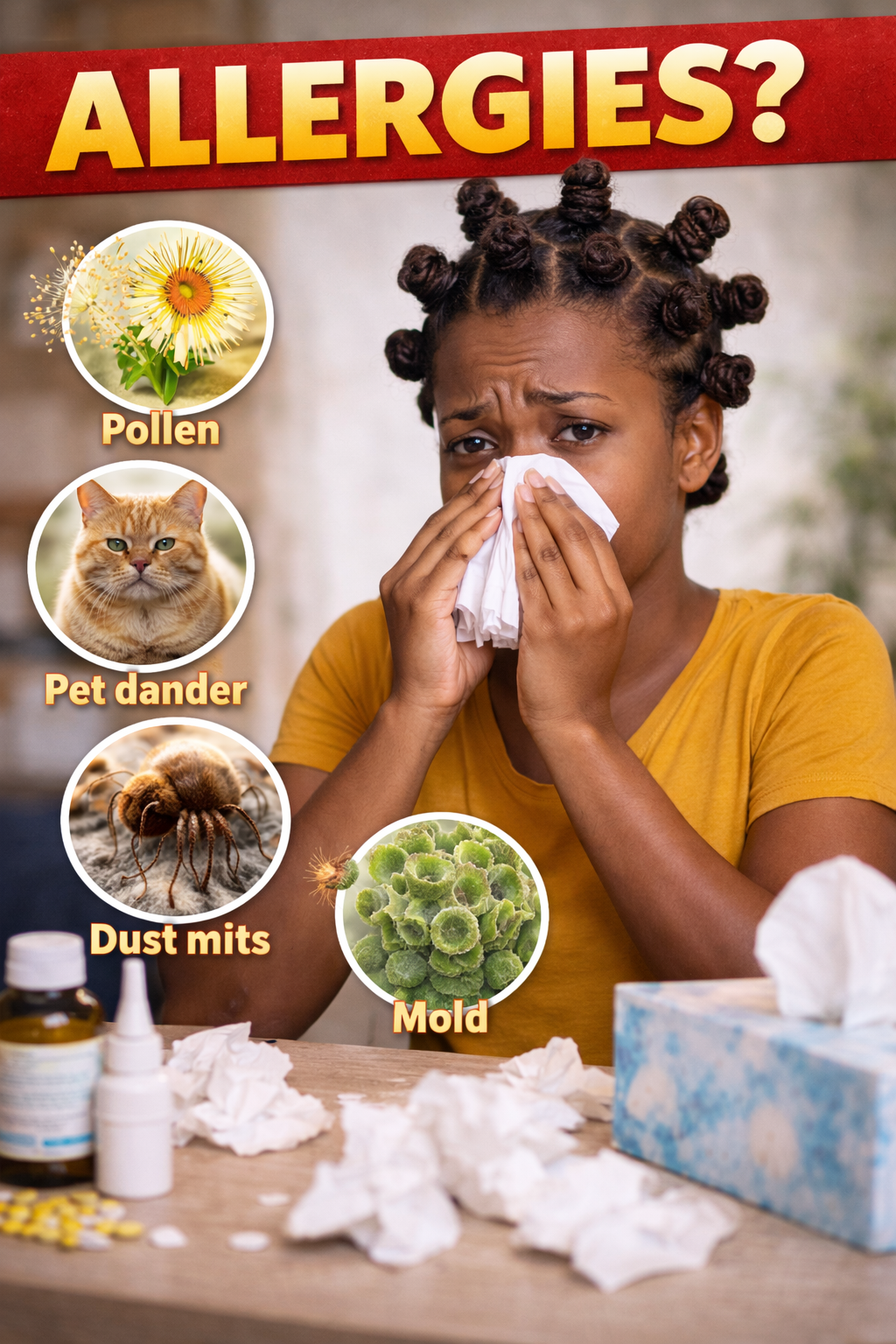
• common triggers include dust, pollen, food, and animal dander
• can affect the skin, nose, lungs, or gut
• vary from mild irritation to severe reactions
👉 The body reacts as if the trigger is dangerous—even when it is not.
2️⃣ How it happens
The immune system becomes overly sensitive.
• identifies a harmless substance as a threat
• releases chemicals like histamine
• causes inflammation and symptoms
👉 This overreaction leads to allergy symptoms.
3️⃣ Types
• Seasonal allergies
- triggered by pollen
- occur at certain times of the year
• Allergic reactions (general)
- food, drugs, dust, or pets
- can occur anytime
👉 The trigger determines the pattern.
4️⃣ Common causes
• Environmental triggers
- pollen, dust mites
- animal fur or mold
• Other triggers
- certain foods (nuts, seafood)
- medications
5️⃣ Symptom explanation
• sneezing or runny nose
• itchy eyes or skin
• swelling or rash
👉 These occur due to histamine release and inflammation.
6️⃣ Associated symptoms
• watery eyes
• cough or wheezing
• skin reactions (hives)
• stomach upset (food allergies)
👉 Symptoms depend on the type of allergy.
7️⃣🩺When it becomes dangerous 🚨
• difficulty breathing
• swelling of lips, tongue, or throat
• sudden severe reaction
👉 These may indicate:
• anaphylaxis (severe allergic reaction)
• need for emergency medical care
8️⃣ Management / treatment
• avoid known triggers
• antihistamines or prescribed medication
• emergency treatment for severe reactions
9️⃣ Diagnosis
• clinical history
• allergy testing (skin or blood tests)
• symptom pattern analysis
👉 Identifying the trigger is key to management.
🟢 Important message
Allergies are common and often manageable.
👉 Knowing your triggers helps prevent symptoms and complications.
FAQ
• Can allergies develop later in life?
Yes. Allergies can develop at any age, even if you have never had them before.
• Are all allergies serious?
No. Many allergies are mild, but severe allergic reactions (anaphylaxis) are medical emergencies and require immediate treatment.
• Can allergies be cured?
No. Allergies cannot usually be cured, but symptoms can often be well controlled by avoiding triggers and using the right medicines.
• What are common allergy triggers?
Common triggers include pollen, dust mites, pet dander, certain foods, insect stings, medicines, and mould.
• When should I seek emergency help?
Get emergency medical help if you develop difficulty breathing, swelling of the face, lips or tongue, dizziness, or collapse after exposure to an allergen.
🔗 Related Health Topics
• Asthma
• Skin rash in Children
• Common Cold
• Fever
• Sinus problems
📚 Medical References
• National Health Service (NHS). Allergies.
• Mayo Clinic. Allergy.
• National Institute for Health and Care Excellence (NICE). Drug allergy: diagnosis and management (CG183).
• American Academy of Allergy, Asthma & Immunology (AAAAI). Tools for Patients.
• American College of Allergy, Asthma & Immunology (ACAAI). Allergies.
⚠️ Medical Disclaimer
This article is for educational purposes only and does not replace professional medical advice.
If you have severe or unusual symptoms, seek medical care immediately.