

Read in: English | Pidgin English
🩺 Medically reviewed by the Health Decoded Guide Editorial Team · Last reviewed: July 2026
🔍 Quick Summary
Asthma is a condition that affects the airways and breathing.
It can be controlled—but flare-ups can become serious if not treated early.
1️⃣ Introduction
Asthma is a chronic condition that affects the airways in the lungs.
• airways become inflamed and narrowed
• can cause breathing difficulty
• often comes and goes in episodes
👉 Asthma is manageable—but understanding triggers is key.
2️⃣ How it happens
Asthma involves airway inflammation and sensitivity.
• airways swell and narrow
• muscles around airways tighten
• mucus production increases
👉 These changes make it harder for air to move in and out.
3️⃣ Types
• Intermittent asthma
- symptoms occur occasionally
- long symptom-free periods
• Persistent asthma
- symptoms occur more regularly
- may require ongoing treatment
👉 Severity varies from person to person.
4️⃣ Common causes and triggers
Asthma develops because of a combination of genetic (inherited) and environmental factors.
This means some people are born with a higher tendency to develop asthma,
but symptoms often appear or worsen after exposure to certain environmental factors or triggers.
• Factors that increase the risk of asthma
- family history of asthma or allergies
- eczema or hay fever (atopic conditions)
- exposure to tobacco smoke or air pollution
- certain childhood respiratory infections
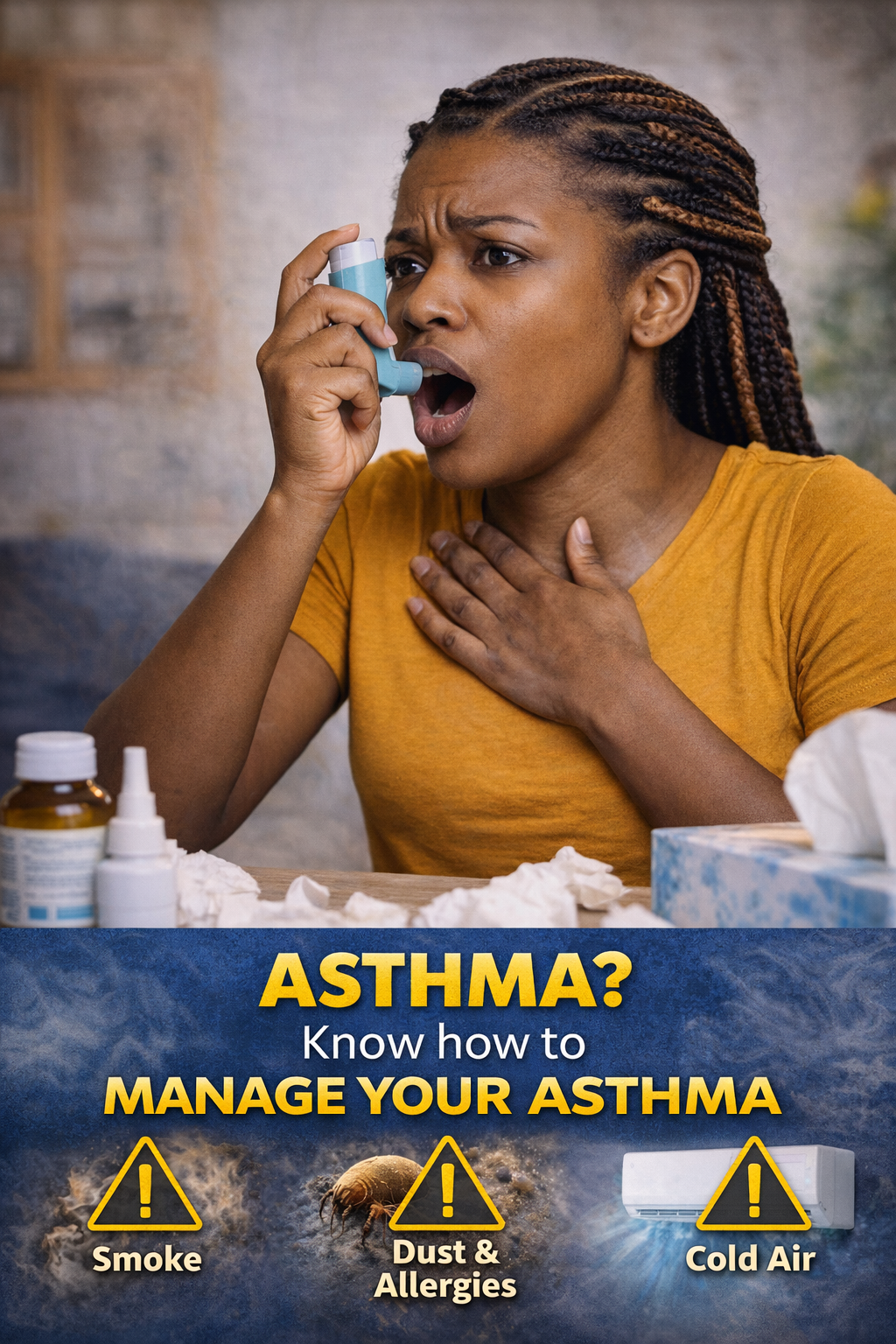
• Common asthma triggers
- dust mites, pollen, mould or pet dander
- smoke, air pollution or strong smells
- cold air, weather changes or exercise
- viral respiratory infections (e.g. the common cold)
👉 Triggers do not cause asthma, but they can bring on asthma symptoms or asthma attacks in people who already have the condition.
5️⃣ Symptom
• Wheezing (whistling sound)
• Shortness of breath
• Chest tightness
👉 These occur due to narrowed airways and reduced airflow.
6️⃣ Associated symptoms
• coughing (especially at night)
• fatigue
• difficulty speaking during attacks
• fast breathing
👉 Symptoms often worsen during an asthma attack.
7️⃣🩺When it becomes dangerous 🚨
• severe breathlessness
• difficulty speaking full sentences
• lips or face turning blue
👉 These may indicate:
• severe asthma attack
• need for emergency medical care
8️⃣ Management / treatment
• inhalers (reliever and preventer)
• avoiding triggers
• regular follow-up care
9️⃣ Diagnosis
• clinical history
• lung function tests
• response to treatment
👉 Diagnosis focuses on symptom patterns and airway function.
🟢 Important message
Asthma can be controlled with proper care.
👉 Knowing triggers and using treatment correctly helps prevent attacks.
FAQ
• Can asthma be cured?
No. Asthma cannot usually be cured, but with the right treatment, most people can keep it well controlled.
• What triggers asthma attacks?
Common triggers include dust, smoke, pollen, cold air, exercise, pet dander, strong smells, and respiratory infections.
• Can people with asthma exercise?
Yes. Most people with well-controlled asthma can exercise safely, and regular physical activity is encouraged.
• When should I seek emergency help?
Get urgent medical help if you are struggling to breathe, cannot speak in full sentences, your reliever inhaler is not helping, or your lips or fingers turn blue.
• Do I need to use my inhaler every day?
It depends on the type of asthma and your treatment plan. Some inhalers are used every day to prevent symptoms, while others are used only when symptoms occur.
🔗 Related Health Topics
• Wheezing
• Cough
• Asthma attacks
• Allergies
• Common Cold
• Breathing difficulty
• Asthma Management
📚 Medical References
• World Health Organization (WHO). Asthma.
• National Health Service (NHS). Asthma.
• Centers for Disease Control and Prevention (CDC). About Asthma.
• Mayo Clinic. Asthma.
• National Institute for Health and Care Excellence (NICE). Asthma: diagnosis, monitoring and chronic asthma management (NG245).
• Global Initiative for Asthma (GINA). Global Strategy for Asthma Management and Prevention.
⚠️ Medical Disclaimer
This article is for educational purposes only and does not replace professional medical advice.
If you have symptoms of asthma, consult a qualified healthcare professional.