

Read in: English | Pidgin English
🩺 Medically reviewed by the Health Decoded Guide Editorial Team · Last reviewed: July 2026
🔍 Quick Summary
High cholesterol is a condition where fats in the blood are elevated.
It often has no symptoms—but increases the risk of heart disease over time.
1️⃣ Introduction
Cholesterol is a fatty substance found in the blood.
• needed for normal body functions
• produced by the liver and obtained from food
• becomes harmful when levels are too high
👉 High cholesterol is often silent—but its effects build over time.
2️⃣ How it happens
Cholesterol travels in the blood in different forms.
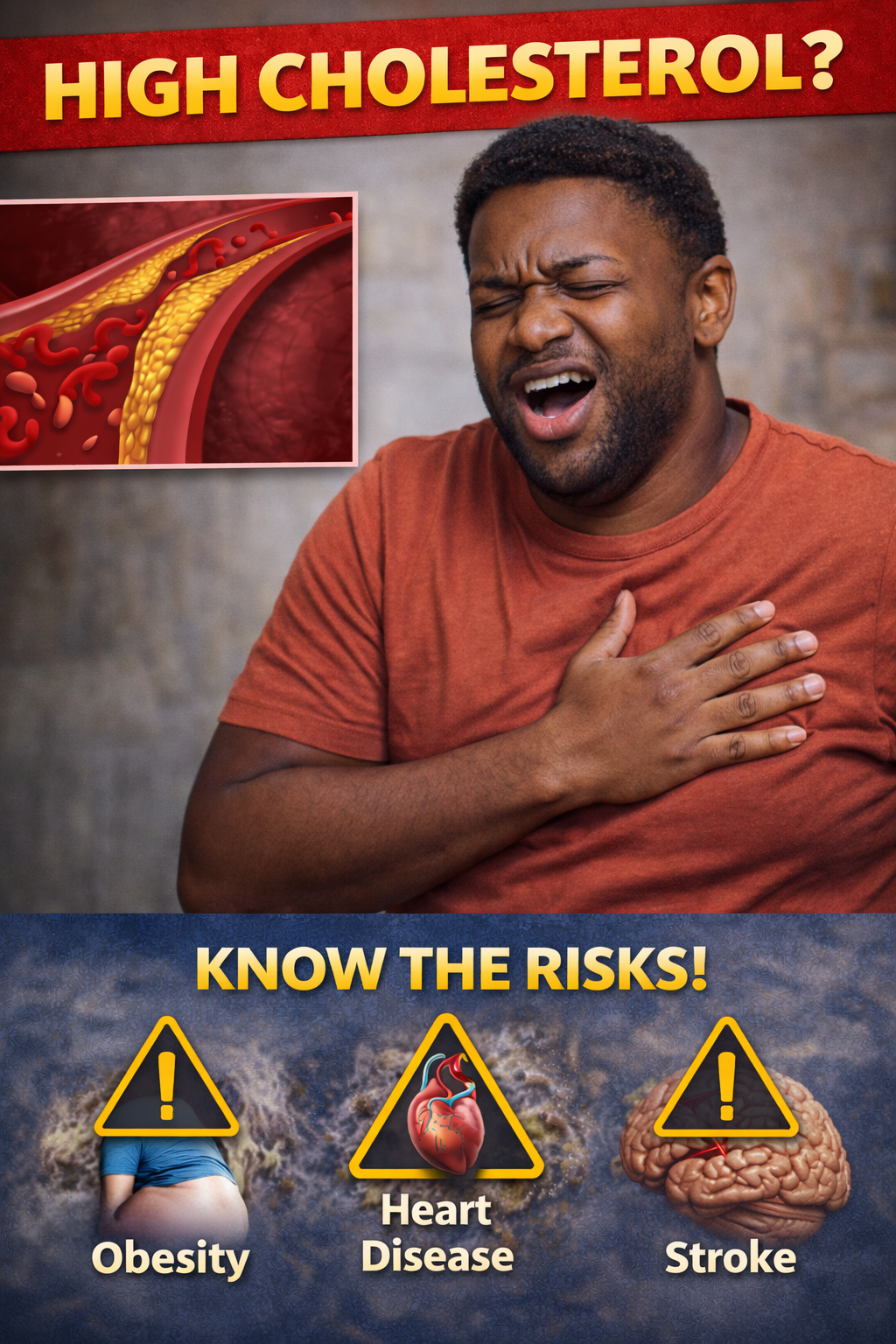
• LDL (“bad” cholesterol) can build up in arteries
• HDL (“good” cholesterol) helps remove excess cholesterol
• imbalance leads to plaque formation
👉 Over time, arteries can narrow and restrict blood flow.
3️⃣ Classification
• High LDL cholesterol
- increases risk of heart disease
- contributes to artery blockage
• Low HDL cholesterol
- reduces protection
- allows cholesterol to accumulate
👉 The balance between types is important.
4️⃣ Common causes
• Lifestyle factors
- high-fat diet
- lack of physical activity
• Medical factors
- genetics (family history)
- conditions like diabetes
5️⃣ Symptom explanation
• usually no obvious symptoms
• often discovered through blood tests
👉 Damage happens silently inside blood vessels.
6️⃣ Associated symptoms
• chest discomfort (late stages)
• fatigue
• signs of heart disease (if advanced)
👉 Symptoms often appear only when complications develop.
7️⃣🩺When it becomes dangerous 🚨
• chest pain
• shortness of breath
• sudden cardiovascular symptoms
👉 These may indicate:
• heart disease or blocked arteries
• need for urgent medical care
8️⃣ Management / treatment
• healthy diet (reduce saturated fats)
• regular exercise
• medications if prescribed
9️⃣ Diagnosis
• blood test (lipid profile)
• risk factor assessment
• regular monitoring
👉 Early detection helps prevent complications.
🟢 Important message
High cholesterol is manageable and often preventable.
👉 Small lifestyle changes can significantly reduce risk.
FAQ
• Can I feel high cholesterol?
No. High cholesterol usually has no symptoms and is often found during a blood test.
• Can it be reversed?
Yes. Healthy lifestyle changes and, when needed, medicines can help lower cholesterol.
• Who is more at risk?
People with a family history, diabetes, obesity, high blood pressure, or those who smoke are at higher risk.
• How often should I check my cholesterol?
It depends on your age and risk factors, but your doctor can advise when you should be tested.
• Can thin people have high cholesterol?
Yes. Even people with a healthy weight can have high cholesterol, especially if it runs in the family or they have an unhealthy diet.
🔗 Related Health Topics
• Heart disease
• High blood pressure
• High blood sugar
• Heart attack
• Stroke
📚 Medical References
• National Health Service (NHS). High cholesterol.
• Centers for Disease Control and Prevention (CDC). About Cholesterol.
• Mayo Clinic. High cholesterol.
• National Institute for Health and Care Excellence (NICE). Cardiovascular disease: risk assessment and reduction, including lipid modification (NG238).
• American Heart Association (AHA). Cholesterol.
⚠️ Medical Disclaimer
This article is for educational purposes only and does not replace professional medical advice.
If you are concerned about cholesterol levels, consult a healthcare professional.