🌍 English
🩺 Medically reviewed by Priscilla Afiakurue, MD, Family Medicine Physician | Founder & Lead Medical Editor · Last reviewed: July 2026
🔎 Quick Summary
A stroke happens when blood flow to part of the brain is interrupted, causing brain cells to become damaged or die.
Symptoms usually begin suddenly and may include facial drooping, arm weakness, speech difficulty, vision changes, or loss of balance.
Stroke is a medical emergency. Getting treatment as quickly as possible can help save brain function and improve recovery.
1️⃣ Introduction
A stroke is one of the most serious medical emergencies affecting the brain.
It occurs when part of the brain does not receive enough oxygen-rich blood because a blood vessel becomes blocked or bursts.
Without oxygen and nutrients, brain cells begin to die within minutes.
The earlier treatment begins, the greater the chance of reducing permanent brain damage and disability.
👉 Recognising the warning signs quickly and seeking emergency medical care immediately can save both life and brain function.
2️⃣ How it happens
The brain depends on a constant supply of oxygen and nutrients carried by the blood.
There are two main types of stroke:
Ischaemic stroke (most common)
• caused by a blood clot blocking a blood vessel supplying the brain
Haemorrhagic stroke
• caused by bleeding into or around the brain after a blood vessel bursts
Both types prevent parts of the brain from functioning normally and can rapidly damage brain tissue.
👉 The longer the brain goes without adequate blood flow, the greater the risk of permanent injury.
3️⃣ Common symptoms
Stroke symptoms usually begin suddenly.
Common symptoms include:
• weakness or numbness on one side of the body
• facial drooping
• difficulty speaking or understanding speech
• sudden confusion
• sudden vision loss or blurred vision
• dizziness or loss of balance
• sudden severe headache (especially with haemorrhagic stroke)
👉 Symptoms often affect only one side of the body because each side of the brain controls the opposite side of the body.
4️⃣ Why these symptoms happen
Different parts of the brain control different body functions.
Depending on the area affected, a stroke may interfere with:
• movement
• speech and language
• vision
• balance and coordination
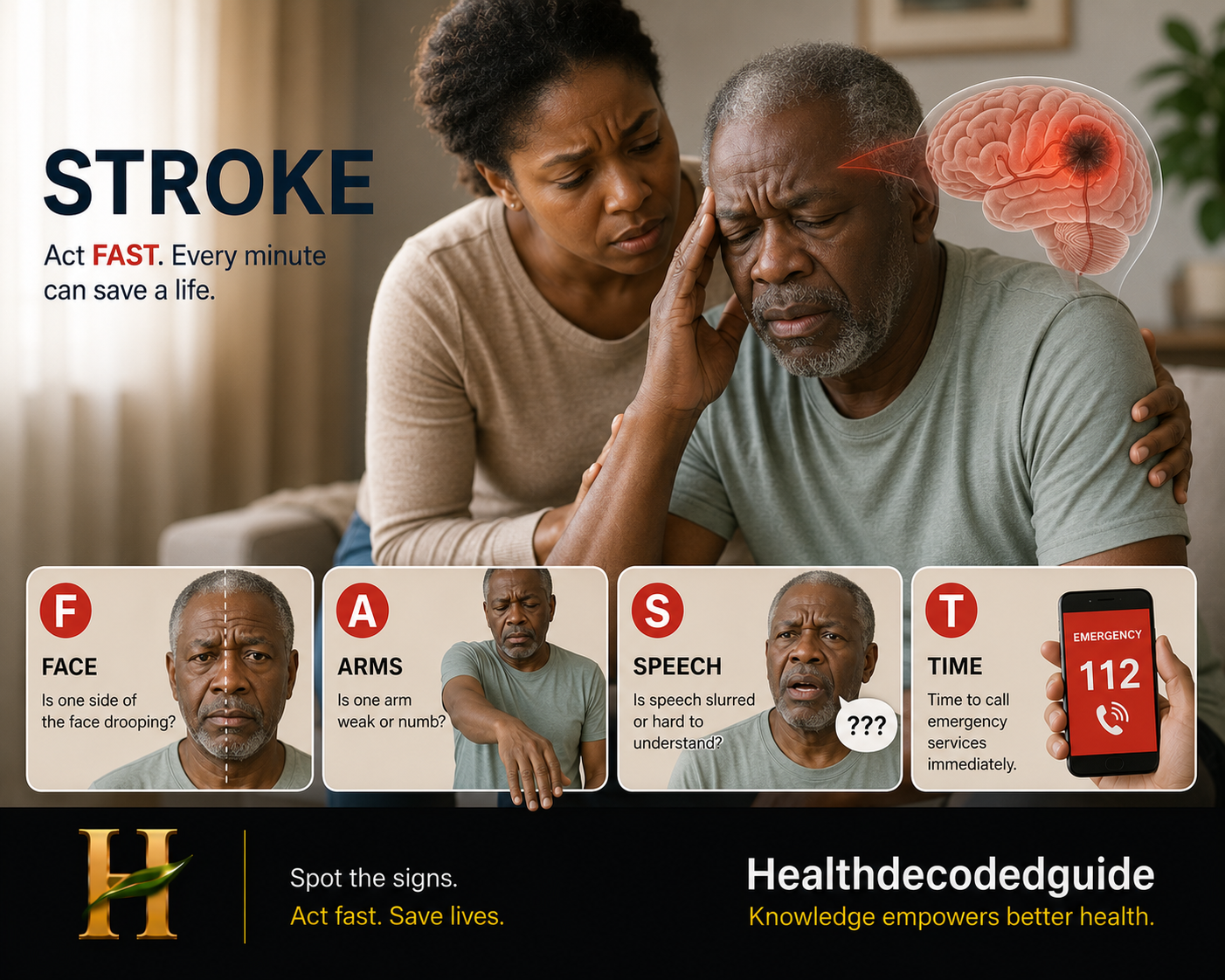
A simple way to remember the warning signs is FAST:
• F – Face drooping
• A – Arm weakness
• S – Speech difficulty
• T – Time to call emergency services immediately
👉 FAST helps people recognise stroke quickly and act without delay.
5️⃣ Conditions that can look similar
Some conditions may resemble a stroke, including:
• seizures
• migraine with aura
• low blood sugar
• Bell's palsy
Unlike many of these conditions, stroke symptoms usually begin suddenly and often cause weakness affecting one side of the body.
👉 Never assume facial weakness or sudden neurological symptoms are "just Bell's palsy" or a migraine without medical assessment.
6️⃣ 🩺 When it becomes dangerous 🚨
Seek emergency medical care immediately if someone develops:
• sudden weakness or numbness
• facial drooping
• difficulty speaking or understanding speech
• sudden loss of vision
• severe headache
• loss of balance or coordination
• confusion or loss of consciousness
👉 These may indicate:
• stroke
• bleeding in the brain
• another serious neurological emergency
👉 Every minute matters. Early treatment can greatly improve recovery and reduce disability.
7️⃣ Prevention / management
Although not all strokes can be prevented, you can reduce your risk by:
• controlling high blood pressure
• managing diabetes
• stopping smoking
• exercising regularly
• maintaining a healthy weight
• eating a balanced diet
• taking prescribed medicines as directed
👉 Managing blood pressure is one of the most effective ways to reduce stroke risk.
8️⃣ Diagnosis / testing
Doctors may perform:
• neurological examination
• CT scan or MRI of the brain
• blood tests
• heart rhythm assessment (ECG)
• blood vessel imaging if needed
👉 Brain imaging helps doctors determine whether the stroke is caused by a blocked blood vessel or bleeding, which guides treatment.
🟢 Important message
Stroke is a medical emergency that requires immediate treatment.
Recognising the warning signs and acting quickly can save brain function, reduce long-term disability, and improve survival.
👉 If you think someone may be having a stroke, call emergency services immediately—do not wait for the symptoms to improve.
FAQ
• What is the most common type of stroke?
Ischaemic stroke, caused by a blocked blood vessel, accounts for most strokes.
• Can stroke be prevented?
Many strokes can be prevented by controlling risk factors such as high blood pressure, diabetes, smoking, and high cholesterol.
• Can a stroke happen without pain?
Yes. Most strokes are painless, which is why recognising the warning signs is so important.
• What should I do if I think someone is having a stroke?
Call emergency services immediately. Do not wait to see if the symptoms go away.
• Can young people have a stroke?
Yes. Although stroke is more common in older adults, it can occur at any age.
🔗 Related Health Topics
• Stroke vs Bell's Palsy
• High Blood Pressure
• Dizziness
• Seizures
• Headache
• Heart Attack
• Emergency First Aid
📚 Medical References
• World Health Organization (WHO). Stroke fact sheet: https://www.who.int/news-room/fact-sheets/detail/stroke
• Centers for Disease Control and Prevention (CDC). About Stroke: https://www.cdc.gov/stroke/about/index.html
• National Health Service (NHS). Stroke: https://www.nhs.uk/conditions/stroke/
• Mayo Clinic. Stroke – Symptoms and causes: https://www.mayoclinic.org/diseases-conditions/stroke/symptoms-causes/syc-20350113
• American Stroke Association. Stroke Symptoms (B.E. F.A.S.T.): https://www.stroke.org/en/about-stroke/stroke-symptoms
• National Institute for Health and Care Excellence (NICE). Stroke and transient ischaemic attack in over 16s (NG128): https://www.nice.org.uk/guidance/ng128
⚠️ Medical Disclaimer
This article is for educational purposes only and does not replace professional medical advice, diagnosis, or treatment.
If you have symptoms or concerns, please consult a qualified healthcare professional.
If you suspect a stroke, call emergency services immediately. Do not delay seeking emergency medical care.