Read in: English | Pidgin
🔎 Quick Summary
Seizures are sudden disturbances in brain activity that can cause shaking, loss of awareness, or unusual behavior, and may require urgent medical care depending on the cause.
1️⃣ Introduction
Seizures occur when there is abnormal electrical activity in the brain.
They can affect how a person moves, behaves, or becomes aware of their surroundings.
Seizures can happen once or repeatedly, and they may be caused by different conditions.
Some seizures are brief and harmless.
Others can be serious and require immediate medical attention.
Understanding seizures helps you recognize danger signs and respond appropriately.
2️⃣ How the condition develops
The brain normally sends electrical signals in a controlled way.
A seizure occurs when these signals become sudden, excessive, and disorganized.
This disruption affects normal brain function.
Common causes include:
• epilepsy (recurrent seizures)
• high fever (especially in children)
• infections (e.g. meningitis)
• head injury
• low blood sugar
• alcohol withdrawal or substance use
3️⃣ Early symptoms (warning signs)
Some people experience warning signs before a seizure, known as an “aura”:
• unusual smells or tastes
• sudden fear or anxiety
• dizziness
• visual disturbances
• confusion
Not all seizures have warning signs.
4️⃣ Symptom explanation
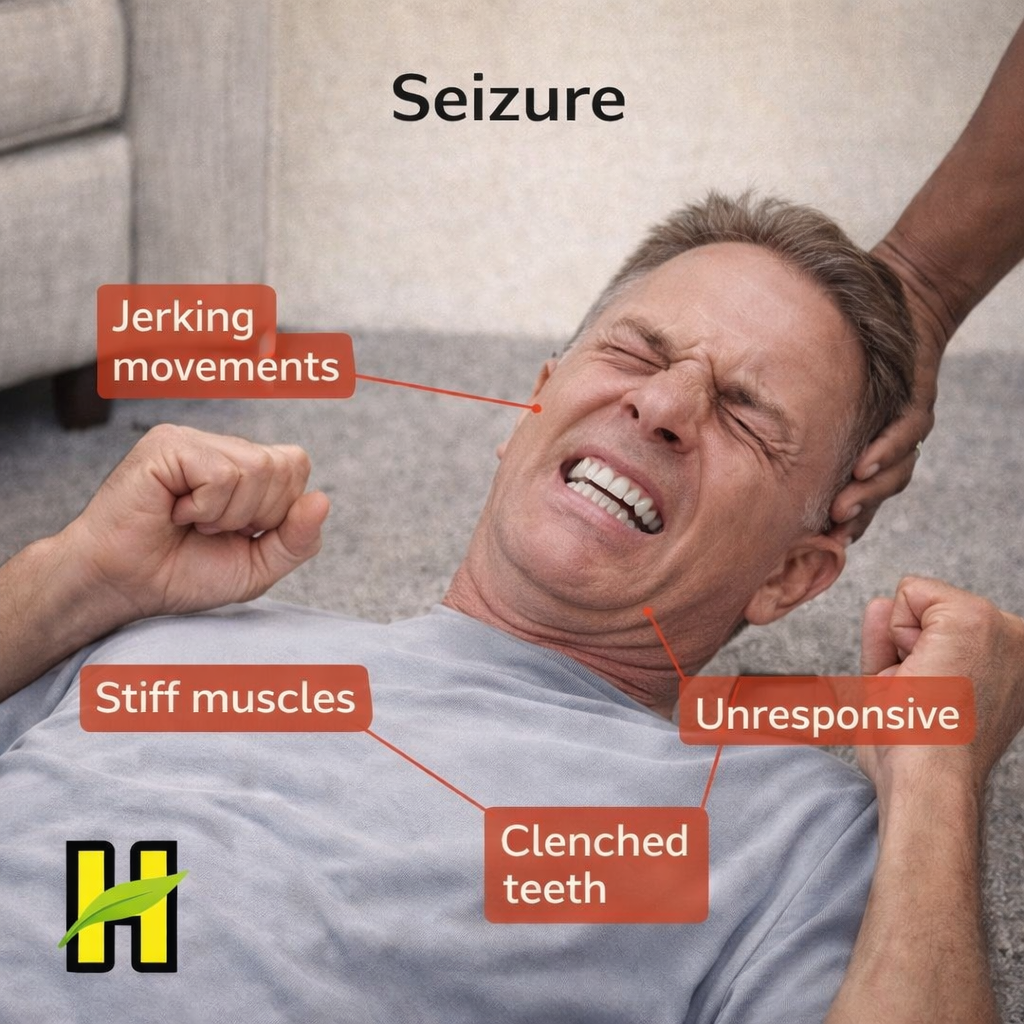
During a seizure, symptoms may include:
• uncontrolled shaking (convulsions)
• loss of consciousness
• staring or unresponsiveness
• sudden collapse
• stiffening of the body
After the seizure (post-ictal phase), the person may have:
• confusion
• tiredness
• headache
• difficulty remembering what happened
This occurs because the brain is recovering from abnormal activity.
5️⃣ Comparison note
Seizures can sometimes be confused with:
• fainting (loss of consciousness without shaking)
• panic attacks
• movement disorders
Key differences:
• seizures often involve uncontrolled movements or loss of awareness
• fainting usually involves brief loss of consciousness with quick recovery
Seizures associated with infections (like meningitis) often occur with:
• fever
• neck stiffness
• confusion
6️⃣ When it becomes dangerous
Seek emergency medical care immediately if:
• a seizure lasts more than 5 minutes
• seizures occur repeatedly without recovery
• the person does not regain consciousness
• the seizure is the first ever episode
• injury occurs during the seizure
• breathing is affected
⚠️ These may indicate a serious underlying condition.
7️⃣ Prevention / management
Management depends on the cause:
• epilepsy → anti-seizure medication
• fever → temperature control
• infection → medical treatment
• low blood sugar → glucose correction
General precautions:
• take prescribed medication regularly
• avoid triggers (e.g. sleep deprivation, alcohol)
• ensure safety during activities
8️⃣ Diagnosis / testing
Doctors may perform:
• neurological examination
• blood tests
• brain imaging (CT or MRI)
• EEG (electroencephalogram)
These tests help identify the cause and guide treatment.
9️⃣ Important message
Not all seizures mean epilepsy.
However, any seizure should be taken seriously and evaluated.
Early diagnosis and treatment can prevent complications.
🔟 FAQ
🔹 Are all seizures epilepsy?
No. Some seizures occur due to temporary conditions like fever or infection.
🔹 What should I do during a seizure?
Keep the person safe, lay them on their side, and do not put anything in their mouth.
🔹 When should I call emergency services?
If the seizure lasts more than 5 minutes or repeats.
🔹 Can children have seizures from fever?
Yes, febrile seizures are common in young children.
🔹 Can seizures be treated?
Yes, treatment depends on the underlying cause.
Related Health Topics
🔹 Meningitis – Symptoms and Warning Signs
🔹 Fever – When to Worry
🔹 Head Injury – Symptoms
🔹 Weakness – Causes
🔹 Seizure vs Fainting – How to Tell the Difference
🔹 Fever vs Seizure in Children – What to Know
🔹 Epilepsy vs Single Seizure – Key Differences
Medical References
• World Health Organization – Epilepsy and seizures
• Centers for Disease Control and Prevention – Seizure disorders
• Mayo Clinic – Seizures overview
• National Health Service – Seizures and epilepsy
• National Institute of Neurological Disorders and Stroke – Seizure information
• Peer-reviewed neurology guidelines
Medical Disclaimer
This article is for educational purposes only and does not replace professional medical advice, diagnosis, or treatment.
Always consult a qualified healthcare professional if you have symptoms or concerns about your health.
Seek urgent medical care if symptoms are severe or life-threatening.