Read in: English | Pidgin English
🩺 Medically reviewed by the Health Decoded Guide Editorial Team · Last reviewed: July 2026
🔎 Quick Summary
Dengue fever is a mosquito-borne viral infection that commonly causes high fever, severe body pain and headache.
Most people recover with supportive care, but some cases can become serious and require urgent medical attention.
1️⃣ Introduction
Dengue fever is a viral infection transmitted by mosquitoes.
It is common in many tropical and subtropical regions, including parts of Africa, Asia, and South America.
The illness can range from mild to severe, and in some cases may become life-threatening.
Recognizing the warning signs early and staying well hydrated can help reduce the risk of serious complications.
2️⃣ How the condition develops
Dengue is caused by the dengue virus, which is transmitted through the bite of an infected Aedes mosquito.
After a mosquito bite:
• the virus enters the bloodstream
• it spreads through the body
• it triggers the body's immune response
• in some people, it can affect blood vessels and increase the risk of bleeding
• there are four different dengue virus types (DENV-1, DENV-2, DENV-3 and DENV-4)
A person can develop dengue more than once because infection with one type does not provide lifelong protection against the other three types.
Symptoms usually appear within 4–10 days after infection.
3️⃣ Early symptoms
Dengue symptoms often start suddenly.
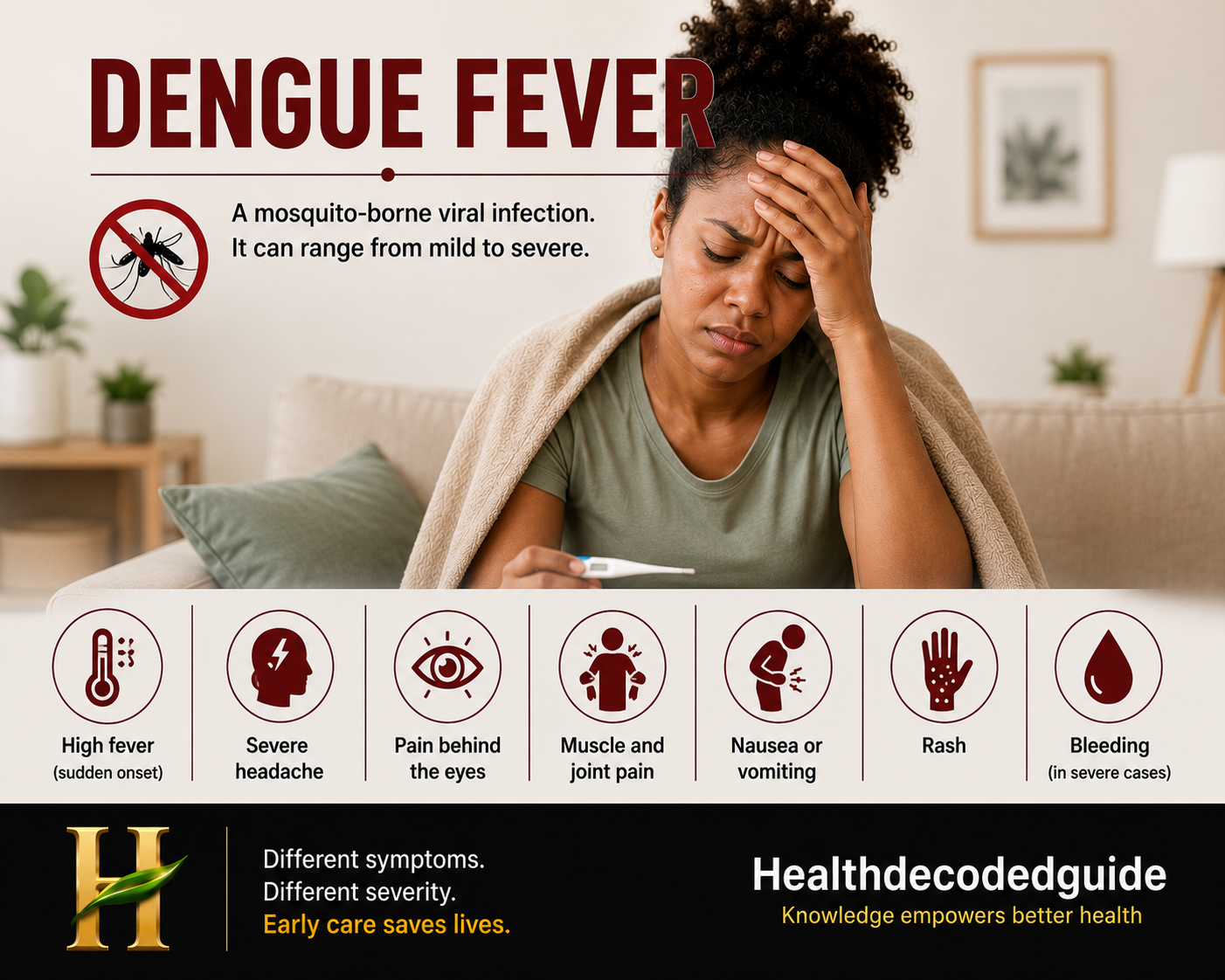
Common early symptoms include:
• high fever
• severe headache
• pain behind the eyes
• joint and muscle pain
• fatigue
• nausea and/or vomiting
4️⃣ Why dengue causes these symptoms
Dengue is sometimes called "breakbone fever" because the body aches and joint pain can be very severe.
The symptoms happen because:
• the virus triggers a strong immune response
• inflammation develops throughout the body
• in some people, the virus also affects blood vessels
👉 This can cause fever, severe body pain, rash and, in some cases, bleeding.
5️⃣How dengue differs from other illnesses
• dengue often causes severe muscle and joint pain
• malaria commonly causes fever with chills and sweating
• typhoid fever usually develops more gradually
• flu (Influenza) often causes cough, sore throat or runny nose, which are less common in dengue
👉 Because the symptoms can overlap, testing is important to confirm the diagnosis.
6️⃣ When it becomes dangerous
🚨 Seek urgent medical care if:
• becoming unusually sleepy or difficult to wake
• severe abdominal pain
• persistent vomiting
• bleeding (gums, nose, or in stool)
• difficulty breathing
• extreme weakness
These may be signs of severe dengue, which requires urgent treatment.
7️⃣ Prevention / management
Prevention focuses on avoiding mosquito bites:
• use mosquito nets
• use insect repellent
• remove standing/stagnated water
• wear long-sleeved clothing, especially during the day, when Aedes mosquitoes are most active
Management includes:
• rest👌
• drink plenty of fluids
• use paracetamol for fever if needed
⚠️ Avoid ibuprofen, aspirin and diclofenac unless advised by a healthcare professional because they may increase the risk of bleeding.
8️⃣ Diagnosis/testing
Diagnosis may include:
• blood tests
• dengue antigen or antibody tests
Doctors may also rule out:
• malaria
• typhoid
🟢Important message
Dengue fever is common in many regions but can become serious.
Early recognition and proper care can prevent complications.
FAQ
How is dengue spread?
Through bites from infected mosquitoes.
How long does dengue last?
Usually 1–2 weeks, though fatigue may persist longer during recovery
Can dengue be treated?
There is no specific cure, but symptoms can be managed.
Is dengue dangerous?
Most cases are mild, but severe dengue can be life-threatening.
When should I get tested?
If you have fever and symptoms in a high-risk area.
Can I get dengue more than once?
Yes. There are four different dengue virus types.
Recovering from one type does not protect you against the others, so a person can develop dengue more than once.
Do dengue mosquitoes bite during the day or at night?
The mosquitoes that spread dengue (Aedes mosquitoes) are most active during the daytime, especially in the early morning and late afternoon.
This is different from the Anopheles mosquitoes that spread malaria, which usually bite from dusk to dawn.
👉 Protecting yourself from mosquito bites during the day is also important in areas where dengue is common.
🔗 Related Health Topics
• Malaria
• Typhoid Fever
• Fever
• Dehydration
• Malaria vs Dengue – How to Tell the Difference
• Malaria vs Typhoid – Difference
📚 Medical References
• World Health Organization (WHO) – Dengue and severe dengue: https://www.who.int/news-room/fact-sheets/detail/dengue-and-severe-dengue
• Centers for Disease Control and Prevention (CDC) – Dengue overview: https://www.cdc.gov/dengue/
• NHS (National Health Service, UK) – Dengue: https://www.nhs.uk/conditions/dengue/
• Mayo Clinic – Dengue fever: https://www.mayoclinic.org/diseases-conditions/dengue-fever
• Pan American Health Organization (PAHO) – Dengue guidance: https://www.paho.org/en/topics/dengue
• BMJ Best Practice – Dengue: https://bestpractice.bmj.com
• UpToDate – Dengue virus infection: https://www.uptodate.com
⚠️ Medical Disclaimer
This article is for educational purposes only and does not replace professional medical advice, diagnosis, or treatment.
Always consult a qualified healthcare professional if you have symptoms or concerns about your health.