Read in: English | Pidgin
Flu, also known as influenza, is a viral infection that affects the nose, throat, and lungs.
It spreads easily from person to person through coughing, sneezing, or close contact.
Although many people recover within a week, flu can sometimes cause serious illness, especially in young children, elderly individuals, and people with chronic health conditions.
Understanding flu symptoms helps people recognize the illness and respond appropriately.
What Causes the Flu?
Flu is caused by influenza viruses.
These viruses spread through respiratory droplets when an infected person coughs, sneezes, or talks.
People may also become infected by touching contaminated surfaces and then touching their nose, mouth, or eyes.
Flu outbreaks often occur during certain seasons but can happen at any time.
Common Symptoms of the Flu
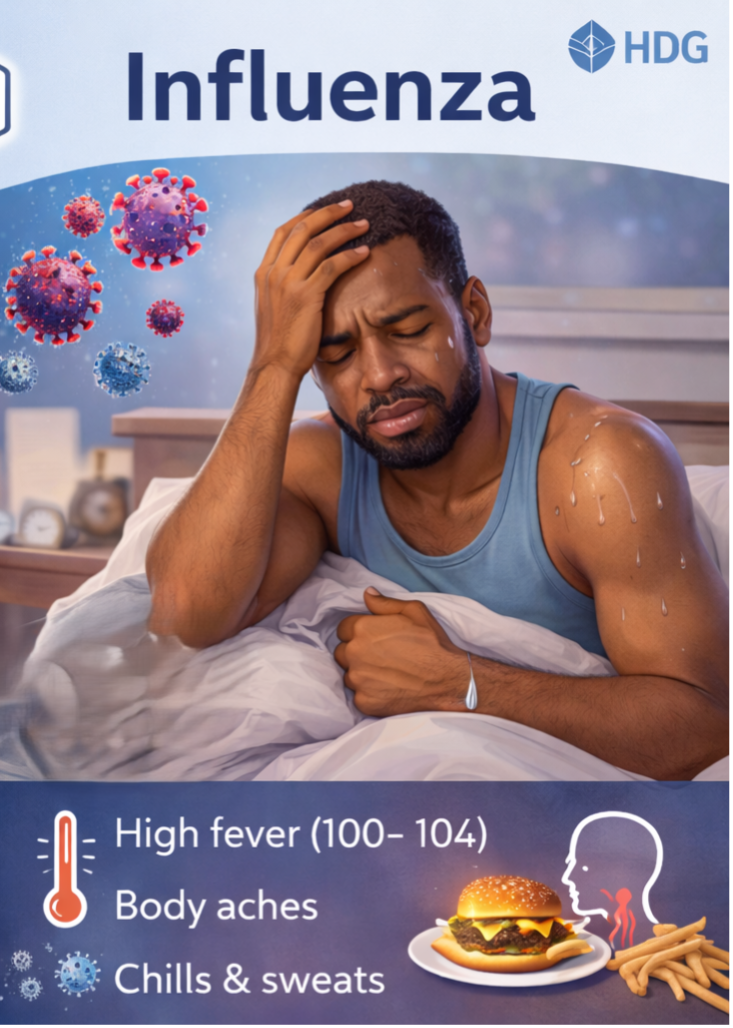
Flu symptoms usually appear suddenly and may include:
• high fever
• headache
• body aches
• fatigue or weakness
• cough
• sore throat
• chills
• runny or blocked nose
Some people may also experience nausea or vomiting.
Symptoms usually last about 5–7 days, though fatigue may continue longer.
How Flu Is Different From the Common Cold
Flu symptoms tend to be more severe than those of the common cold.
Flu often causes sudden illness with high fever, body aches, and strong fatigue.
Cold symptoms usually develop gradually and are generally milder.
You can read more here:
Flu vs Common Cold: How to Tell the Difference
Who Is at Higher Risk of Complications?
Certain groups may develop more severe flu illness, including:
• young children
• elderly individuals
• pregnant women
• people with chronic illnesses
• people with weakened immune systems
These groups should seek medical advice earlier if symptoms occur.
When Should You See a Doctor?
Medical evaluation may be necessary if:
• fever remains high for several days
• breathing becomes difficult
• chest pain occurs
• severe weakness develops
• confusion occurs
Early medical care helps prevent complications.
Final Advice
Flu is a common viral infection that usually improves with rest, fluids, and supportive care.
However, severe symptoms or persistent illness should be evaluated by a healthcare professional.
Understanding flu symptoms helps people recognize when medical attention may be needed.
Medical References
• World Health Organization – Influenza Guidelines
• CDC – Influenza (Flu) Information
• National Institutes of Health – Respiratory Virus Guidelines
Medical Disclaimer
This article is for educational purposes only and is not a substitute for professional medical advice, diagnosis, or treatment.
Always consult a qualified healthcare professional if you experience concerning symptoms.