Read in: English | Pidgin English
🩺 Medically reviewed by the Health Decoded Guide Editorial Team · Last reviewed: July 2026
Flu and the common cold are both respiratory infections that affect the nose, throat, and lungs.
Because the symptoms may appear similar at first, many people confuse the two illnesses.
However, the flu (influenza) is usually more severe than the common cold.
Understanding the differences can help people recognize symptoms and seek medical care when necessary.
What Is the Common Cold?
The common cold is a mild viral infection that affects the upper respiratory tract.
It is caused by several viruses, including rhinoviruses.
Cold symptoms usually develop gradually and are generally mild.
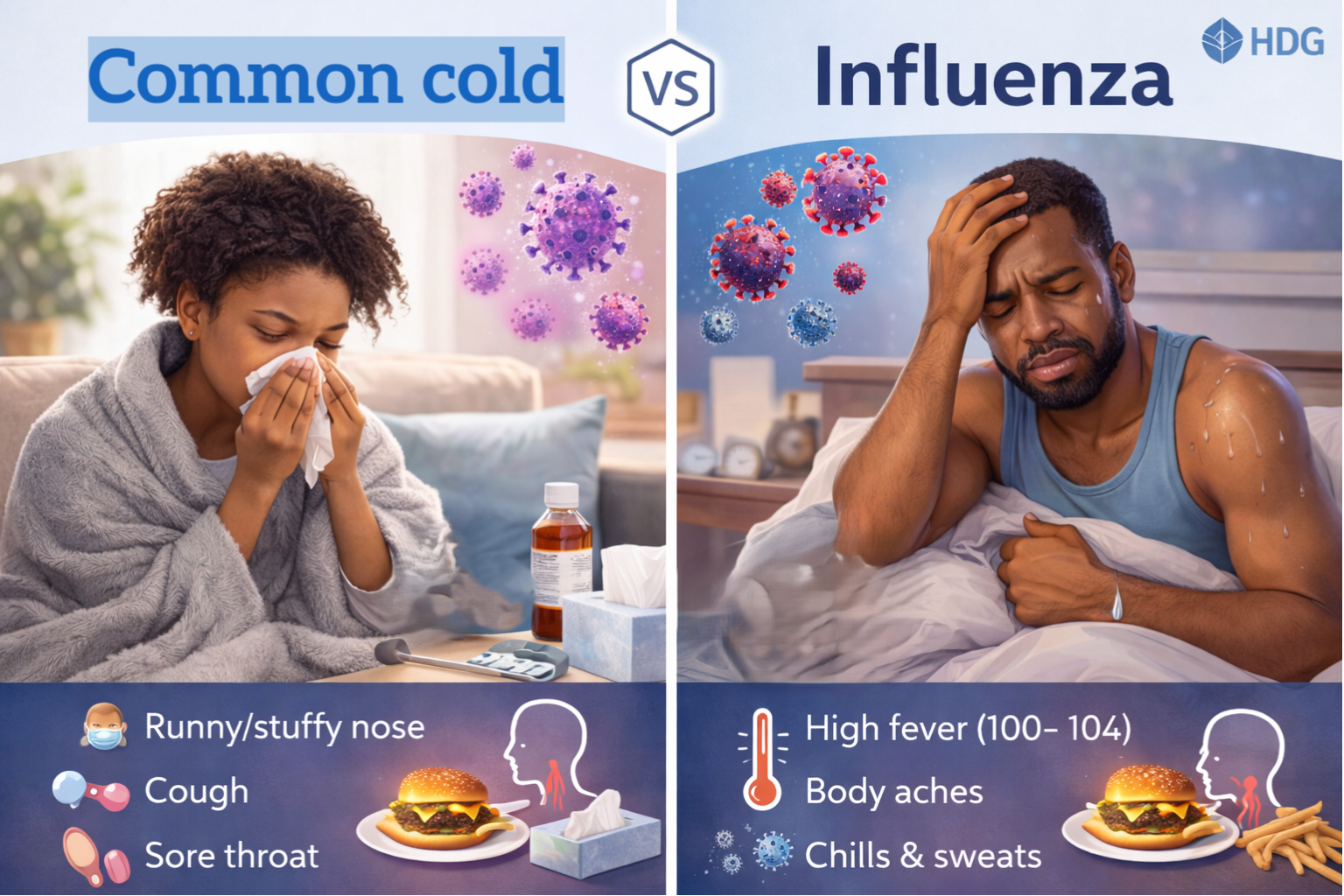
Common cold symptoms include:
• runny or blocked nose
• sneezing
• sore throat
• cough
• mild fever
• headache
• mild fatigue
Most people recover within 7–10 days.
What Is the Flu?
The flu (influenza) is caused by influenza viruses.
Unlike the common cold, flu symptoms often appear suddenly and can be more severe.
Common flu symptoms include:
• sudden high fever
• body aches
• severe fatigue
• headache
• cough
• sore throat
• chills
Flu can sometimes lead to complications, especially in children, elderly individuals, and people with chronic illnesses.
Key Differences Between Flu and the Common Cold
1️⃣ Symptom Severity
Common cold symptoms are usually mild.
Flu symptoms are often more intense and can cause significant weakness.
2️⃣ Onset of Symptoms
Cold symptoms develop gradually over a few days.
Flu symptoms usually appear suddenly.
3️⃣ Fever Pattern
Flu commonly causes high fever.
Cold-related fever is usually mild or may not occur.
4️⃣ Body Weakness
Flu often causes severe fatigue and body aches.
Cold symptoms usually cause only mild tiredness.
When Should You See a Doctor?
Seek medical care if you experience:
• persistent high fever
• severe weakness
• difficulty breathing
• chest pain
• confusion
• symptoms that worsen instead of improving
Young children, elderly individuals, and people with chronic illnesses should seek care earlier.
Final Advice
Both the flu and the common cold are caused by viruses, but the flu is usually more severe.
Rest, hydration, and supportive care help most people recover.
However, severe symptoms should be evaluated by a healthcare professional.
Medical References
• World Health Organization – Influenza Guidelines
• CDC – Flu vs Cold Information
• National Institutes of Health – Respiratory Virus Information
Medical Disclaimer
This article is for educational purposes only and is not a substitute for professional medical advice, diagnosis, or treatment.
Always consult a qualified healthcare professional if you have symptoms or concerns about your health.