Flu (Influenza): Signs, Causes and When Person Suppose See Doctor
Read in: English | Pidgin
Flu, wey dem also call influenza, na viral infection wey affect the nose, throat, and lungs.
The virus dey spread easily from person to person through coughing, sneezing, or close contact.
Although many people recover within one week, flu fit sometimes cause serious illness, especially for children, elderly people, and people wey get chronic illness.
Understanding flu symptoms fit help person recognize the infection early.
Wetin Cause Flu?
Flu na influenza virus cause am.
The virus dey spread through droplets when infected person cough, sneeze, or talk.
Person fit also catch flu by touching surfaces wey virus dey and then touching nose, mouth, or eyes.
Flu outbreaks often happen during certain seasons.
Common Signs of Flu
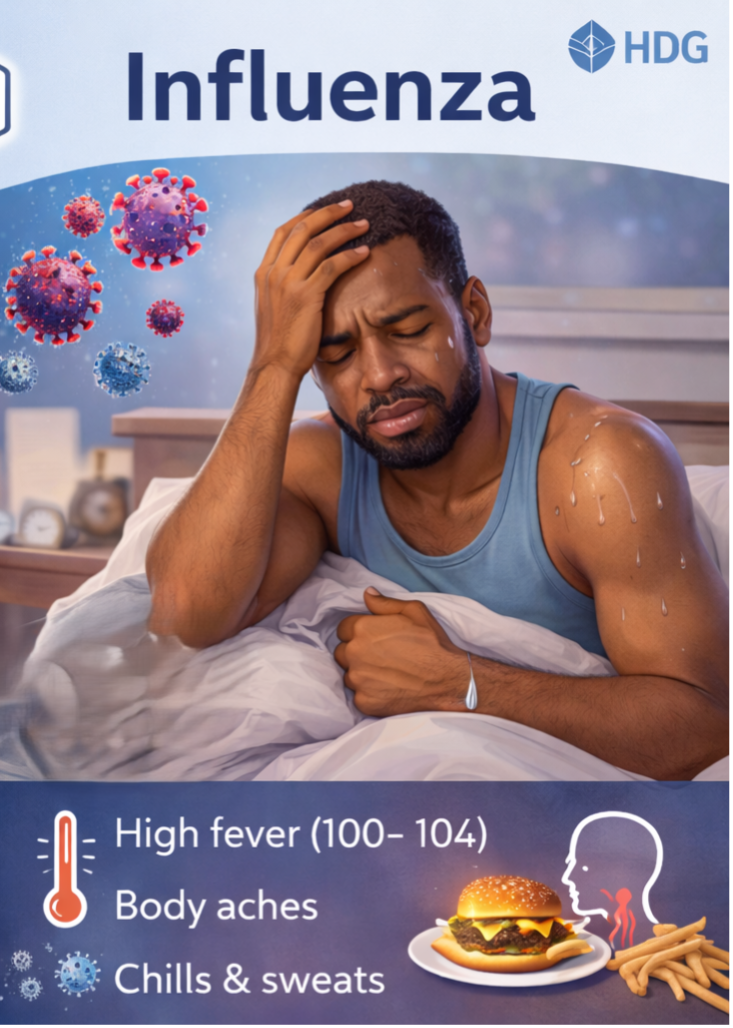
Flu symptoms usually start suddenly and fit include:
• high fever
• headache
• body pain
• tiredness or weakness
• cough
• sore throat
• chills
• runny or blocked nose
Some people fit also experience vomiting or nausea.
Most symptoms improve within 5–7 days, but tiredness fit last longer.
Difference Between Flu and Common Cold
Flu symptoms usually dey dey more serious than common cold.
Flu often dey start suddenly with high fever and body pain.
Cold symptoms usually develop gradually and milder.
You fit read more here:
Flu vs Common Cold: How to Tell the Difference
Who Fit Get Serious Flu Illness?
Some people fit develop more serious flu complications, including:
• children
• elderly people
• pregnant women
• people wey get chronic illness
• people wey immune system weak
These people suppose seek medical advice earlier.
When Person Suppose See Doctor?
Seek medical help if:
• high fever persist
• breathing wahala
• chest pain happen
• serious weakness develop
• confusion occur
Early medical care fit prevent complications.
Final Advice
Flu na common viral infection wey most people recover from with rest and fluids.
But severe symptoms suppose make person go check with doctor.
Medical evaluation important if the symptoms dey worsen or no get better.
Medical References
• World Health Organization – Influenza Guidelines
• CDC – Influenza Information
• National Institutes of Health – Respiratory Virus Guidelines
Medical Disclaimer
This article na for education purpose only.
E no replace medical advice from qualified health professional.
If symptoms serious or persistent, make trained health worker examine you.