Read in: English | Pidgin English
🩺 Medically reviewed by the Health Decoded Guide Editorial Team · Last reviewed: July 2026
🟦 Quick Summary
Chest pain can have many different causes.
Sometimes it is caused by heartburn or a panic attack. Other times, it may be a sign of a heart attack.
Because these conditions can produce similar symptoms, it is not always possible to tell the difference on your own.
If you have new, severe or unexplained chest pain, seek emergency medical care immediately.
| Feature | Heart Attack | Heartburn | Panic Attack |
|---|---|---|---|
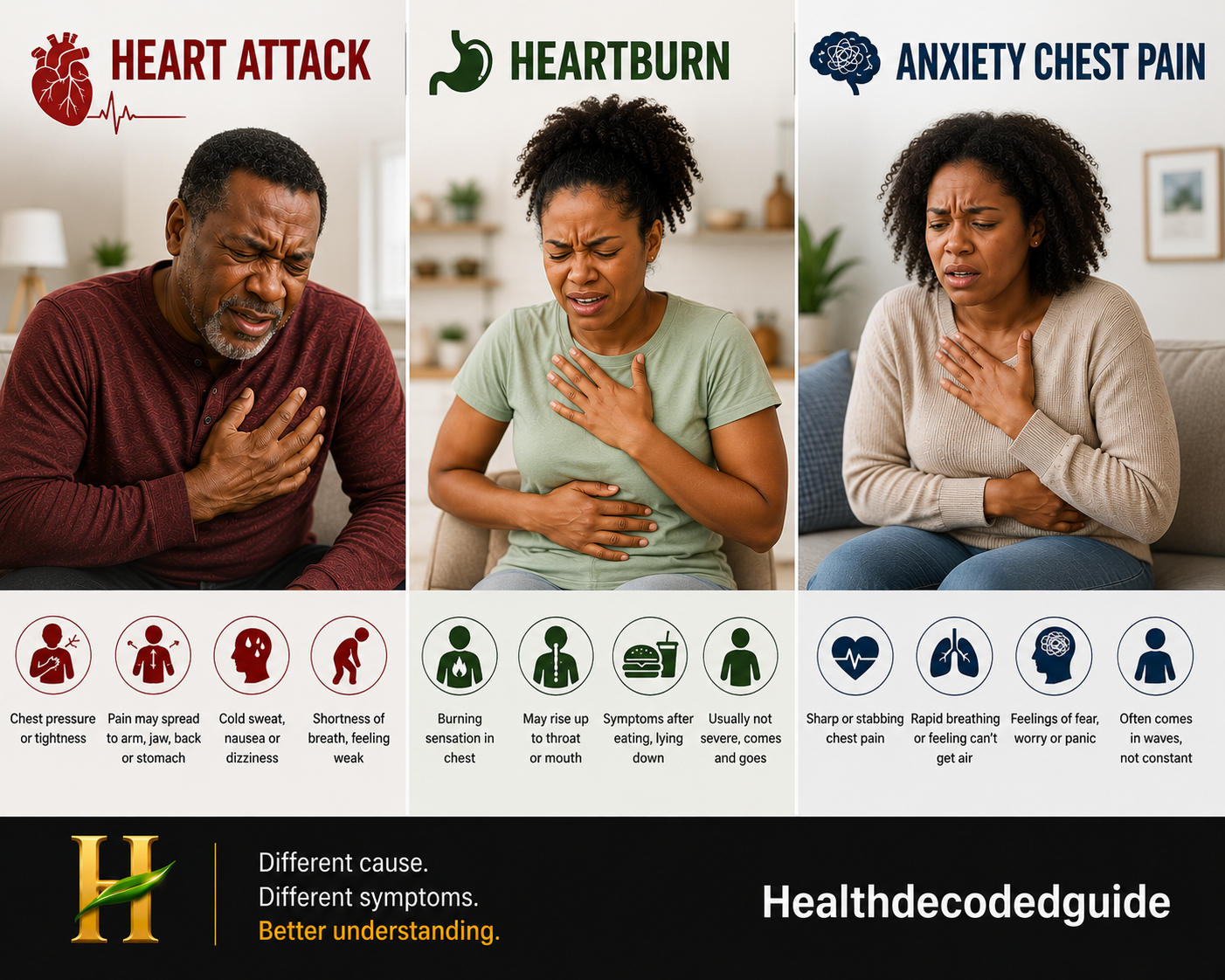
| Cause | Blocked blood flow to the heart | Stomach acid flowing back into the food pipe | Sudden episode of intense fear or anxiety |
| Type of pain | Heavy pressure, squeezing or tightness | Burning pain | Tightness, discomfort or sharp pain |
| Pain spreads to arm, jaw or back | Common | Uncommon | Rare |
| After eating | Uncommon | Common | No |
| Fast heartbeat | May occur | Rare | Very common |
| Shortness of breath | Common | Sometimes | Common |
| Sweating | Common | Rare | Common |
| Main treatment | Emergency medical care | Acid-reducing treatment and lifestyle measures | Assessment and treatment for anxiety after serious medical conditions have been excluded |
🟦 What Is a Heart Attack?
A heart attack occurs when blood flow to part of the heart muscle becomes blocked.
Without prompt treatment, the heart muscle can become permanently damaged.
Common symptoms include:
- Heavy pressure, squeezing or tightness in the chest
- Pain spreading to the arm, jaw, neck, shoulder or back
- Shortness of breath
- Cold sweats
- Nausea or vomiting
- Dizziness or light-headedness
A heart attack is a medical emergency.
🟦 What Is Heartburn?
Heartburn, also called acid reflux, occurs when stomach acid flows back into the oesophagus (food pipe).
This often causes a burning sensation behind the breastbone.
Common symptoms include:
- Burning chest pain
- A sour or bitter taste in the mouth
- Symptoms after eating
- Pain that becomes worse when lying down or bending over
Many people improve with lifestyle changes or acid-reducing medicines.
🟦 What Is a Panic Attack?
A panic attack is a sudden episode of intense fear or anxiety.
Although it is not usually life-threatening, it can cause physical symptoms that closely resemble a heart attack.
Common symptoms include:
- Chest tightness or pain
- A racing heartbeat
- Shortness of breath
- Sweating
- Dizziness
- Trembling
- Tingling in the hands, feet or face
- Feeling that something terrible is about to happen
🟦 Why Are They Often Confused?
Heart attacks, heartburn and panic attacks can all cause chest discomfort.
They may also cause shortness of breath, sweating or nausea.
Because the symptoms overlap, healthcare professionals may need to perform an examination and additional tests to identify the cause.
🟦 How Do Doctors Tell the Difference?
Healthcare providers consider:
- Your symptoms
- Your medical history
- Risk factors for heart disease
- Whether symptoms started after eating or during emotional stress
Tests may include:
- Electrocardiogram (ECG)
- Blood tests
- Heart monitoring
- Additional investigations if needed
🟦 When Should You Seek Emergency Medical Care?
Seek emergency medical care immediately if you develop:
- New or severe chest pain
- Chest pressure or tightness that does not improve
- Pain spreading to the arm, jaw, neck or back
- Severe shortness of breath
- Fainting
- Persistent dizziness
- Cold sweats
- Nausea with chest pain
It is always safer to have chest pain assessed than to assume it is caused by anxiety or heartburn.
🟦 Key Takeaway
Chest pain is not always caused by a heart attack, but it should never be ignored.
Heartburn and panic attacks can produce symptoms that feel similar, making it difficult to tell the difference without medical assessment.
If you are unsure what is causing your chest pain, seek emergency medical care immediately.
🔗 Related Articles
📚 Medical References
- American Heart Association (AHA). Heart Attack Symptoms.
- National Heart, Lung, and Blood Institute (NHLBI). Heart Attack.
- National Institute of Mental Health (NIMH). Panic Disorder.
- NHS. Heartburn and Acid Reflux.
⚠️ Medical Disclaimer
This article is for educational purposes only and is not a substitute for professional medical advice, diagnosis or treatment.
Always seek advice from a qualified healthcare professional if you have concerns about your health.