Read in: English | Pidgin
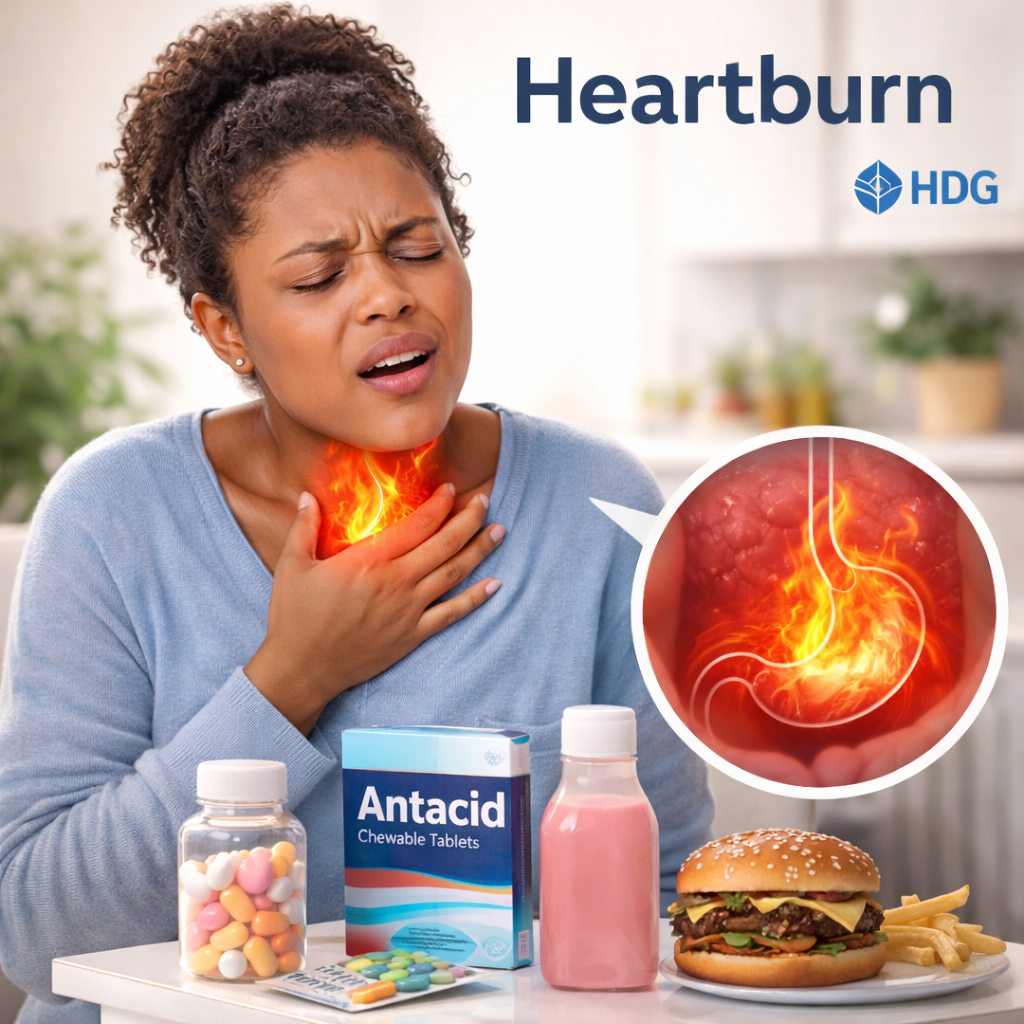
Heartburn is a common condition that causes a burning sensation in the chest.
Despite its name, heartburn is usually not related to the heart (read more here).
It occurs when stomach acid flows backward into the esophagus (the tube that connects the mouth to the stomach).
This irritation can cause discomfort or burning in the chest or throat.
Understanding the symptoms helps people recognize the condition and know when medical care may be needed.
What Causes Heartburn?
Heartburn usually occurs when stomach acid moves upward into the esophagus.
Several factors may increase the likelihood of acid reflux.
1️⃣ Weak Lower Esophageal Muscle
A small muscle at the bottom of the esophagus normally prevents stomach acid from flowing backward.
If this muscle becomes weak or relaxes too often, acid can move upward and cause heartburn.
2️⃣ Certain Foods and Drinks
Some foods can trigger acid reflux.
Common triggers include:
• spicy foods
• fatty foods
• caffeine
• chocolate
• alcohol
Large meals may also worsen symptoms.
3️⃣ Lying Down After Eating
Heartburn often becomes worse when lying down shortly after eating because stomach acid can move more easily into the esophagus.
4️⃣ Other Risk Factors
Other factors that may contribute to heartburn include:
• obesity
• pregnancy
• smoking
• certain medications
Common Symptoms of Heartburn
Symptoms may include:
• burning sensation in the chest
• burning feeling in the throat
• sour or bitter taste in the mouth
• discomfort after eating
• symptoms that worsen when lying down
Heartburn can sometimes feel similar to chest pain, which may cause concern (read more here).
When Should You See a Doctor?
Medical evaluation may be necessary if:
• heartburn occurs frequently
• symptoms persist for several weeks
• swallowing becomes difficult
• unexplained weight loss occurs
• severe chest pain develops
Persistent reflux symptoms may require medical treatment.
Final Advice
Occasional heartburn is common and often improves with lifestyle changes such as avoiding trigger foods and not lying down immediately after meals.
However, persistent or severe symptoms should be evaluated by a healthcare professional.
Early medical assessment helps prevent complications.
Medical References
• American College of Gastroenterology – Acid Reflux Guidelines
• World Health Organization – Digestive Disorders
• National Institutes of Health – Gastroesophageal Reflux Disease
Medical Disclaimer
This article is for educational purposes only and is not a substitute for professional medical advice, diagnosis, or treatment.
Always consult a qualified healthcare professional if you have persistent or concerning symptoms.