Information
Read in: English | Pidgin
Eye infections are common conditions that affect the surface of the eye or the surrounding tissues.
One of the most common eye infections is conjunctivitis, often called pink eye.
The infection causes inflammation of the thin membrane covering the white part of the eye and the inner eyelids.
Most eye infections are mild, but some may require medical evaluation and treatment.
Understanding the symptoms helps people know when medical care may be needed.
What Causes Eye Infections?
Eye infections are a common cause of red or irritated eyes, but redness can also occur from allergies, dry eyes, or other eye conditions. Eye infections can occur when bacteria, viruses, or irritants affect the eye.
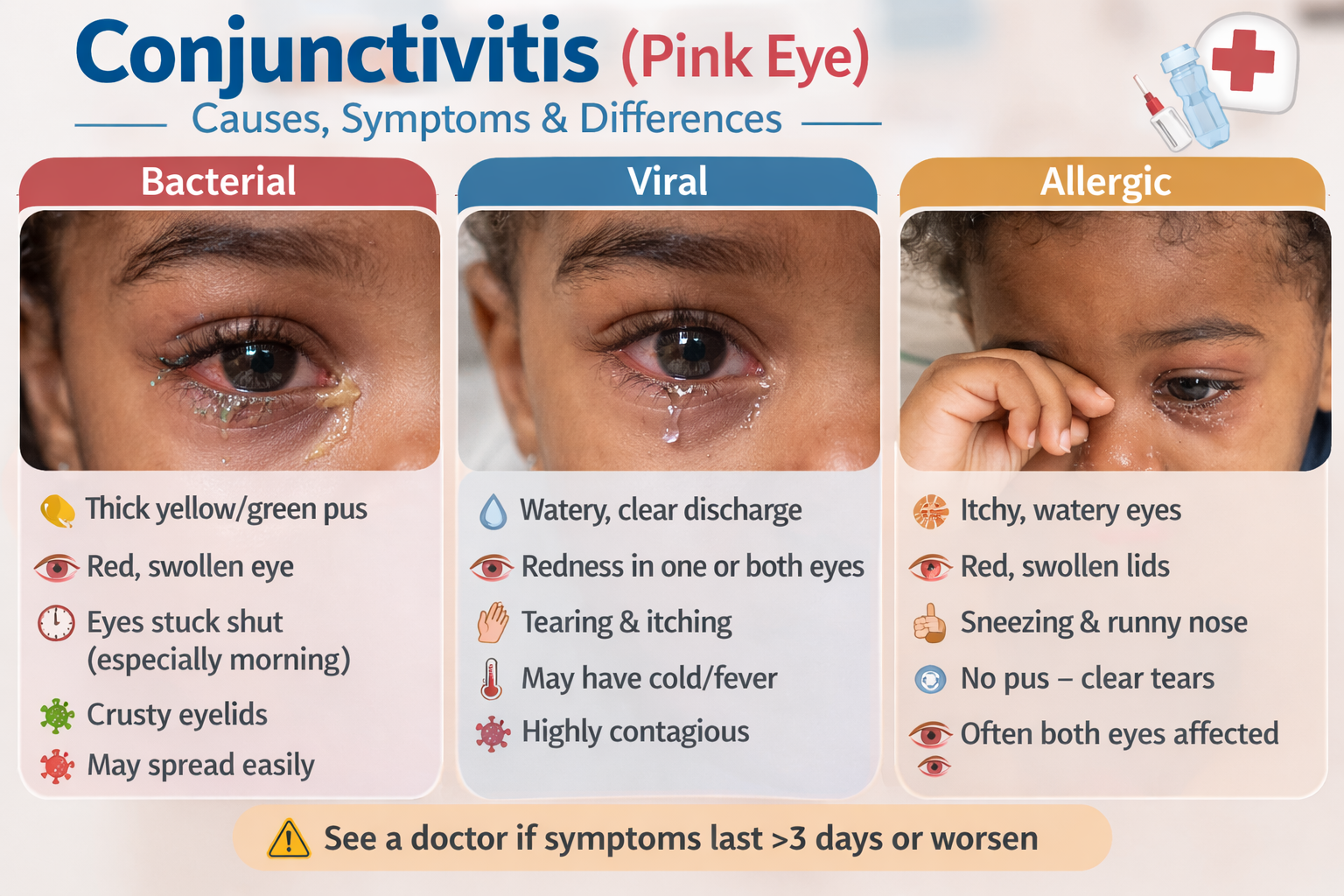
1️⃣ Bacterial Infection
Bacteria can infect the eye and cause redness, swelling, and discharge.
Bacterial eye infections often produce thick yellow or green discharge from the eye.
2️⃣ Viral Infection
Viruses are another common cause of eye infection.
Viral conjunctivitis may occur during cold or flu infections and often spreads easily from one person to another.
3️⃣ Allergic Reactions
Allergies to dust, pollen, or other irritants can also cause eye inflammation.
This type of eye irritation usually causes itching and watery eyes.
4️⃣ Poor Eye Hygiene
Touching the eyes with unwashed hands or sharing contaminated towels, makeup, or contact lenses can increase the risk of infection.
Common Symptoms of Eye Infection
Symptoms may include:
• red or pink eyes
• itching or irritation
• watery eyes
• discharge from the eye
• crusting around the eyelids
• sensitivity to light
Sometimes one eye is affected first and the infection may spread to the other eye.
When Should You See a Doctor?
Medical evaluation is important if:
• eye pain becomes severe
• vision becomes blurred
• swelling becomes worse
• symptoms last more than a few days
• thick discharge continues
Seek urgent medical care if you experience:
• sudden loss of vision
• flashes of light
• dark shadows or curtain over vision
• severe eye pain
• strong sensitivity to light
Early medical care helps prevent complications and protect vision.
Final Advice
Most mild eye infections improve with proper hygiene and rest.
Avoid touching the eyes and wash hands frequently to prevent spreading the infection.
However, persistent lasting longer than 4-5 days or severe symptoms should be evaluated by a healthcare professional.
Medical References
• World Health Organization – Eye Health Guidelines
• CDC – Conjunctivitis Information
• American Academy of Ophthalmology – Eye Infection Guidance
Medical Disclaimer
This article is for educational purposes only and is not a substitute for professional medical advice, diagnosis, or treatment.
Always consult a qualified healthcare professional if you have symptoms or concerns about your health.