

Read in: English | Pidgin English
🩺 Medically reviewed by the Health Decoded Guide Editorial Team · Last reviewed: July 2026
🔎 Quick Summary
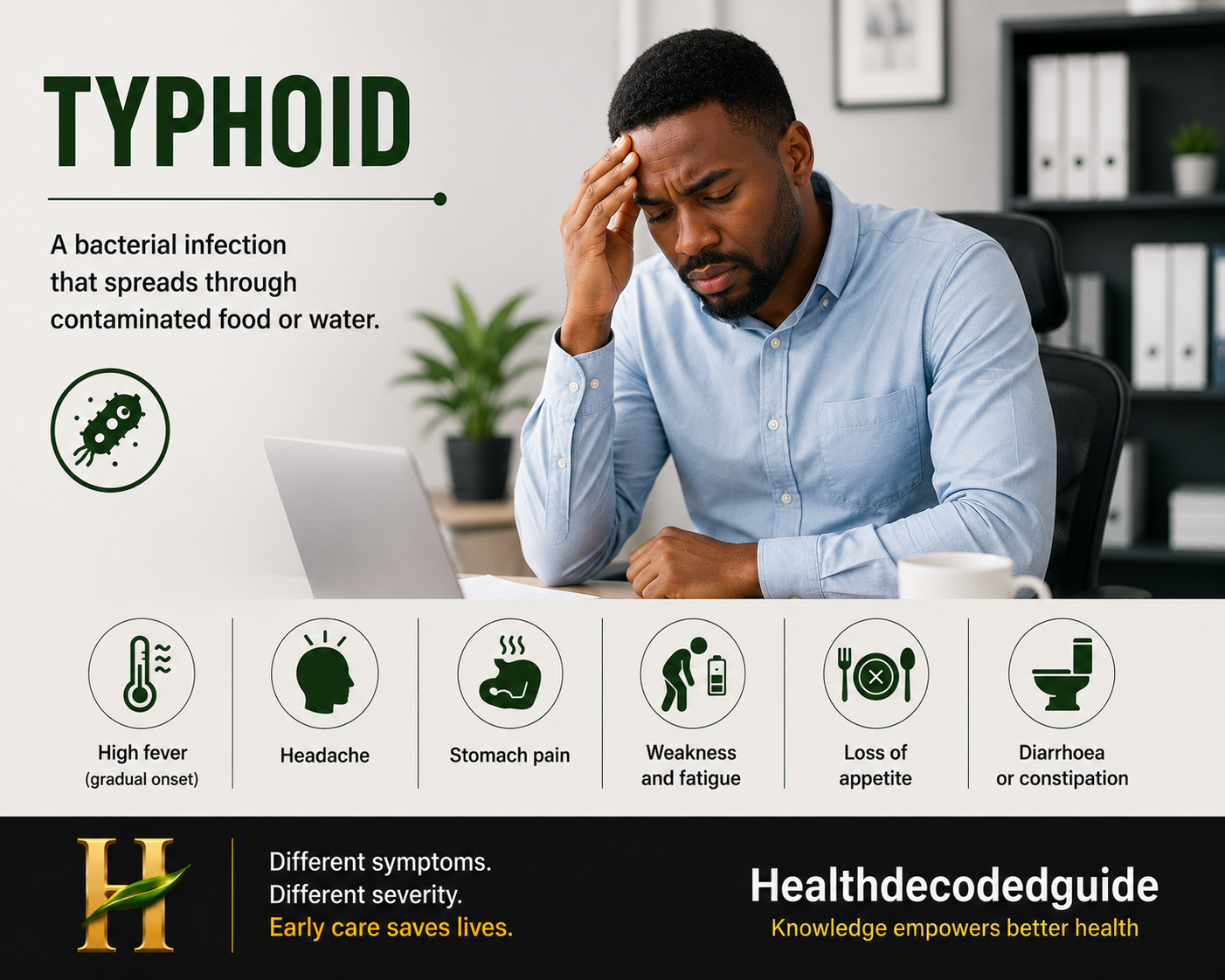
Typhoid fever is a bacterial infection caused by Salmonella Typhi. It usually spreads through contaminated food or water and commonly causes prolonged fever, abdominal pain and weakness.
Early diagnosis and antibiotic treatment are important to prevent serious complications.
1️⃣ Introduction
Typhoid fever is a serious bacterial infection that remains common in many parts of Africa, Asia and other regions with limited access to clean water and adequate sanitation.
Although the illness can become severe if left untreated, most people recover completely with early diagnosis, the correct antibiotics and supportive care.
Recognizing the symptoms early can help prevent complications and reduce the spread of infection.
2️⃣ How the condition develops
Typhoid fever is caused by the bacterium Salmonella Typhi.
Most people become infected after consuming contaminated food or drinking contaminated water.
After entering the body:
• the bacteria pass through the intestines
• they enter the bloodstream
• they spread to different organs, including the liver, spleen and bone marrow
👉 This widespread infection causes the prolonged fever and many of the symptoms associated with typhoid fever.
3️⃣ Early symptoms
Typhoid symptoms usually develop gradually over several days.
Common symptoms include:
• persistent high fever
• weakness and fatigue
• headache
• abdominal pain
• loss of appetite
• constipation or diarrhea
• dry cough
• muscle and body aches
Some people may also develop:
• small, rose-coloured spots on the chest or abdomen
• nausea or vomiting
👉 Unlike many viral illnesses, typhoid fever often continues to worsen without appropriate treatment.
4️⃣ Why does typhoid cause these symptoms?
The bacteria spread through the bloodstream and trigger the body's immune response.
As the infection progresses:
• inflammation develops throughout the body
• the intestines become irritated
• the digestive system may not function normally
👉 This is why people with typhoid often experience prolonged fever, abdominal discomfort, weakness and digestive symptoms.
5️⃣ How is typhoid different from other illnesses?
Typhoid fever can resemble several other infections, especially in regions where malaria is common.
For example:
• malaria often causes fever with chills and sweating cycles
• dengue fever commonly causes severe muscle and joint pain
• flu(influenza) usually causes cough, sore throat and other respiratory symptoms
👉 Because these illnesses can overlap, laboratory testing is important to confirm the correct diagnosis.
Related: Malaria vs Typhoid: How to Tell the Difference
6️⃣ When it becomes dangerous
🚨 Seek urgent medical care if you develop:
• severe abdominal pain
• persistent vomiting
• confusion or extreme drowsiness
• difficulty drinking fluids
• signs of dehydration
• blood in the stool
• a very high fever that is not improving
⚠️ Untreated typhoid fever can lead to intestinal bleeding or a hole in the intestine (intestinal perforation), both of which are life-threatening emergencies.
7️⃣ Treatment
Typhoid fever is treated with antibiotics prescribed by a healthcare professional.
Treatment may also include:
• drinking plenty of fluids
• getting adequate rest
• treating fever if needed
👉 Always complete the full course of antibiotics, even if you begin to feel better before the medicine is finished.
⚠️ Avoid self-medicating without proper testing and medical advice, as incorrect treatment can delay recovery and contribute to antibiotic resistance.
8️⃣ Prevention
Typhoid fever can often be prevented through good hygiene and safe food practices.
You can reduce your risk by:
• drinking clean, treated or boiled water
• washing your hands regularly with soap and water
• eating properly cooked food
• washing fruits and vegetables before eating them
• avoiding food and water from unsafe sources
• getting vaccinated if travelling to or living in high-risk areas
👉 Prevention is one of the most effective ways to reduce the spread of typhoid fever.
9️⃣ Diagnosis/Testing
Healthcare professionals may diagnose typhoid using:
• blood tests
• stool tests
• urine tests in some cases
• clinical examination and medical history
👉 Early testing helps ensure the correct treatment is started as soon as possible.
🟢 Important message
Persistent fever should not automatically be assumed to be malaria.
Typhoid fever is another important cause of prolonged fever, particularly in areas where sanitation and access to clean water are limited.
Early diagnosis, appropriate antibiotics and completing the full treatment are essential for a full recovery and to reduce the risk of complications.
FAQ
How does typhoid fever spread?
Typhoid spreads through contaminated food or water containing Salmonella Typhi. It can also spread through poor hand hygiene after using the toilet.
Can typhoid go away on its own?
Some mild infections may improve, but typhoid fever usually requires antibiotic treatment. Without proper treatment, serious complications can develop.
Can I get typhoid more than once?
Yes. Previous infection does not provide lifelong protection, so a person can become infected again.
How long does typhoid treatment take?
Most people begin to improve within a few days after starting antibiotics, but the full course of treatment should always be completed as prescribed.
How do I know if I have typhoid or malaria?
Both illnesses can cause fever and weakness. However, they are caused by different organisms and require different treatments. Testing is the only reliable way to distinguish between them.
🔗 Related Health Topics
• Malaria
• Dengue Fever
• Fever
• Dehydration
• Malaria vs Typhoid: How to Tell the Difference
• Malaria vs Dengue: How to Tell the Difference
📚 Medical References
• World Health Organization (WHO) – Typhoid: https://www.who.int/news-room/fact-sheets/detail/typhoid
• Centers for Disease Control and Prevention (CDC) – Typhoid Fever: https://www.cdc.gov/typhoid-fever/
• NHS (National Health Service, UK) – Typhoid fever: https://www.nhs.uk/conditions/typhoid-fever/
• Nigerian Centre for Disease Control (NCDC) – Typhoid information: https://ncdc.gov.ng
• BMJ Best Practice – Typhoid fever: https://bestpractice.bmj.com
• UpToDate – Enteric (Typhoid and Paratyphoid) Fever: https://www.uptodate.com
⚠️ Medical Disclaimer
This article is for educational purposes only and does not replace professional medical advice, diagnosis or treatment.
If you have symptoms of typhoid fever or persistent fever, consult a qualified healthcare professional promptly for proper testing and treatment.