Read in: English | Pidgin
🔎 Quick Summary
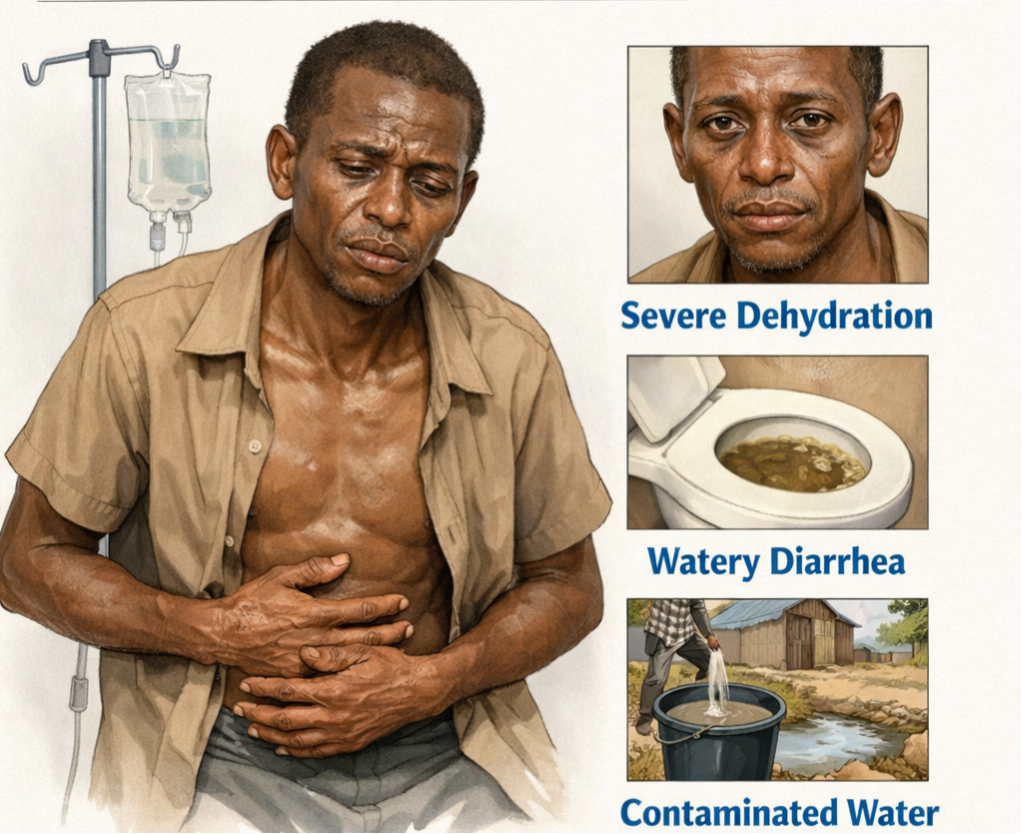
Dehydration occurs when the body loses more fluids than it takes in, which can affect normal body function.
1️⃣ Introduction
Dehydration occurs when the body does not have enough fluid to function properly.
It can happen due to illness, heat, or inadequate fluid intake.
While mild dehydration is common, severe dehydration can be dangerous.
2️⃣ How it develops
The body constantly loses water through:
• sweating
• urination
• breathing
Dehydration occurs when fluid loss exceeds intake.
Common causes include:
• diarrhea
• vomiting
• fever
• excessive sweating
3️⃣ Early symptoms
• thirst
• dry mouth
• fatigue
• dizziness
4️⃣ Symptom explanation
As dehydration worsens:
• blood volume decreases
• circulation is affected
• organs receive less oxygen
5️⃣ Comparison note
Dehydration often occurs with:
• diarrhea
• cholera
• food poisoning
6️⃣ When it becomes dangerous
Seek urgent care if:
• confusion
• no urination
• fainting
• severe weakness
7️⃣ Prevention / management
• drink fluids regularly
• use ORS during illness
• avoid excessive heat
8️⃣ Diagnosis
Doctors assess:
• symptoms
• hydration status
• blood tests (if needed)
9️⃣ Important message
Dehydration is preventable.
Early fluid replacement can prevent complications.
🔟 FAQ
🔹 What is dehydration?
Loss of body fluids.
🔹 Who is at risk?
Children and elderly.
🔹 Can dehydration be serious?
Yes, if untreated.
Medical References
• World Health Organization (WHO) – Dehydration and Fluid Management
• Centers for Disease Control and Prevention (CDC) – Dehydration and Heat-Related Illness
• National Health Service (NHS UK) – Dehydration Overview
• Mayo Clinic – Dehydration Symptoms and Causes
• National Institute for Health and Care Excellence (NICE) – Fluid and Electrolyte Management
• Peer-reviewed clinical guidelines on fluid balance and electrolyte disorders
Medical Disclaimer
This article is for educational purposes only and does not replace professional medical advice, diagnosis, or treatment.
Always consult a qualified healthcare professional if you have symptoms or concerns about your health.