Read in: English | Pidgin
🔎 Quick Summary
Diarrhea is the frequent passage of loose or watery stool, often caused by infection, and can lead to dehydration if fluids are not replaced.
1️⃣ Introduction
Diarrhea is one of the most common symptoms affecting the digestive system.
It can occur in people of all ages and is often caused by infections, food-related issues, or digestive disturbances.
While many cases are mild and resolve on their own, some can lead to serious complications — especially dehydration.
Understanding diarrhea helps you know when it is harmless and when it needs medical attention.
2️⃣ How the condition develops
Diarrhea occurs when the intestines cannot properly absorb water.
Instead, excess fluid remains in the stool, making it loose or watery.
This can happen due to:
• infections (bacteria, viruses, parasites)
• food poisoning
• irritation of the gut
• certain medications
The body may increase bowel movements to remove harmful substances.
3️⃣ Early symptoms
Common symptoms include:
• frequent loose stools
• urgency to pass stool
• stomach cramps
• bloating
• nausea
Some people may also experience mild weakness.
4️⃣ Symptom explanation
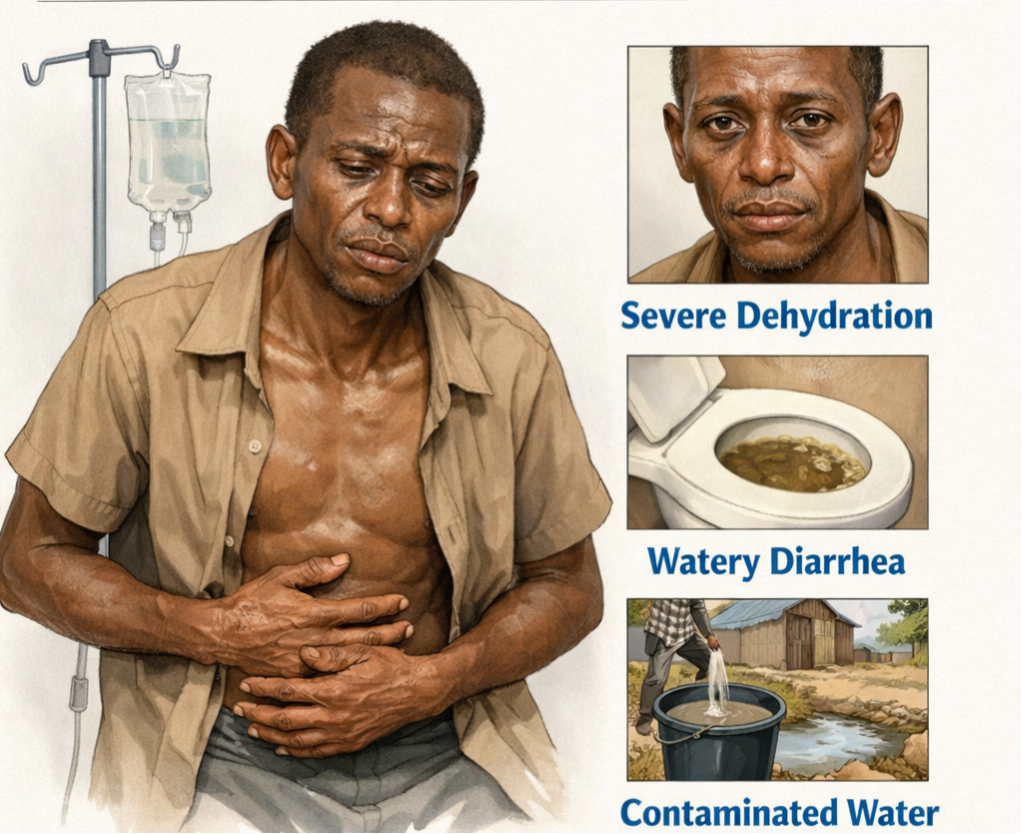
Diarrhea causes the body to lose water and important salts.
This can lead to dehydration, especially if diarrhea is frequent.
Signs of dehydration include:
• thirst
• dizziness
• dry mouth
• reduced urination
• weakness
Children and elderly individuals are more vulnerable.
5️⃣ Comparison note
Diarrhea may occur in many conditions such as:
• Food poisoning
• Cholera
• Gastroenteritis
However, cholera usually causes more severe watery diarrhea, while mild infections may resolve quickly.
For comparison:
🔹 Cholera vs Gastroenteritis – Symptoms Compared
🔹 Cholera vs Food Poisoning – Key Differences
6️⃣ When it becomes dangerous
Seek medical care if:
• diarrhea lasts more than 2–3 days
• signs of dehydration appear
• there is blood in stool
• severe abdominal pain occurs
• fever is high or persistent
7️⃣ Prevention / management
To reduce risk:
• wash hands regularly
• drink clean water
• eat properly cooked food
• maintain food hygiene
If diarrhea occurs:
• drink fluids frequently
• use oral rehydration solution (ORS)
• rest
• avoid heavy meals
8️⃣ Diagnosis / testing
Doctors may assess:
• symptoms
• medical history
• stool tests (if needed)
9️⃣ Important message
Most diarrhea cases are mild.
However, dehydration can become serious if not treated early.
Pay attention to warning signs and seek care when needed.
🔟 FAQ
🔹 Can diarrhea stop on its own?
Yes, many cases resolve within a few days.
🔹 Why is dehydration dangerous?
It can affect blood pressure, kidney function, and overall health.
🔹 When should I worry?
If diarrhea is severe, persistent, or accompanied by dehydration.
🔹 Can children get dehydrated quickly?
Yes, children are at higher risk.
🔹 Should I eat during diarrhea?
Light meals are usually recommended if tolerated.
Related Health Topics
🔹 Food Poisoning – Causes and Treatment
🔹 Cholera – Symptoms and Causes
🔹 Dehydration – Warning Signs
🔹 Gastroenteritis – Symptoms
Medical References
• World Health Organization – Diarrheal Disease
• CDC – Diarrhea Guidelines
• UNICEF – ORS and Hydration
• Peer-reviewed gastroenterology guidelines
Medical Disclaimer
This article is for educational purposes only and does not replace professional medical advice.