Read in: English | Pidgin English
🩺 Medically reviewed by the Health Decoded Guide Editorial Team · Last reviewed: July 2026
🔎 Quick Summary
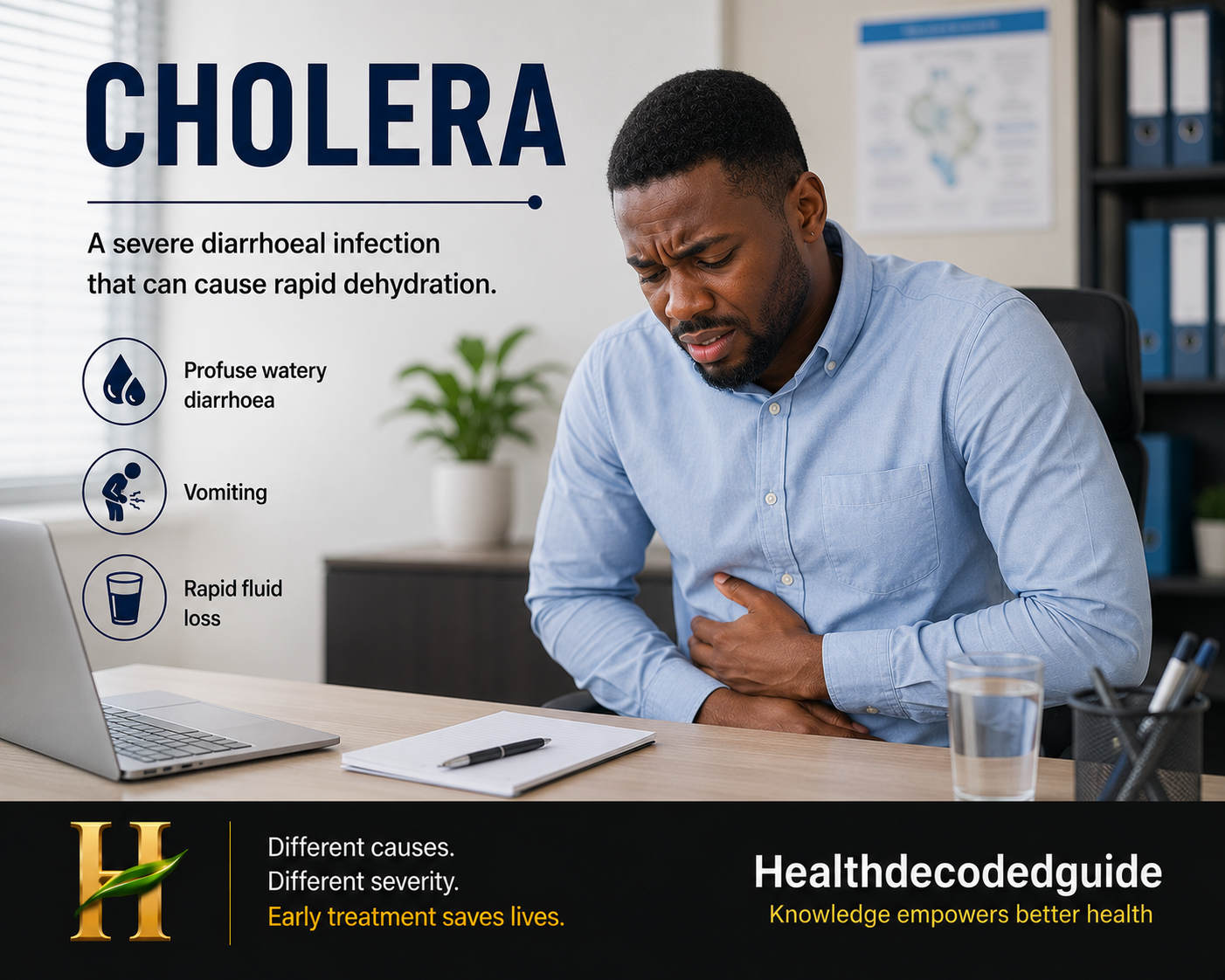
Cholera is a bacterial infection that causes sudden severe watery diarrhea and vomiting, leading to rapid dehydration if fluids are not replaced quickly.
Early treatment with oral rehydration solution (ORS) and medical care can save lives.
1️⃣ Introduction
Cholera is an infectious disease that affects the digestive system.
It is caused by bacteria called Vibrio cholerae, which spreads mainly through contaminated water or food.
Cholera can cause sudden diarrhea and vomiting, leading to rapid loss of fluids and body salts.
Without treatment, dehydration can develop quickly and become life-threatening.
Understanding the early symptoms helps people seek treatment early.
2️⃣ How the condition develops
Cholera bacteria enter the body through contaminated food or water.
Inside the small intestine, the bacteria produce a toxin that causes the intestine to release large amounts of water and salts into the bowel.
This results in profuse watery diarrhea, sometimes described as “rice-water stool.”
Large amounts of fluid and electrolytes are lost in a short time.
If these fluids are not replaced quickly, dehydration develops.
3️⃣ Early symptoms
Symptoms of cholera often begin suddenly.
Common early symptoms include:
• sudden watery diarrhea
• nausea and vomiting
• stomach cramps
• weakness
• intense thirst
• dizziness
• leg cramps
These symptoms may worsen rapidly if fluid loss continues.
4️⃣ Symptom explanation
The most dangerous effect of cholera is severe dehydration.
When the body loses too much fluid, symptoms may include:
• extreme thirst
• dry mouth
• sunken eyes
• little or no urine
• fast heartbeat
• severe weakness
Children and older adults may become dehydrated faster.
👉 Severe dehydration—not the bacteria itself—is the main reason cholera becomes life-threatening.
5️⃣ How cholera differs from other illnesses
Cholera symptoms can resemble other digestive infections such as:
• Food poisoning often causes vomiting first
• Gastroenteritis usually causes smaller amounts of diarrhoea
• Typhoid fever usually develops gradually with persistent fever
👉However, cholera typically causes sudden, large-volume watery diarrhoea that can lead to severe dehydration within hours.
6️⃣ When it becomes dangerous
Cholera becomes life-threatening when dehydration becomes severe.
Seek urgent medical care if someone has:
• continuous watery diarrhea
• persistent vomiting
• inability to drink fluids
• confusion or extreme weakness
• signs of severe dehydration
Rapid treatment with fluids can save lives.
7️⃣ Prevention and management
Preventing cholera focuses on clean water and hygiene.
Important prevention measures include:
• drinking clean or treated water
• washing hands regularly
• cooking food properly
• avoiding contaminated water sources
• improving sanitation
If symptoms develop:
• begin drinking ORS immediately
• continue drinking safe fluids if ORS is not available
• seek medical care as soon as possible
👉 Replacing lost fluids quickly is the most important treatment for cholera.
8️⃣ Diagnosis and testing
Doctors diagnose cholera using:
• stool tests to detect bacteria
• clinical symptoms
• outbreak or travel history
During outbreaks, doctors may begin treatment based on symptoms while waiting for test results.
Severe cases may require intravenous fluids and antibiotics.
🟢 Important message
Cholera can become serious quickly because of dehydration.
However, with early treatment and fluid replacement, most people recover.
Recognizing symptoms early helps prevent complications.
FAQ
What does "rice-water stool" mean?
Rice-water stool describes the pale, watery diarrhoea seen in cholera.
It contains large amounts of fluid and small flecks of mucus, making it resemble the water left after rinsing rice.
Can cholera start suddenly?
Yes. Symptoms can begin suddenly with severe watery diarrhea and vomiting.
Is cholera contagious from person to person?
Cholera usually spreads through contaminated food or water rather than direct contact.
Why is dehydration dangerous?
Severe dehydration can affect blood pressure, kidney function, and blood circulation.
Can cholera be treated at home?
Mild cases may improve with oral rehydration solution, but severe symptoms require medical care.
Can cholera kill within one day?
Yes. Without rapid fluid replacement, severe dehydration can develop within hours and become life-threatening.
Prompt treatment with oral rehydration solution (ORS) and medical care greatly improves survival.
Who is at higher risk of severe cholera?
Children, older adults, and people with poor access to clean water are at higher risk.
🔗 Related Health Topics
• Fever
• Diarrhea
• Food Poisoning
• Typhoid Fever
• Dehydration
• Abdominal Pain
• Severe Dehydration in Children
📚 Medical References
• World Health Organization (WHO) – Cholera: https://www.who.int/news-room/fact-sheets/detail/cholera
• Centers for Disease Control and Prevention (CDC) – About cholera: https://www.cdc.gov/cholera/about/index.html
• UNICEF – Cholera prevention: https://www.unicef.org/topics/cholera
• MSD Manual Consumer Version – Cholera: https://www.msdmanuals.com
• UpToDate – Cholera: https://www.uptodate.com
⚠️ Medical Disclaimer
This article is for educational purposes only and does not replace professional medical advice, diagnosis, or treatment. Always consult a qualified healthcare professional for medical concerns.