Read in: English | Pidgin
🔎 Quick Summary
Meningitis is a serious infection of the brain and spinal cord coverings that can become life-threatening if not treated quickly.
1️⃣ Introduction
Meningitis is a medical emergency that involves inflammation of the protective layers surrounding the brain and spinal cord (meninges).
It can affect both children and adults.
Some forms are mild, but others can progress rapidly and become life-threatening.
Early recognition is critical.
2️⃣ How the condition develops
Meningitis is usually caused by:
• bacterial infection (most dangerous)
• viral infection (more common, often milder)
• rarely fungi or other causes
The infection spreads through the bloodstream and reaches the brain coverings.
This leads to inflammation and increased pressure in the brain.
3️⃣ Early symptoms
Early symptoms may resemble common infections:
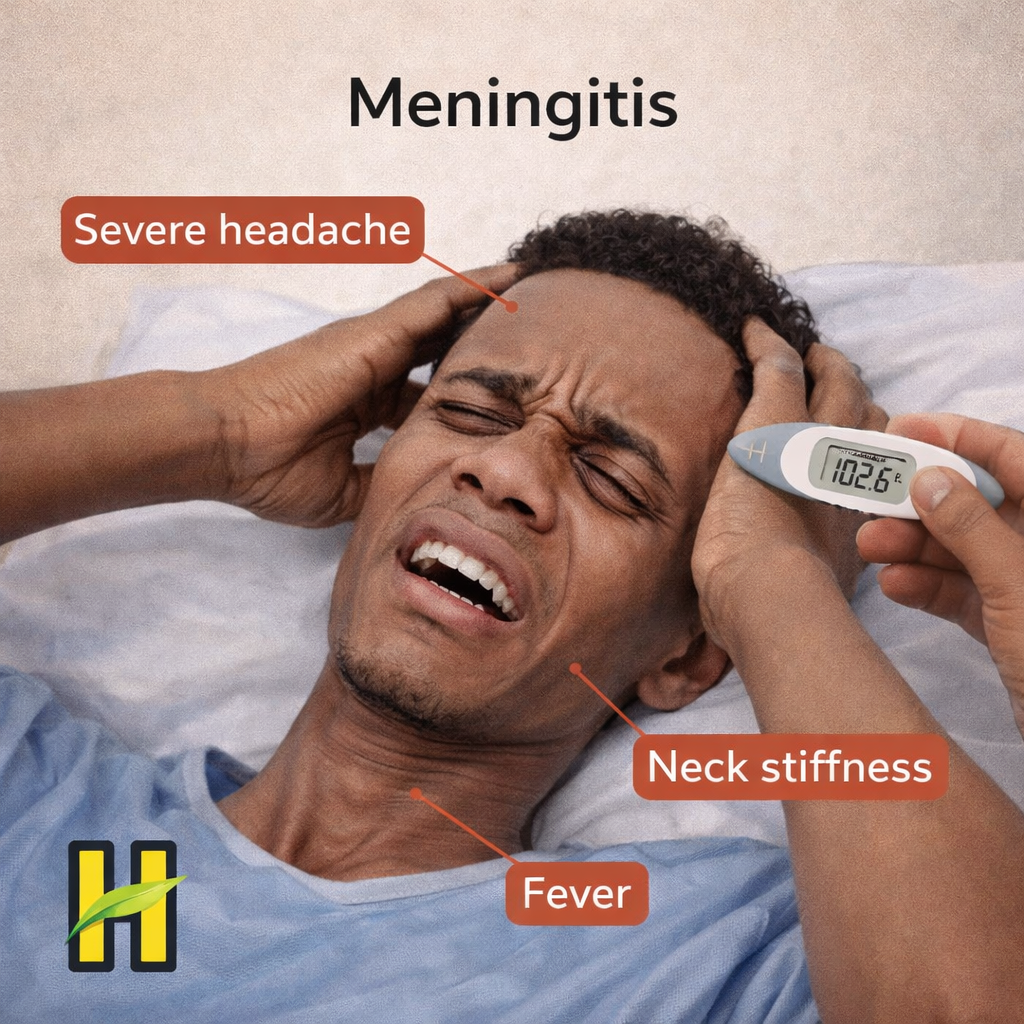
• fever
• headache
• nausea
• vomiting
• sensitivity to light
This is why meningitis can be missed early.
4️⃣ Symptom explanation
As inflammation increases, more specific symptoms appear:
• neck stiffness
• confusion
• difficulty concentrating
• drowsiness
• seizures
In children or infants:
• irritability
• poor feeding
• bulging soft spot (fontanelle)
5️⃣ Comparison note
Meningitis can initially look like:
• flu
• malaria (in endemic regions)
• severe infection
However, meningitis often includes:
• neck stiffness
• confusion
• light sensitivity
These are key warning signs.
6️⃣ When it becomes dangerous
Seek emergency care immediately if:
• neck stiffness
• confusion
• seizures
• difficulty waking up
• severe headache
• sensitivity to light
• rash (especially non-blanching rash)
⚠️ These signs can indicate bacterial meningitis, which can worsen quickly.
7️⃣ Prevention / management
Prevention includes:
• vaccination (very important)
• avoiding close contact with infected individuals
• good hygiene
Treatment depends on cause:
• bacterial → urgent antibiotics
• viral → supportive care
8️⃣ Diagnosis / testing
Doctors may perform:
• physical examination
• blood tests
• lumbar puncture (spinal fluid test)
This helps confirm the cause and guide treatment.
9️⃣ Important message
Meningitis is a medical emergency.
Early symptoms can look mild, but the condition can worsen rapidly.
Prompt medical care can save lives.
🔟 FAQ
🔹 Is meningitis always serious?
No, but bacterial meningitis is life-threatening.
🔹 Can it start like flu?
Yes, early symptoms can be similar.
🔹 How fast can it worsen?
Very quickly — within hours in severe cases.
🔹 Who is at risk?
Children, elderly, and people with weak immunity.
🔹 Can it be prevented?
Yes, vaccines are very effective.
Related Health Topics
🔹 Fever – When to Worry
🔹 Headache – Causes
🔹 Seizures – Causes
🔹 Weakness – Causes
🔹 Malaria vs Common cold – Difference
🔹 Flu vs Malaria – Difference
Medical References
• World Health Organization – Meningitis fact sheet
• Centers for Disease Control and Prevention – Meningitis overview
• National Health Service – Meningitis symptoms
• Mayo Clinic – Meningitis causes and treatment
• National Institute for Health and Care Excellence – Bacterial meningitis guidelines
• Peer-reviewed infectious disease guidelines
Medical Disclaimer
This article is for educational purposes only and does not replace professional medical advice, diagnosis, or treatment.
Always seek urgent medical care if meningitis is suspected.