Read in: English | Pidgin English
🩺 Medically reviewed by the Health Decoded Guide Editorial Team · Last reviewed: July 2026
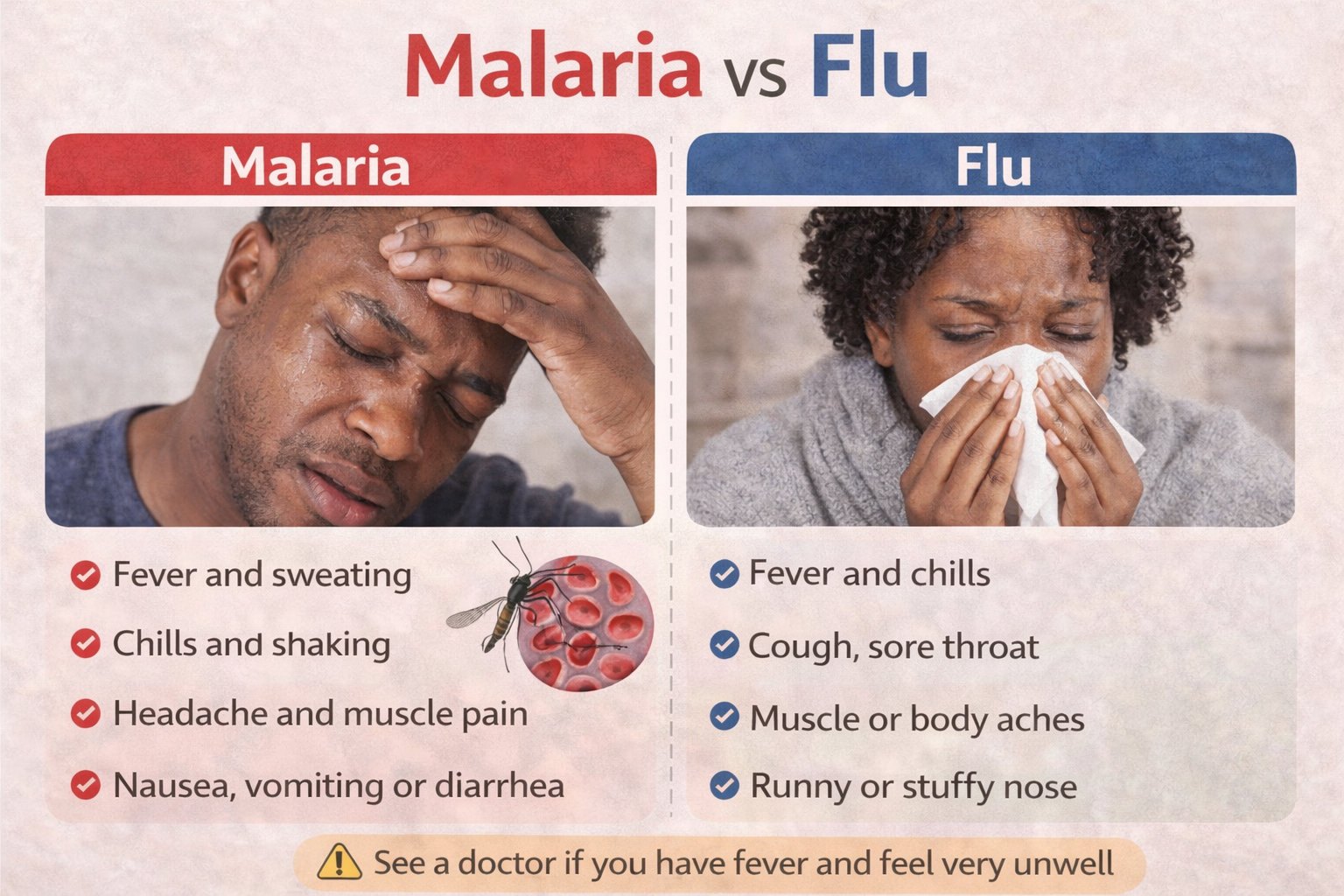
Flu and malaria are two illnesses that can cause fever, body aches, weakness, and headache. Because the symptoms can look similar, many people may confuse them.
However, flu and malaria are caused by different organisms and spread in different ways.
Understanding the differences can help you know when to seek medical care and testing.
What causes flu?
Flu (influenza) is caused by a virus that spreads from person to person.
It spreads through:
• coughing
• sneezing
• close contact with infected people
Flu mainly affects the respiratory system, including the nose, throat, and lungs.
What causes malaria?
Malaria is caused by a parasite that enters the body through the bite of an infected mosquito.
The parasite infects and destroys red blood cells, which causes the symptoms people experience.
Malaria is common in many tropical and subtropical regions, especially parts of Africa.
Similar symptoms
Both illnesses can cause:
• fever
• headache
• body aches
• weakness
• fatigue
• sweating
Because of these shared symptoms, it may be difficult to tell the difference without testing.
Symptoms more common in flu
Flu often causes:
• sore throat
• cough
• runny or blocked nose
• chest discomfort
• sudden body aches
Flu symptoms usually appear quickly within a few days of infection.
Symptoms more common in malaria
Malaria may cause:
• chills and shivering
• repeated fever cycles
• nausea or vomiting
• severe weakness
• sweating episodes
Symptoms may appear 7–14 days after a mosquito bite.
When to seek medical care
Seek medical care urgently if symptoms include:
• high persistent fever
• confusion
• difficulty breathing
• severe weakness
• repeated vomiting
Testing is important because malaria requires specific treatment.
Final advice
Flu and malaria can feel similar at first.
If you live in or have traveled to an area where malaria occurs, it is important to get tested for malaria when fever develops.
Early diagnosis allows fast and effective treatment.
Medical References
• World Health Organization – Malaria Guidelines
• CDC – Influenza Information
• CDC – Malaria Overview
• Peer-reviewed infectious disease guidelines
Medical Disclaimer
This article is for educational purposes only and does not replace medical advice from a qualified healthcare professional. Always consult a healthcare provider if you have symptoms or concerns about your health.