Read in: English | Pidgin
What Is Endometriosis?
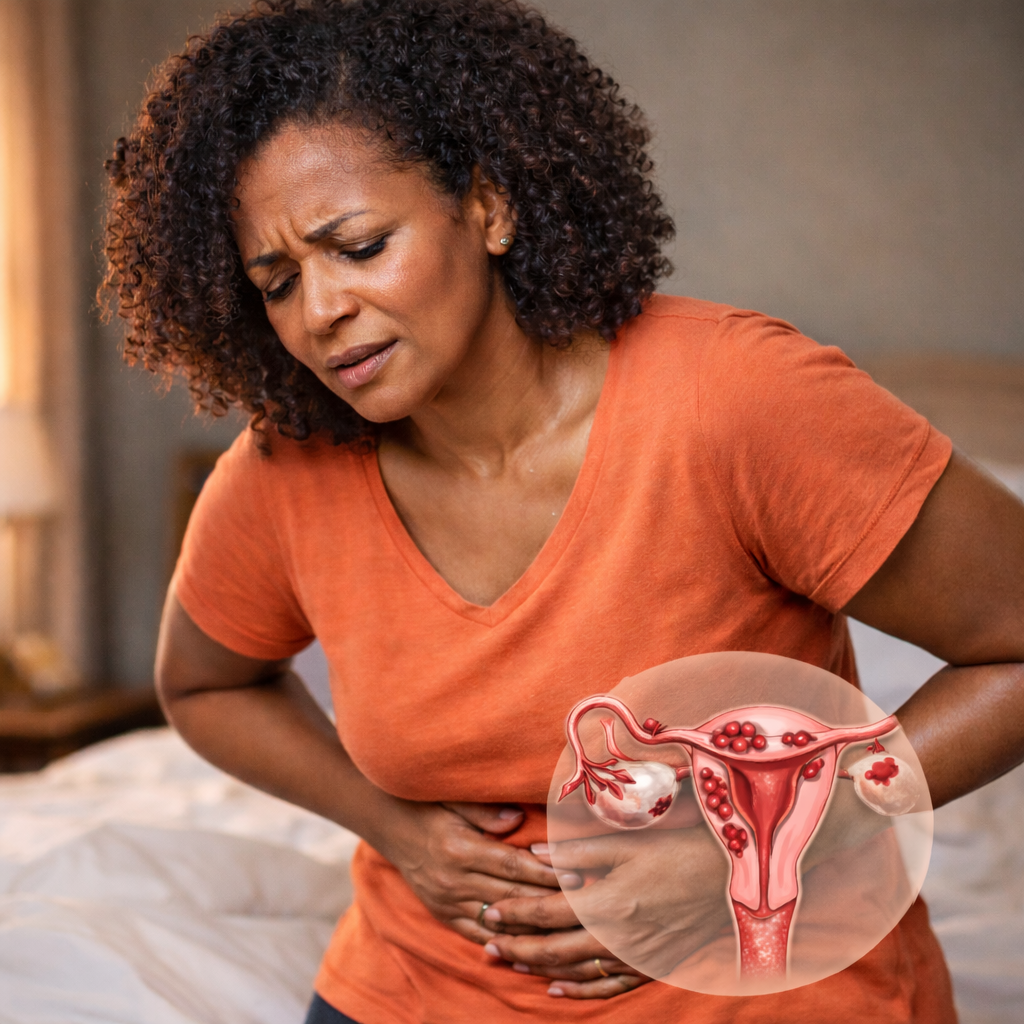
Endometriosis is a condition where tissue similar to the lining of the uterus grows outside the uterus.
These tissue patches may grow on organs such as:
• ovaries
• fallopian tubes
• pelvic lining
• bladder or intestines
Like the normal uterine lining, this tissue responds to hormones during the menstrual cycle.
However, because the tissue is outside the uterus, it cannot exit the body normally, which can lead to inflammation and pain.
Common Symptoms of Endometriosis
Symptoms can vary, but common signs include:
• severe menstrual cramps
• pelvic pain
• painful intercourse
• heavy menstrual bleeding
• fatigue
• difficulty becoming pregnant
Many women with endometriosis also experience painful periods or irregular menstrual cycles.
Why Endometriosis Causes Pain
During menstruation, endometrial-like tissue outside the uterus also thickens and breaks down.
Because this tissue cannot leave the body normally, it may cause:
• inflammation
• swelling
• scar tissue formation
This process may lead to chronic pelvic pain.
Possible Causes of Endometriosis
The exact cause is not fully understood, but possible factors include:
• hormonal changes
• genetic predisposition
• immune system dysfunction
• retrograde menstruation (menstrual blood flowing backward)
When Should You See a Doctor?
Seek medical advice if you experience:
• severe menstrual pain
• pelvic pain that worsens over time
• heavy or irregular periods
• difficulty becoming pregnant
Early evaluation can help improve treatment options and quality of life.
Final Thoughts
Endometriosis can significantly affect daily life and reproductive health.
Although the condition can be chronic, early diagnosis and treatment can help manage symptoms effectively.
Understanding menstrual health helps women recognize when medical care may be needed.
Medical References
• World Health Organization – Endometriosis Information
• American College of Obstetricians and Gynecologists (ACOG)
• NHS – Endometriosis Overview
• Peer-reviewed gynecology guidelines
Medical Disclaimer
This article is for educational purposes only and does not replace professional medical advice, diagnosis, or treatment. Always consult a qualified healthcare professional if you have concerns about your health.