Read in: English | Pidgin English
🩺 Medically reviewed by the Health Decoded Guide Editorial Team ·Last reviewed: July 2026.
🔍 Quick Summary
Heavy menstrual bleeding means periods that are heavier, longer,
or more difficult to manage than usual.
Some women may soak through pads frequently, pass large blood clots,
or feel weak and tired during periods.
Hormonal imbalance,
fibroids,
adenomyosis, and other medical conditions may contribute.
1️⃣ Introduction
Heavy menstrual bleeding is also called menorrhagia.
• menstrual flow may become unusually heavy or prolonged
• symptoms may interfere with work, sleep, or daily life
• severe bleeding can sometimes lead to anemia and weakness
👉 Heavy periods are common, but persistent severe bleeding should not be ignored.
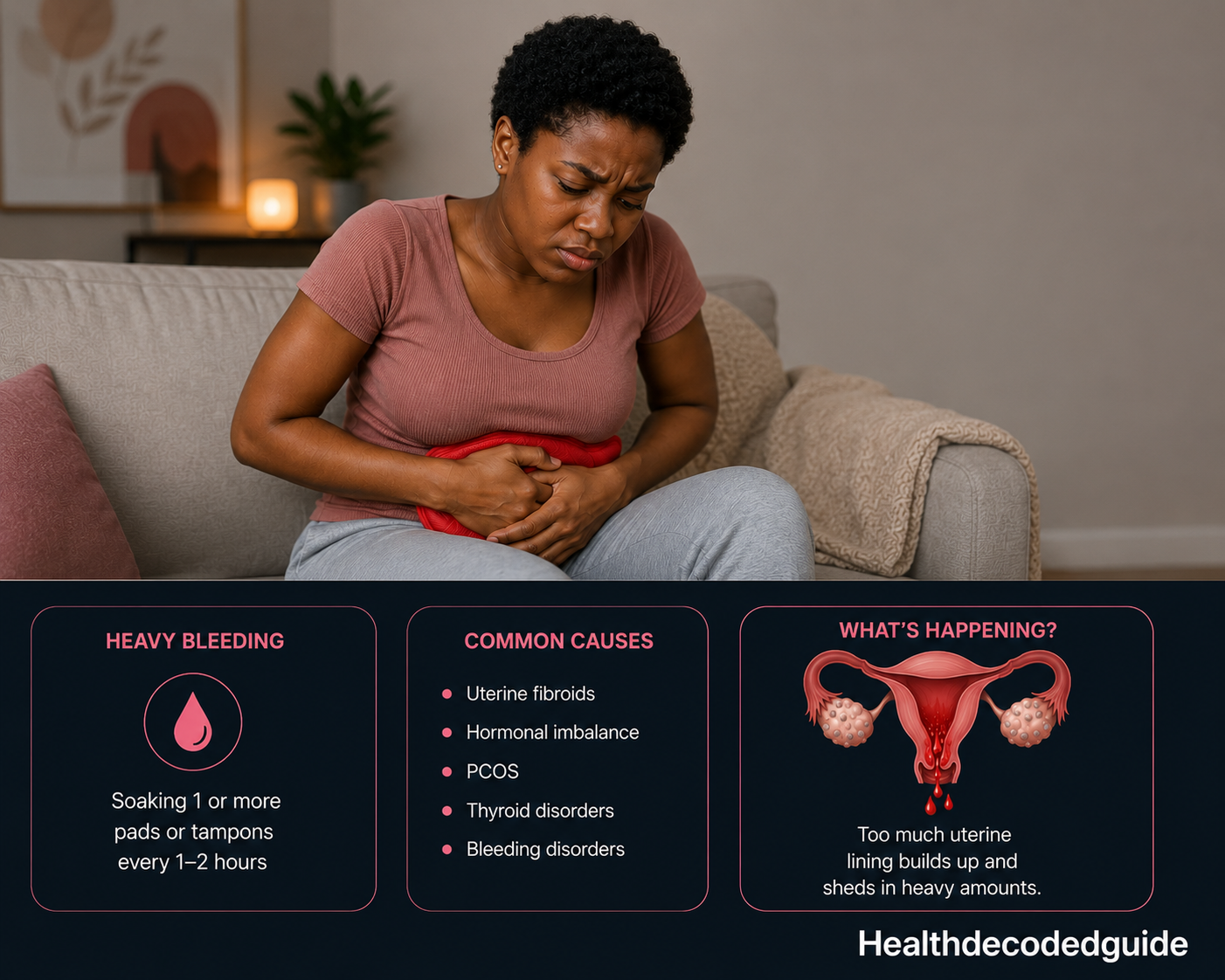
2️⃣ What is considered heavy bleeding?
Doctors may consider bleeding heavy if:
• pads or tampons need changing every 1–2 hours
• periods last longer than 7 days
• large blood clots are passed regularly
• nighttime pad changes become necessary
• weakness or dizziness develops during menstruation
👉 Heavy bleeding affects different women differently, but excessive blood loss can affect overall health.
3️⃣ Common causes
- irregular ovulation may thicken the uterine lining
- heavier bleeding may occur when the lining sheds
• Fibroids
- non-cancerous growths in the uterus
- may cause pressure and heavy bleeding
- uterine lining tissue grows into the muscle wall
- periods may become painful and heavier
• Blood clotting disorders
- blood may not clot properly
- bleeding may last longer than usual
• Pregnancy-related causes
- bleeding during pregnancy should always be evaluated urgently
👉 Sometimes more than one condition contributes to heavy bleeding.
4️⃣ Why it matters
Heavy blood loss can affect the whole body.
• iron levels may become low
• anemia can develop gradually
• energy levels and concentration may decrease
👉 Some women normalize severe bleeding for years before seeking help.
5️⃣ Symptoms that may happen together
• tiredness
• weakness
• dizziness
• fainting sensations
• pelvic pain or severe cramps
• shortness of breath during activity
👉 These symptoms may suggest anemia from chronic blood loss.
6️⃣🩺 When to see a doctor
• bleeding becomes unusually heavy
• large blood clots occur regularly
• periods interfere with normal activities
• severe cramps or pelvic pain develop
👉 Persistent cycle changes deserve proper medical evaluation.
7️⃣🚨 When it becomes urgent
• fainting or severe dizziness
• soaking pads very rapidly
• continuous heavy bleeding
• severe pain or pregnancy-related bleeding
👉 These may indicate:
• dangerous blood loss or anemia
• emergency gynecological or pregnancy-related conditions
8️⃣ Management / treatment
Treatment depends on the underlying cause.
• iron supplements if anemia develops
• hormonal medications in some cases
• treatment of fibroids or other uterine conditions
• surgical treatment when necessary
Supportive Measures
• track menstrual bleeding patterns
• maintain iron-rich nutrition
• rest during severe fatigue episodes
• attend regular medical follow-up appointments
👉 Early treatment may improve energy levels and quality of life.
9️⃣ Diagnosis
• menstrual history and symptom review
• blood tests for anemia or hormones
• pelvic ultrasound or gynecological evaluation
👉 Doctors often investigate both hormonal and structural causes together.
🟢 Important message
Heavy menstrual bleeding is common, but severe or prolonged bleeding should never be ignored.
Early diagnosis may help prevent anemia and identify treatable gynecological conditions.
👉 You should not have to silently endure severe bleeding every month.
FAQ
• What is heavy menstrual bleeding?
Bleeding that is unusually heavy, prolonged, or difficult to manage.
• Can heavy periods cause anemia?
Yes. Chronic blood loss can lower iron levels and cause anemia.
• Can fibroids cause heavy bleeding?
Yes. Fibroids commonly increase menstrual flow.
• Are blood clots during periods normal?
Small clots may happen, but large frequent clots deserve evaluation.
• When should medical help be sought?
If bleeding causes weakness, severe pain, dizziness, or major disruption to daily life.
🔗 Related Health Topics
• Irregular Periods
• Hormonal Imbalance
• Iron Deficiency
• Pelvic Pain
• Adenomyosis
• Fibroid
• Missed Periods
📚 Medical References
• World Health Organization (WHO). Sexual and reproductive health.
• National Health Service (NHS). Heavy periods.
• Mayo Clinic. Menorrhagia (heavy menstrual bleeding).
• American College of Obstetricians and Gynecologists (ACOG). Abnormal Uterine Bleeding.
• National Institute for Health and Care Excellence (NICE). Heavy menstrual bleeding: assessment and management (NG88).
⚠️ Medical Disclaimer
This article is for educational purposes only and does not replace professional medical advice.
If you have symptoms or concerns, please consult a qualified healthcare professional.