English
🩺 Medically reviewed by the Health Decoded Guide Editorial Team· Last reviewed: July 2026
🔍 Quick Summary
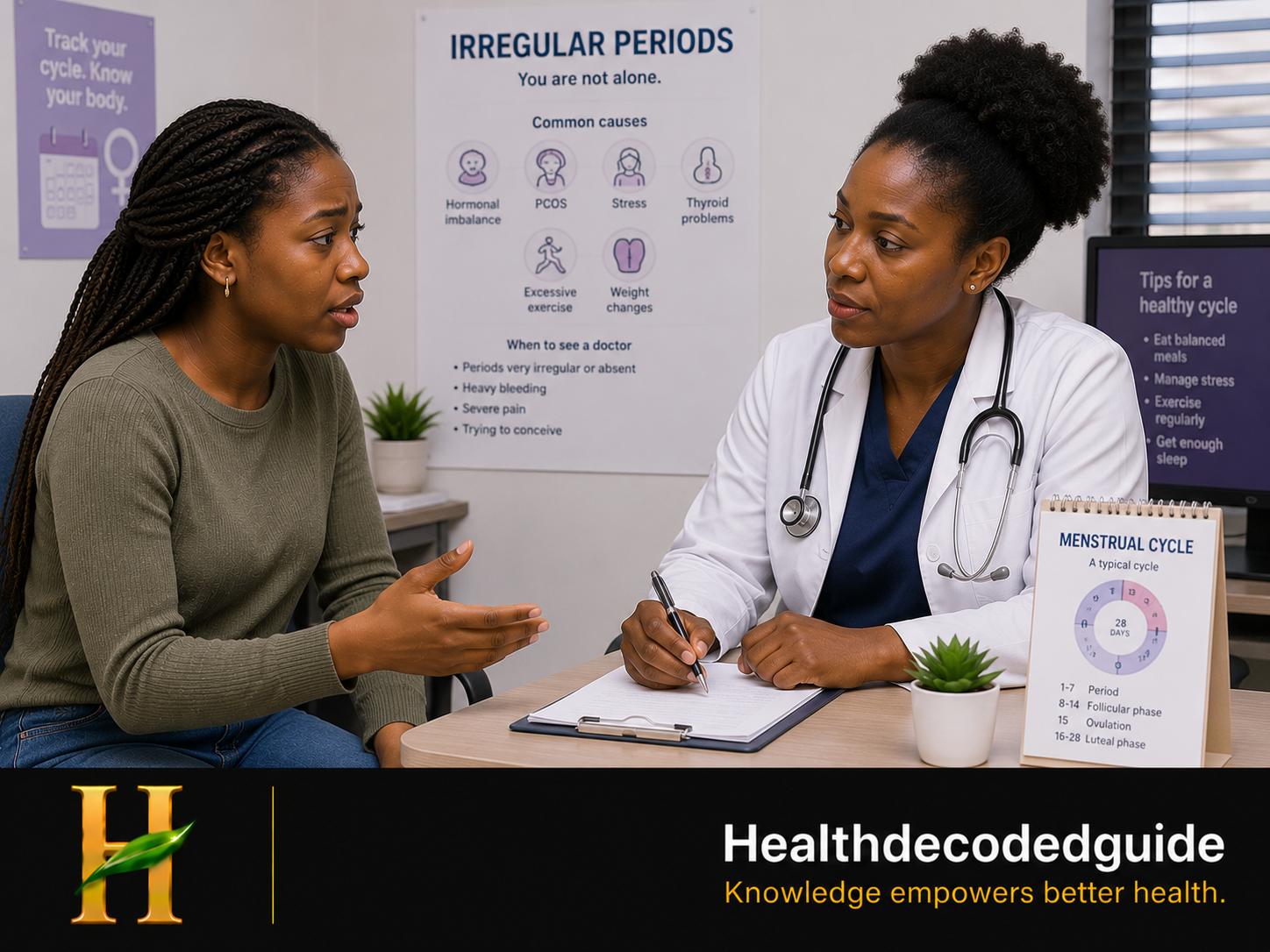
Irregular periods happen when menstrual cycles become unpredictable, too frequent, delayed, or absent.
Hormonal changes, stress, weight fluctuations, PCOS, thyroid disorders, and other medical conditions may contribute.
Occasional changes can happen normally, but persistent irregular cycles deserve medical evaluation.
1️⃣ Introduction
A menstrual cycle normally follows a relatively regular pattern.
• most menstrual cycles occur every 21–35 days
• cycle length may vary slightly between women
• periods that frequently come too early, too late, or stop completely may be considered irregular
👉 Small temporary changes may happen normally, especially during stress or hormonal transitions.
2️⃣ How it happens
Hormones (mainly estrogen and progesterone) normally work together
in a balanced way to control ovulation and menstrual bleeding.
• disruptions in this hormonal balance may affect ovulation timing
• if ovulation becomes irregular, menstrual cycles may also become irregular
• metabolism, stress, and body weight can all influence hormones in the body.
👉 The menstrual cycle reflects communication between the brain, ovaries, and hormones.
3️⃣ Common causes
• Hormonal conditions
- PCOS
- perimenopause
- hormonal imbalance
• Lifestyle and stress factors
- emotional or physical stress
- sudden weight changes or excessive exercise
• Medical conditions
- thyroid disorders
- fibroids
- chronic illness
👉 Sometimes more than one factor affects the menstrual cycle at the same time.
4️⃣ Other possible symptoms
• missed periods
• spotting between periods
• heavy menstrual bleeding
• excess facial hair
• acne (pimples)
👉 Symptoms associated with hormones may help doctors identify the underlying cause.
5️⃣ Symptoms suggesting irregular periods
• cycles that become unpredictable
• periods arriving very early or very late
• menstrual bleeding stopping for several months
👉 Tracking cycles may help identify important changes early.
6️⃣ Associated symptoms
• pelvic pain or severe cramps
• fatigue or low energy
• mood changes
• fertility difficulties in some women
👉 Hormonal imbalance may affect several body systems beyond menstruation.
7️⃣🩺 When it becomes dangerous 🚨
• very heavy bleeding
• severe pelvic pain
• no periods for several months unexpectedly
👉 These may indicate:
• hormonal disorders, pregnancy complications, or gynecological conditions
• problems requiring medical evaluation and testing
8️⃣ Management / treatment
• treatment of the underlying cause
• lifestyle and stress management support
• hormonal treatment in some cases
Supportive Measures
• track menstrual cycles regularly
• maintain balanced nutrition and sleep
• avoid excessive exercise or severe dieting
• attend medical follow-up if symptoms persist
👉 Understanding personal menstrual patterns may help detect abnormalities earlier.
9️⃣ Diagnosis
• menstrual and medical history review
• hormone blood tests
• pelvic ultrasound or thyroid testing in some cases
👉 Doctors often investigate hormonal, metabolic, and gynecological causes together.
🟢 Important message
Irregular periods are common and may happen temporarily because of stress or hormonal shifts.
👉The goal isn't simply to regulate the menstrual cycle—it's to understand the reason behind any change and choose the treatment that's right for the individual. Early evaluation may help identify treatable hormonal or gynecological conditions.
FAQ
• What are irregular periods?
Periods that occur unpredictably, too often, too rarely, or stop completely.
• Can stress affect menstrual cycles?
Yes. Stress commonly affects hormones and ovulation.
• Can PCOS cause irregular periods?
Yes. PCOS is one of the most common causes.
• Can thyroid problems affect menstruation?
Yes. Thyroid disorders may disrupt hormone balance and cycles.
• When should medical help be sought?
If cycles remain irregular for months, bleeding becomes severe, or periods stop unexpectedly.
🔗 Related Health Topics
• PCOS
• Heavy Menstrual Bleeding
• Spotting Between Periods
• Perimenopause
• Hormonal Imbalance
📚 Medical References
• World Health Organization (WHO). Sexual and reproductive health.
• National Health Service (NHS). Periods.
• Mayo Clinic. Menstrual cycle: What's normal, what's not.
• American College of Obstetricians and Gynecologists (ACOG). Abnormal Uterine Bleeding.
• National Institute for Health and Care Excellence (NICE). Heavy menstrual bleeding: assessment and management (NG88).
⚠️ Medical Disclaimer
This article is for educational purposes only and does not replace professional medical advice.
If you have symptoms or concerns, please consult a qualified healthcare professional.