
Read in: English | Pidgin English
Published on February 02/2026 at 7:07 PM
🩺 Medically reviewed by the Health Decoded Guide Editorial Team · Last reviewed: August 2026
🔍 Quick Summary
Pelvic pain is pain felt in the lower part of the abdomen, between the belly button and groin. It can come from the reproductive organs, urinary system, bowel, muscles or other structures in the pelvis.
Many causes are temporary and treatable, but sudden severe pain, especially with pregnancy, heavy bleeding, fever or fainting, requires prompt medical assessment.
1️⃣ Introduction
Pelvic pain is a symptom rather than one specific condition.
The pain may:
• start suddenly or develop gradually
• be constant or come and go
• feel sharp, cramping, aching or like pressure
• occur in women or men
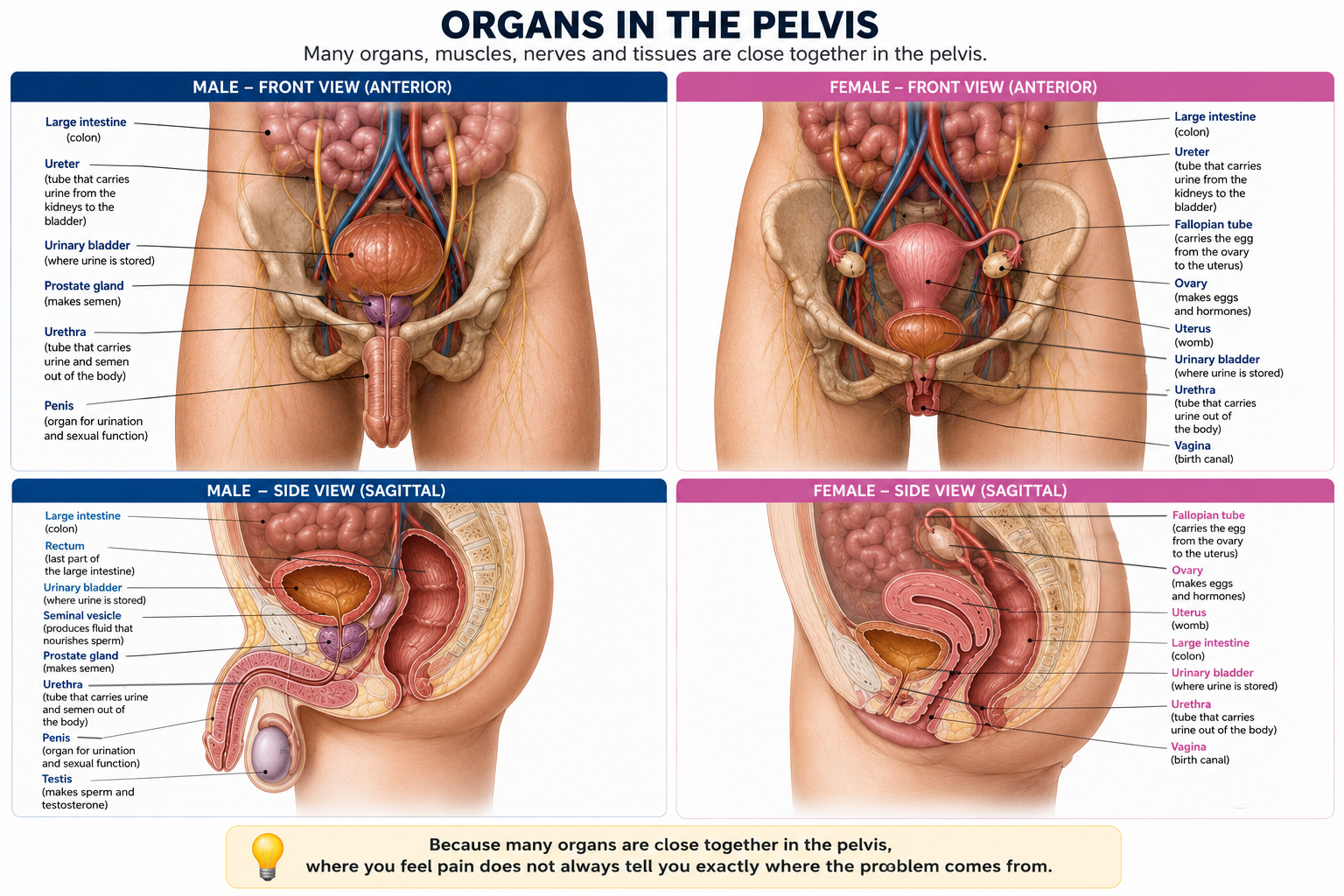
Where the pain is felt does not always tell you exactly which organ is causing it.
2️⃣ How it happens
The pelvis contains several organs and structures close together.
Pain may develop when:
• an organ becomes inflamed or infected
• muscles or tissues become irritated
• an ovarian cyst stretches, ruptures or twists
• the bowel or urinary tract becomes inflamed or blocked
• nerves in the pelvic region become irritated
👉 Because several organs share similar nerve pathways, different conditions can produce very similar pelvic pain.
3️⃣ Types
Acute pelvic pain
• begins suddenly
• may last hours or days
• sometimes requires urgent assessment
Chronic pelvic pain
• persists or repeatedly returns for 6 months or longer
• may involve more than one underlying cause
How quickly the pain started and how long it has lasted are important clues to the cause.
4️⃣ Common causes
Reproductive and gynaecological causes
• period pain
• ovulation pain
• endometriosis
• ovarian cysts
• pelvic inflammatory disease (PID)
• fibroids
• ectopic pregnancy
Urinary, bowel and other causes
• urinary tract infection (UTI)
• kidney or urinary stones
• constipation
• irritable bowel syndrome (IBS)
• appendicitis
• muscle or pelvic floor problems
• prostate or testicular conditions in men
Pelvic pain has many possible causes, so persistent or severe pain should not be self-diagnosed.
5️⃣ Symptoms
Pelvic pain may feel like:
• dull or aching pain
• sharp or stabbing pain
• cramping
• heaviness or pressure
• pain that comes and goes
• pain during sex, urination or bowel movements
The pattern of pain and what makes it better or worse can help identify the underlying cause.
6️⃣ Associated symptoms or complications
Depending on the cause, pelvic pain may occur with:
• abnormal vaginal bleeding or discharge
• missed period
• fever or chills
• nausea or vomiting
• painful or frequent urination
• constipation or diarrhea
• pain during sex
• testicular pain or swelling
Associated symptoms are often just as important as the pain itself when identifying the cause.
7️⃣ 🩺 When it becomes dangerous 🚨
Seek urgent medical assessment for:
• sudden or severe pelvic pain
• pelvic pain with fainting, dizziness or weakness
• pain with heavy vaginal bleeding
• severe pain when pregnant or possibly pregnant
• severe pain with fever or persistent vomiting
• sudden severe testicular pain
👉 These may indicate:
• ectopic pregnancy, ovarian torsion, appendicitis, severe infection, testicular torsion or another urgent condition
• need for urgent medical assessment
8️⃣ Management / treatment
Treatment depends on the underlying cause and may include:
• appropriate pain relief
• antibiotics for certain bacterial infections
• hormonal treatment for some gynaecological conditions
• treatment for bowel or urinary problems
• physiotherapy for some muscular or pelvic floor conditions
• surgery when necessary
Pelvic pain does not have one universal treatment—the underlying cause needs to be identified.
9️⃣ Diagnosis
Depending on the symptoms, assessment may include:
• medical history and physical examination
• pregnancy test when relevant
• urine and blood tests
• testing for sexually transmitted infections when appropriate
• pelvic ultrasound or other imaging
👉 Pregnancy testing is an important early investigation for pelvic pain in anyone who could potentially be pregnant.
🟢 Important Message
Pelvic pain is common and often has a treatable cause.
👉 Sudden severe pain or pain accompanied by pregnancy, fainting, heavy bleeding or fever should never be ignored.
FAQ
• Can period pain cause pelvic pain?
Yes. Period cramps are a common cause, but severe, worsening or disabling pain may need further assessment.
• Can pelvic pain happen without a reproductive problem?
Yes. The bowel, bladder, urinary tract, muscles and other structures can all cause pelvic pain.
• Can men have pelvic pain?
Yes. Possible causes include urinary infections, prostate problems, bowel conditions, muscle problems and conditions affecting the testicles.
• When should persistent pelvic pain be checked?
If pain repeatedly returns, persists, worsens or interferes with daily activities, arrange medical assessment.
🧠 Why We Delay
Pelvic pain is often normalised, particularly when it occurs around menstruation. Some people also delay seeking help because discussing periods, sexual symptoms, vaginal discharge, bowel problems or testicular symptoms can feel embarrassing.
Most pelvic pain is not caused by a medical emergency, but persistent or severe pain deserves proper assessment. Explaining all accompanying symptoms openly can help healthcare professionals identify the cause more quickly.
👉 You do not have to simply tolerate persistent pelvic pain—getting it assessed can help identify a treatable cause.
🔗 Related Health Topics
• Period Pain
• Endometriosis
• Pelvic Inflammatory Disease (PID)
• Ovarian Cysts
• Urinary Tract Infection (UTI)
📚 Medical References
• National Health Service (NHS). Pelvic pain.
• Mayo Clinic. Chronic pelvic pain in women.
• American College of Obstetricians and Gynecologists (ACOG). Chronic Pelvic Pain.
• Royal College of Obstetricians and Gynaecologists (RCOG). Long-term pelvic pain.
• Cleveland Clinic. Pelvic Pain.
⚠️ Medical Disclaimer
This article is for educational purposes only and does not replace professional medical advice.
If you have concerning symptoms, risk factors or abnormal test results, consult a healthcare professional.