Read in: English | Pidgin English
🔍 Quick Summary
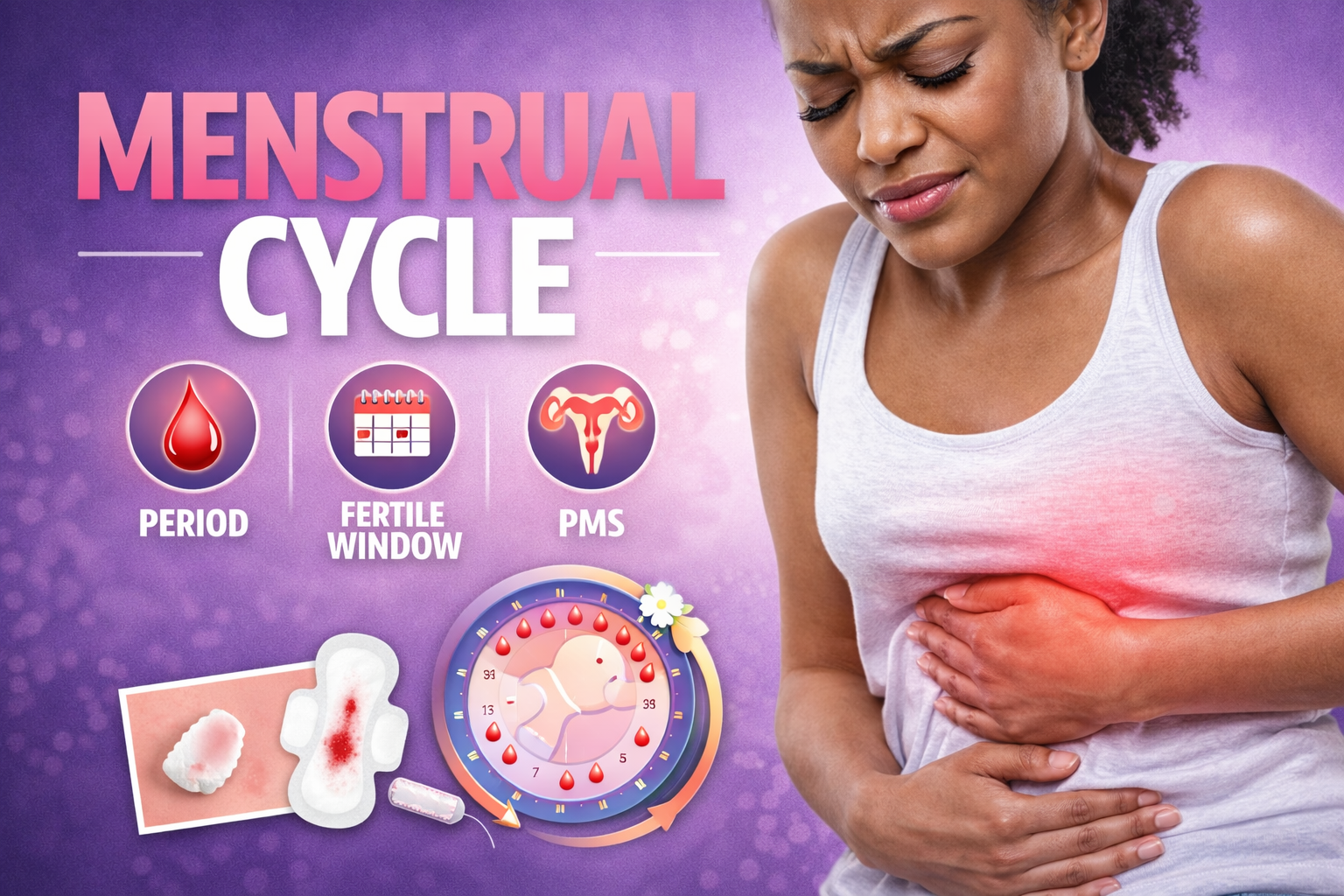
The menstrual cycle is a natural monthly process that prepares the body for pregnancy.
It involves hormonal changes that affect bleeding, mood, and energy levels.
1️⃣ Introduction
• The menstrual cycle is a monthly hormonal cycle in women
• It prepares the uterus for possible pregnancy
• A typical cycle lasts about 21–35 days
👉 Every woman’s cycle is slightly different — variation can still be normal
2️⃣ How it happens
• The brain releases hormones that signal the ovaries
• The ovaries produce estrogen and progesterone
• The uterus lining thickens, then sheds if no pregnancy occurs
👉 The cycle is controlled by a delicate hormone balance between brain and ovaries
3️⃣ Types (if applicable)
• Regular cycle
- Occurs every 21–35 days
- Predictable pattern
• Irregular cycle
- Varies in length or timing
- May skip months or come too often
👉 Occasional irregularity can be normal — frequent changes may need review
4️⃣ Common causes
• Hormonal influences
- Puberty or menopause transition
- Stress and lifestyle changes
• Medical factors
- Polycystic ovary syndrome (PCOS)
- Thyroid disorders
5️⃣ Symptom explanation
• Vaginal bleeding (period)
• Mild abdominal cramps
• Breast tenderness
👉 These happen due to hormone changes and the shedding of the uterine lining
6️⃣ Associated symptoms
• Mood changes (PMS)
• Fatigue
• Bloating
• Headaches
👉 Hormones affect not just the uterus, but also the brain and body
7️⃣ When it becomes dangerous 🚨
• Very heavy bleeding (soaking pads hourly)
• Severe pain affecting daily life
• Periods absent for several months
👉 These may indicate:
• Hormonal imbalance
• Underlying medical conditions
8️⃣ Management / treatment
• Healthy lifestyle (sleep, nutrition, stress control)
• Pain relief medications when needed
• Hormonal treatments (if prescribed)
9️⃣ Diagnosis
• Medical history and cycle tracking
• Physical examination
• Blood tests (hormones, thyroid)
👉 Tracking your cycle gives valuable clues about your health
🔟 Important message
The menstrual cycle is a normal and healthy part of life — understanding it helps you recognize what’s normal for your body.
👉 Your cycle is like a monthly health report — small changes can give important insights
FAQ
• How long should a normal period last?
Usually 3–7 days.
• Is it normal to miss a period?
Occasionally yes, but frequent missed periods should be checked.
🔗 Related Health Topics
• Vaginal infections
• Hormonal imbalance
• Pelvic pain in women
📚 Medical References
• World Health Organization (WHO). Menstrual health and hygiene
• National Health Service (NHS). Periods and menstrual cycle
• Centers for Disease Control and Prevention (CDC). Menstrual health
• Mayo Clinic. Menstrual cycle overview
• National Institute for Health and Care Excellence (NICE). Heavy menstrual bleeding guidelines
• American College of Obstetricians and Gynecologists (ACOG). Menstruation and cycle regulation
⚠️ Medical Disclaimer
This article is for educational purposes only and does not replace professional medical advice.
If you have symptoms or concerns, please consult a qualified healthcare professional.