Read in: English | Pidgin English
🔍 Quick Summary
Vaginal infections are common and usually treatable conditions affecting many women.
They often cause discharge changes, itching, or discomfort, but not all are serious.
1️⃣ Introduction
• Vaginal infections occur when the natural balance of bacteria or yeast is disrupted
• They are very common across all age groups
• Most cases are mild and treatable
👉 The vagina normally protects itself — problems start when this balance shifts
2️⃣ How it happens
• Normal vaginal flora (good bacteria) keep harmful organisms under control
• Changes in pH or hormones can disrupt this balance
• This allows bacteria, yeast, or parasites to overgrow
👉 Even small changes (like antibiotics or stress) can trigger symptoms
3️⃣ Types
• Bacterial vaginosis (BV)
- Caused by imbalance of normal bacteria
- Often produces a fishy-smelling discharge
• Yeast infection (Candidiasis)
- Caused by overgrowth of yeast (fungus)
- Thick, white discharge with itching
• Trichomoniasis
- Sexually transmitted infection
- Yellow-green discharge and irritation
👉 Different infections can feel similar — but need different treatments
4️⃣ Common causes
• Hormonal changes
- Pregnancy
- Menstrual cycle
• External factors
- Antibiotic use
- Tight clothing or poor hygiene
5️⃣ Symptom explanation
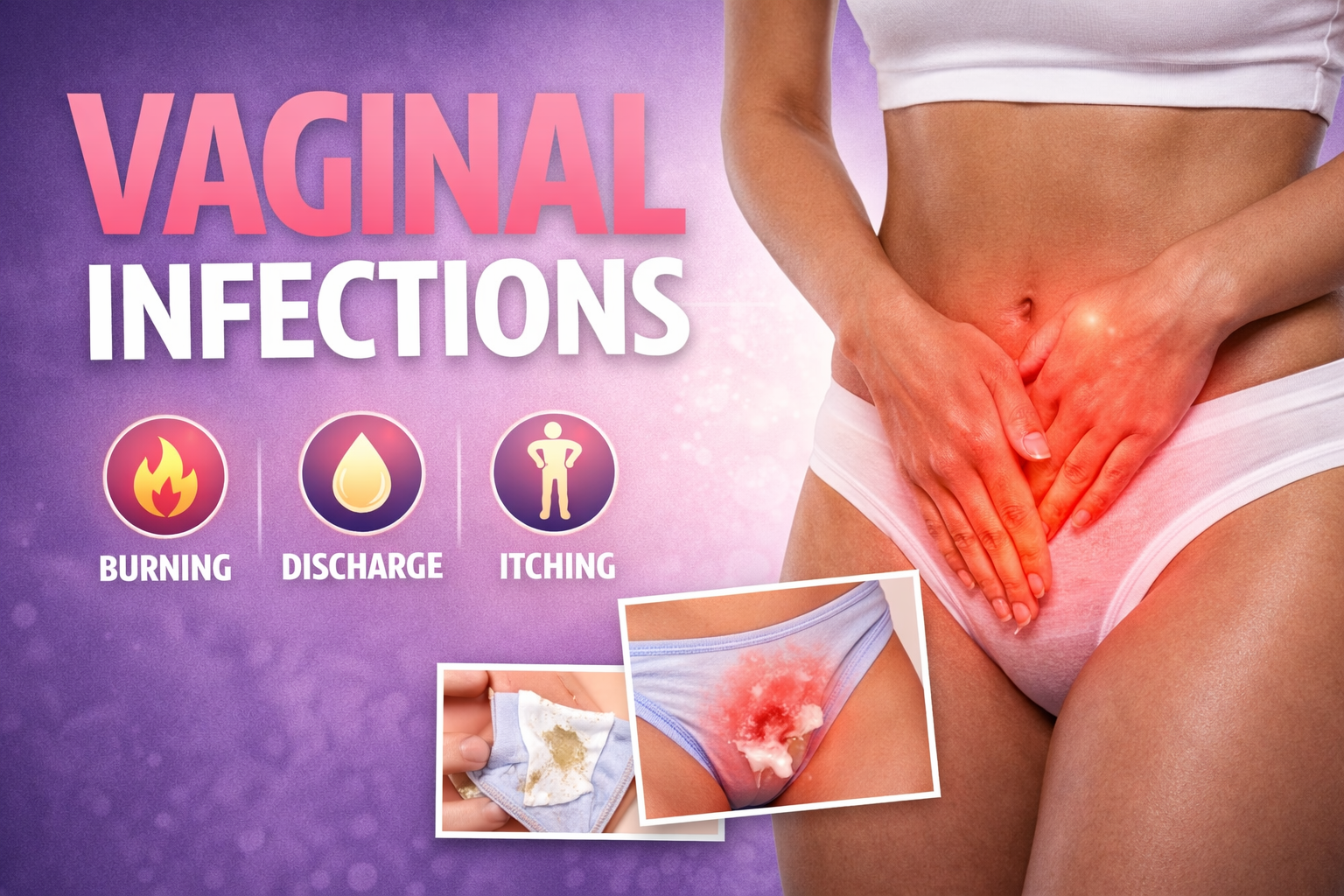
• Unusual vaginal discharge
• Itching or irritation
• Burning sensation (especially during urination or sex)
👉 These symptoms happen because inflammation and imbalance irritate vaginal tissues
6️⃣ Associated symptoms
• Strong or unusual odor
• Pain during intercourse
• Redness or swelling
• Lower abdominal discomfort (less common)
👉 Odor and discharge changes often help identify the type of infection
7️⃣ When it becomes dangerous 🚨
• Severe lower abdominal pain
• Fever or chills
• Bleeding unrelated to menstruation
👉 These may indicate:
• Pelvic inflammatory disease
• More serious underlying infection
8️⃣ Management / treatment
• Antifungal medications (for yeast infections)
• Antibiotics (for bacterial infections or STIs)
• Avoid irritants (e.g., scented products)
9️⃣ Diagnosis
• Clinical history and symptom review
• Vaginal examination
• Swab tests for laboratory analysis
👉 Accurate diagnosis ensures the right treatment is used
🔟 Important message
Vaginal infections are common, manageable, and often not serious when treated early.
👉 Paying attention to changes in your body helps you act early and stay healthy
FAQ
• Is vaginal discharge always a sign of infection?
No. Normal discharge varies throughout the menstrual cycle.
• Can vaginal infections go away on their own?
Some mild cases may improve, but proper treatment is often needed.
🔗 Related Health Topics
• Pelvic pain
• Menstrual cycle
• Sexually transmitted infections
• Hormonal imbalance
• Premenstrual syndrome (PMS)
📚 Medical References
• World Health Organization (WHO). Reproductive health and vaginal infections
• National Health Service (NHS). Vaginal discharge and infections
• Centers for Disease Control and Prevention (CDC). Bacterial vaginosis and STIs
• Mayo Clinic. Vaginitis overview
• National Institute for Health and Care Excellence (NICE). Vaginal infection management
• American College of Obstetricians and Gynecologists (ACOG). Vaginitis guidelines
⚠️ Medical Disclaimer
This article is for educational purposes only and does not replace professional medical advice.
If you have symptoms or concerns, please consult a qualified healthcare professional.