

Read in: English | Pidgin English
🩺 Medically reviewed by the Health Decoded Guide Editorial Team · Last reviewed: July 2026
🔍 Quick Summary
Breast pain (mastalgia) is common and is usually not a sign of breast cancer.
Most cases are related to hormonal changes, especially around the menstrual cycle, and improve without serious treatment.
However, persistent pain, a new breast lump, or bloody nipple discharge should always be assessed by a healthcare professional.
1️⃣ Introduction
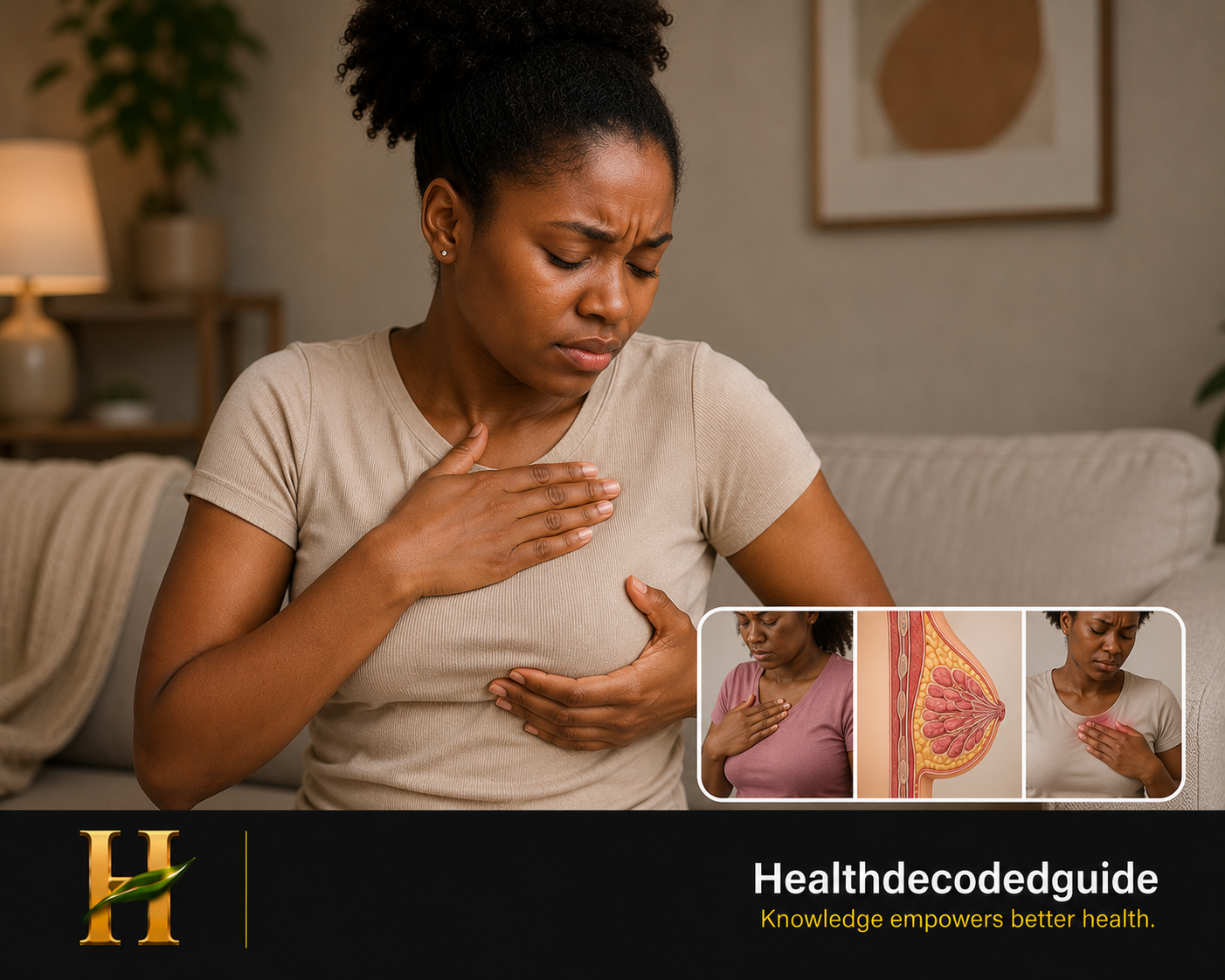
Breast pain, also called mastalgia, refers to discomfort or tenderness in one or both breasts.
It can feel different from person to person and may come and go over time.
• most common in women of reproductive age
• often linked to hormonal changes, especially during the menstrual cycle
• rarely a sign of serious disease
2️⃣ How it happens
Breast tissue responds to hormones like estrogen and progesterone.
• hormone fluctuations cause swelling and sensitivity
• fluid retention can stretch breast tissue
• nerve endings become more sensitive
👉 This is why pain often follows a pattern during the menstrual cycle.
3️⃣ Different types of breast pain
• Cyclical breast pain
- linked to menstrual cycle
- usually affects both breasts
• Non-cyclical breast pain
- not related to periods
- may affect one specific area
👉 The pattern of pain often gives clues to the cause.
4️⃣ Common causes of breast pain
• Hormonal causes
- menstrual cycle changes
- premenstrual syndrome (PMS)
• Non-hormonal causes
- muscle strain (chest wall pain)
- poorly fitting bra
• Breast cysts
5️⃣ Symptoms: What breast pain feels like
• dull, heavy, or aching pain
• sharp or burning sensation
• breast tenderness or fullness
👉 Hormones increase blood flow and fluid in the breast, causing swelling and discomfort.
6️⃣ Associated symptoms
• breast swelling
• lumpiness (especially before periods)
• nipple sensitivity
• chest wall tenderness
• changes in breast size or fullness
Common around hormonal cycles.
👉 Pain with movement or touch may suggest muscle-related causes rather than breast tissue itself.
7️⃣🩺 When it becomes dangerous 🚨
• new lump in the breast
• persistent pain in one spot
• nipple discharge (especially bloody)
• skin dimpling or changes to the breast skin
• nipple pulled inward (new nipple inversion)
These may indicate:
• breast infection
• breast cancer (rare but important to rule out)
8️⃣ Management / treatment
• wear a well-fitting supportive bra
• reduce caffeine (may help some people)
• use simple pain relief if needed
9️⃣ Diagnosis
• clinical breast examination
• imaging (ultrasound or mammogram if needed)
• review of symptom pattern
The pattern of the pain, together with a breast examination, is often enough to identify the cause.
Imaging tests may be recommended if there are concerning findings.
🟢 Important message
Breast pain is very common and usually harmless.
👉 Understanding your pain pattern helps reduce anxiety and guides when to seek care.
FAQ
• Is breast pain a sign of breast cancer?
Usually not. Most breast pain is caused by hormonal changes or other non-cancerous conditions.
However, persistent pain with a new lump, skin changes, or bloody nipple discharge should be assessed by a healthcare professional.
• Is a painless lump more concerning than a painful one?
Yes, in general. Most breast cancers do not cause pain, so a painless lump is often taken more seriously than pain alone. This is one reason doctors focus on checking for lumps, skin changes, and nipple discharge — rather than pain itself — when assessing breast cancer risk.
• Why do my breasts hurt before my period?
Hormonal changes during the menstrual cycle can cause the breast tissue to swell and become more sensitive, leading to pain or tenderness before a period.
• Can menopause cause breast pain?
Yes. Hormonal changes during perimenopause and menopause can sometimes cause breast pain or tenderness, although breast pain often becomes less common after menopause.
• When should I see a doctor for breast pain?
You should see a healthcare professional if the pain is persistent, affects one specific area of the breast, is associated with a new lump, bloody nipple discharge, skin changes, or if you are concerned about your symptoms.
• Can breast pain happen without a lump?
Yes. Most people with breast pain do not have a breast lump. Breast pain is often related to hormonal changes, muscle strain, or other non-cancerous causes.
🔗 Related Health Topics
• Premenstrual Syndrome (PMS)
• Breast Lumps
• Hormonal Imbalance
• Menopause
• Chest Pain
📚 Medical References
• World Health Organization (WHO). Breast cancer: https://www.who.int/news-room/fact-sheets/detail/breast-cancer
• National Health Service (NHS). Breast pain: https://www.nhs.uk/conditions/breast-pain/
• Centers for Disease Control and Prevention (CDC). What Are the Symptoms of Breast Cancer? https://www.cdc.gov/breast-cancer/symptoms/index.html
• Mayo Clinic. Breast pain (Mastalgia): https://www.mayoclinic.org/symptoms/breast-pain/basics/definition/sym-20050684
• National Institute for Health and Care Excellence (NICE). Suspected cancer: recognition and referral (NG12): https://www.nice.org.uk/guidance/ng12
• American College of Obstetricians and Gynecologists (ACOG). Benign Breast Conditions: https://www.acog.org/womens-health/faqs/benign-breast-problems-and-conditions
⚠️ Medical Disclaimer
This article is for educational purposes only and does not replace professional medical advice.
If you have symptoms or concerns, please consult a qualified healthcare professional.