Read in: English | Pidgin English
Medically reviewed by the HDG Editorial Team · Last reviewed: July 2026
🔍 Quick Summary
Finding a breast lump can be worrying, but most breast lumps are not cancer.
However, every new breast lump should be assessed by a healthcare professional to identify the cause and decide whether treatment or further tests are needed.
1️⃣ Introduction
A breast lump is an area of tissue that feels different from the surrounding breast.
Some lumps are soft, while others are firm. Some move easily under the skin, while others feel fixed.
Breast lumps can occur in women of all ages and, less commonly, in men.
• many breast lumps are harmless
• some are related to normal hormonal changes
• others may require further investigation
• early assessment helps identify serious conditions sooner
👉 Most breast lumps are not breast cancer, but every new lump deserves medical attention.
2️⃣ How breast lumps develop
The breast contains:
• milk-producing glands
• milk ducts
• fatty tissue
• connective tissue
• blood vessels and lymphatic tissue
A lump can develop when one of these tissues changes.
For example:
• fluid may collect to form a cyst
• glands may become enlarged
• fatty tissue may form a fatty lump (lipoma)
• scar tissue may develop after injury or surgery
• abnormal cells may grow into a tumour
👉 A breast lump is a symptom—not a diagnosis. The cause can only be determined after proper assessment.
3️⃣ Common causes
Benign (non-cancerous) causes
• breast cysts
• fibroadenoma
• fibrocystic breast changes
• breast infection (mastitis)
• breast abscess
• fat necrosis after injury
• lipoma
Less common causes
• breast cancer
• lymphoma involving the breast
• metastatic cancer (rare)
👉 Younger women are more likely to have benign breast lumps, but age alone cannot determine the cause.
4️⃣ Symptoms that may occur
A breast lump may be:
• painless or painful
• soft, firm or hard
• smooth or irregular
• movable or fixed
• single or multiple
You may also notice:
• breast pain
• breast swelling
• redness or warmth
• nipple discharge
• changes in breast shape
• changes in the skin over the breast
👉 Some breast cancers cause no pain, while some harmless lumps can be tender. Pain alone does not tell you whether a lump is cancerous.
5️⃣ Warning signs that need prompt assessment
Although many breast lumps are harmless, certain features deserve urgent medical review.
These include:
• a new lump that does not disappear
• a hard or irregular lump
• a lump fixed to the surrounding tissue
• dimpling or puckering of the skin
• nipple inversion that is new
• bloody nipple discharge
• swollen lymph nodes in the armpit
• changes in breast size or shape without explanation
👉 These signs do not always mean cancer, but they should never be ignored.
6️⃣ When to see a doctor 🚨
Arrange a medical appointment if you notice:
• any new breast lump
• persistent breast swelling
• nipple discharge
• breast pain that does not improve
• changes in the skin or nipple
Seek urgent medical care if:
• the breast becomes very swollen, red and painful with fever
• pus is draining from the breast
• the lump rapidly enlarges
• severe pain develops after a breast injury
👉 These may indicate:
• a breast abscess
• severe breast infection
• bleeding into the breast
• another condition requiring urgent treatment
7️⃣ Management and treatment
Treatment depends entirely on the cause.
It may include:
• observation for harmless lumps
• draining a breast cyst
• antibiotics for infection
• drainage of an abscess
• surgical removal of selected benign lumps
• cancer treatment if breast cancer is diagnosed
👉 Not every breast lump needs surgery. Many benign lumps only require monitoring.
8️⃣ Diagnosis
A healthcare professional may recommend:
• discussion of your symptoms
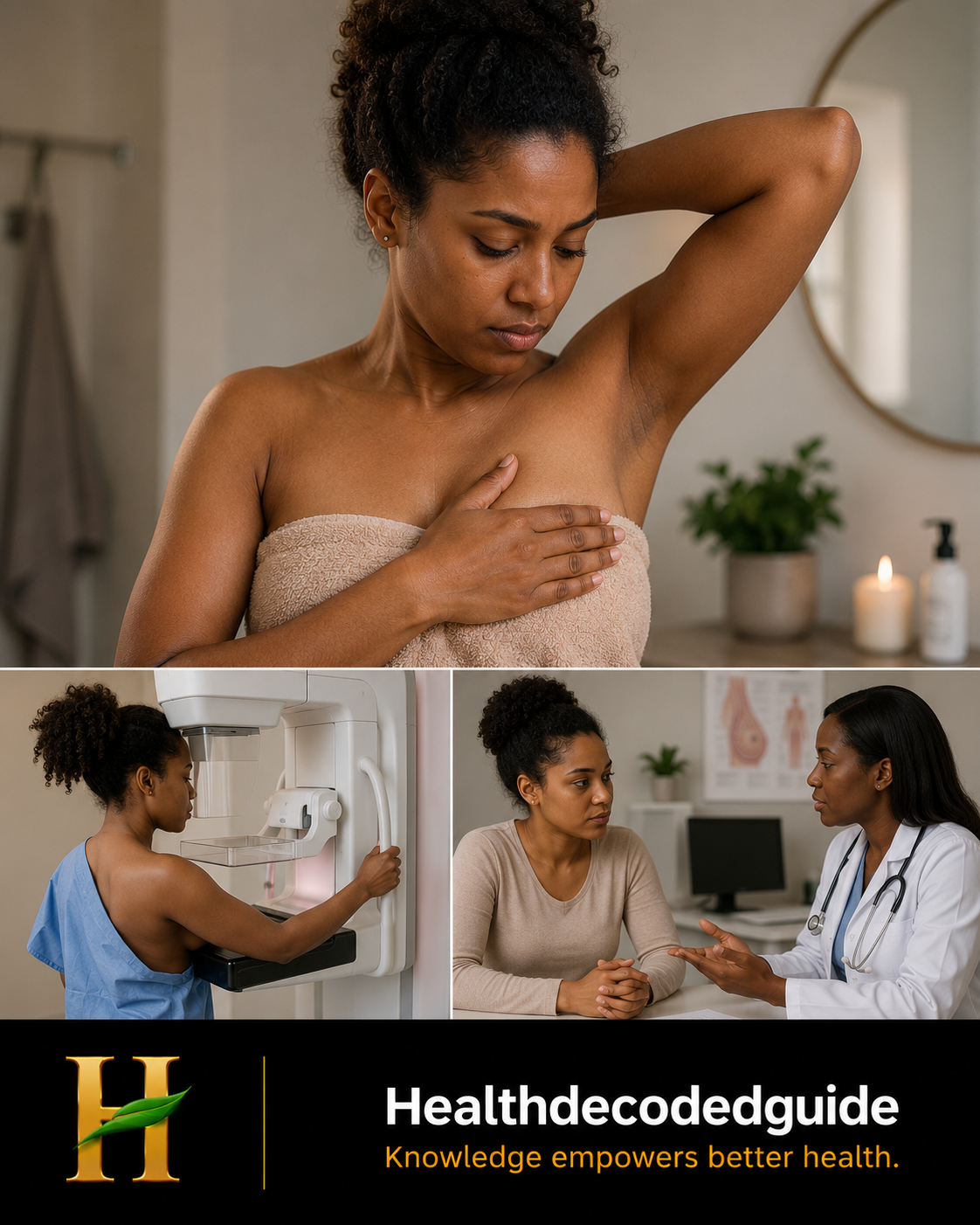
• breast examination
• ultrasound scan
• mammogram
• breast MRI in selected cases
• needle biopsy when necessary
Doctors often use what is called the triple assessment, which combines:
• clinical examination
• breast imaging
• tissue biopsy when needed
👉 Triple assessment provides one of the most reliable ways of identifying the cause of a breast lump.
9️⃣ Looking after your breast health
Become familiar with how your breasts normally look and feel.
You do not need to examine them in a particular way every month, but noticing new changes is important.
Seek medical advice if you notice:
• a new lump
• persistent skin changes
• nipple changes
• unexplained swelling
• ongoing breast pain in one area
👉 Knowing what is normal for you makes it easier to notice changes early.
🟢 Important Message
Most breast lumps are not cancer, but it is impossible to know the cause simply by feeling the lump.
Early assessment allows harmless conditions to be treated appropriately while ensuring breast cancer is diagnosed as early as possible.
👉 Never ignore a new breast lump—even if it is painless.
FAQ
• Are most breast lumps cancer?
No. Most breast lumps are benign, especially in younger women.
• Can breast cancer be painful?
Yes. Although many cancers are painless, some people experience pain or discomfort.
• Can men develop breast lumps?
Yes. Men can develop benign breast conditions and, less commonly, breast cancer.
• Should I wait to see if the lump disappears?
Any new breast lump should be assessed by a healthcare professional, even if it later becomes smaller.
• Can breast cysts disappear on their own?
Yes. Some breast cysts shrink or disappear without treatment.
🧠 Why We Delay
Many people delay seeing a doctor because they are afraid the lump might be cancer. Others assume that if the lump is painless, it cannot be serious.
The truth is that both harmless conditions and breast cancer can present with little or no pain.
👉 Finding a breast lump does not automatically mean cancer, but checking it early gives you the best chance of identifying the cause and starting treatment if needed.
📚 Medical References
• World Health Organization (WHO). Breast cancer.
• National Health Service (NHS). Breast lump in women.
• National Institute for Health and Care Excellence (NICE). Suspected cancer: recognition and referral (NG12).
• American Cancer Society. Signs and Symptoms of Breast Cancer.
• Mayo Clinic. Breast lumps.
Medical Disclaimer
This article is for educational purposes only and does not replace professional medical advice, diagnosis, or treatment. Always consult a qualified healthcare professional regarding medical concerns.