Read in: English | Pidgin
🔎 Quick Summary
PMS refers to physical and emotional symptoms that occur before menstruation due to hormonal changes.
1️⃣ Introduction
Premenstrual syndrome (PMS) is a group of symptoms that occur in the days or weeks before a menstrual period.
These symptoms can affect both the body and emotions.
For some people, PMS is mild.
For others, it can significantly affect daily life.
2️⃣ How it happens
PMS is linked to hormonal changes during the menstrual cycle.
• estrogen and progesterone levels fluctuate
• brain chemicals (such as serotonin) may be affected
👉 These changes can influence mood, energy and physical comfort.
3️⃣ Common symptoms
🔹 Physical symptoms
• bloating
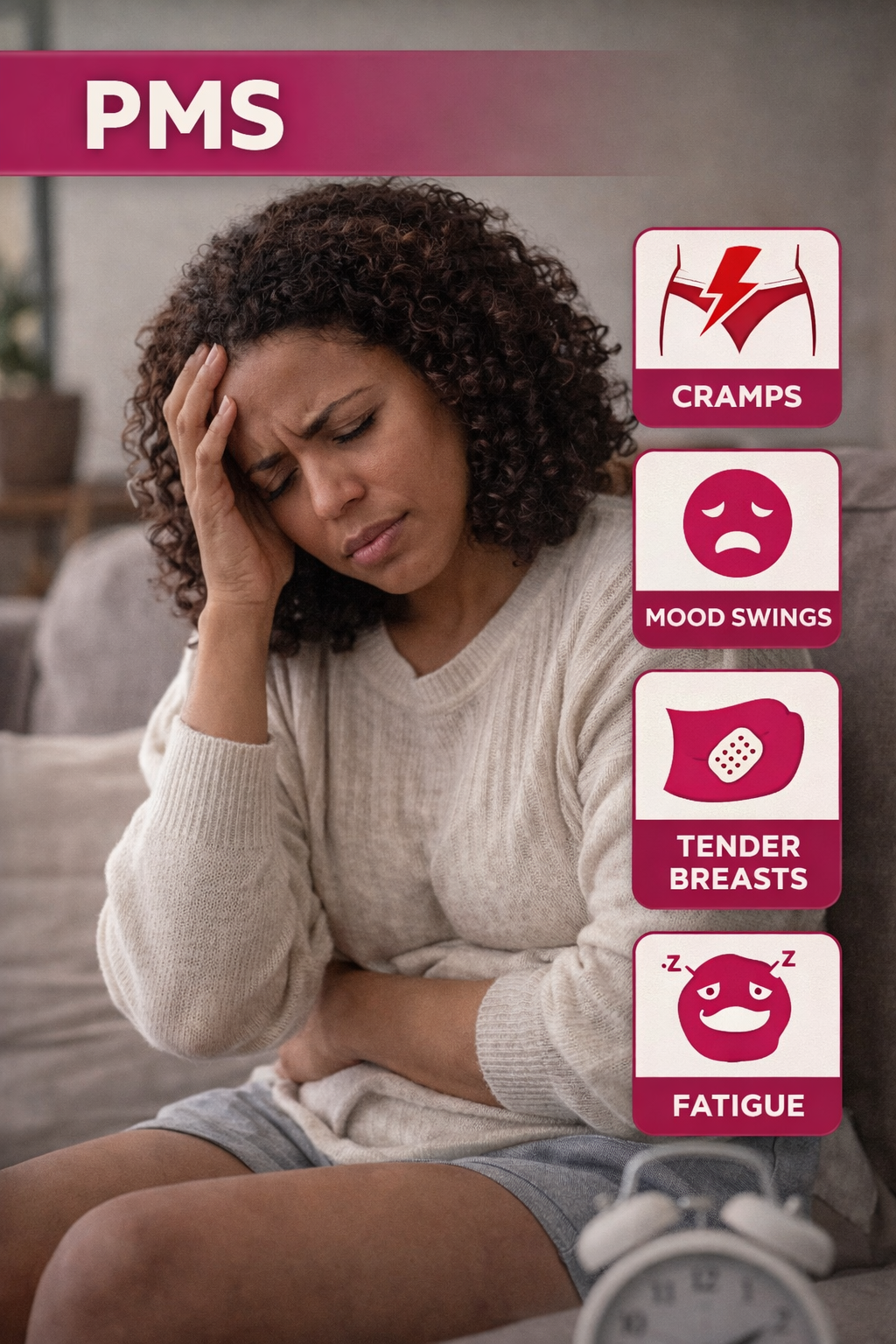
• breast tenderness
• fatigue
• headaches
• changes in appetite
🔹 Emotional symptoms
• mood swings
• irritability
• anxiety
• sadness
• difficulty concentrating
👉 Symptoms usually improve once menstruation begins.
4️⃣ Symptom explanation
Hormonal changes can affect:
• fluid balance → bloating
• brain chemistry → mood changes
• energy levels → fatigue
👉 This explains why PMS affects both body and mind.
5️⃣ Common triggers / factors
• stress
• lack of sleep
• poor diet
• caffeine
• hormonal sensitivity
👉 Some people are more sensitive to hormonal changes.
6️⃣ Comparison note
PMS may be confused with:
• depression
• anxiety
• premenstrual dysphoric disorder (PMDD)
👉 PMDD is a more severe form and requires medical attention.
7️⃣ When it becomes serious
🚨 Seek medical advice if:
• symptoms are severe
• symptoms affect work or relationships
• persistent low mood
• symptoms do not improve after menstruation
⚠️ These may suggest PMDD or another condition.
8️⃣ Management / support
🔹 Lifestyle support
• regular exercise
• balanced diet
• adequate sleep
🔹 Emotional support
• stress management
• relaxation techniques
🔹 Medical support
👉 In some cases, medication or hormonal treatment may be considered.
9️⃣ Diagnosis
Diagnosis is based on:
• symptom pattern
• timing in relation to menstrual cycle
👉 Tracking symptoms can help.
🔟 Important message
PMS is common, but it should not be dismissed if it affects quality of life.
Understanding your cycle can help you manage symptoms better.
🔹 FAQ
🔹 Is PMS normal?
Yes, but severity varies.
🔹 How long does it last?
Usually a few days before menstruation.
🔹 Can it be treated?
Yes, depending on symptoms.
🔹 What is PMDD?
A more severe form of PMS.
🔹 When should I seek help?
If symptoms are severe or persistent.
Related Health Topics
🔹 Menstrual Cycle – How It Works
🔹 Depression – Symptoms
🔹 Anxiety – Symptoms
🔹 Fatigue – Causes
🔹 PMDD – Severe PMS
Medical References
• World Health Organization
• National Health Service
• Mayo Clinic
• American College of Obstetricians and Gynecologists
• Centers for Disease Control and Prevention
Medical Disclaimer
This article is for educational purposes only and does not replace professional medical advice.
If symptoms are severe or affecting your daily life, seek medical advice.