Read in: English | Pidgin
🔎 Quick Summary
Premenstrual dysphoric disorder (PMDD) is a severe form of PMS that significantly affects mood, emotions and daily functioning.
1️⃣ Introduction
Premenstrual dysphoric disorder (PMDD) is a more severe form of premenstrual syndrome (PMS).
While PMS is common and often mild, PMDD can cause intense emotional and physical symptoms that interfere with daily life.
👉 PMDD is a medical condition and should be taken seriously.
2️⃣ How it happens
PMDD is linked to hormonal changes during the menstrual cycle.
• estrogen and progesterone fluctuate
• brain chemicals (such as serotonin) are affected
👉 In some individuals, the brain is more sensitive to these hormonal changes.
👉 This leads to stronger emotional and physical responses.
3️⃣ Symptoms
🔹 Emotional symptoms
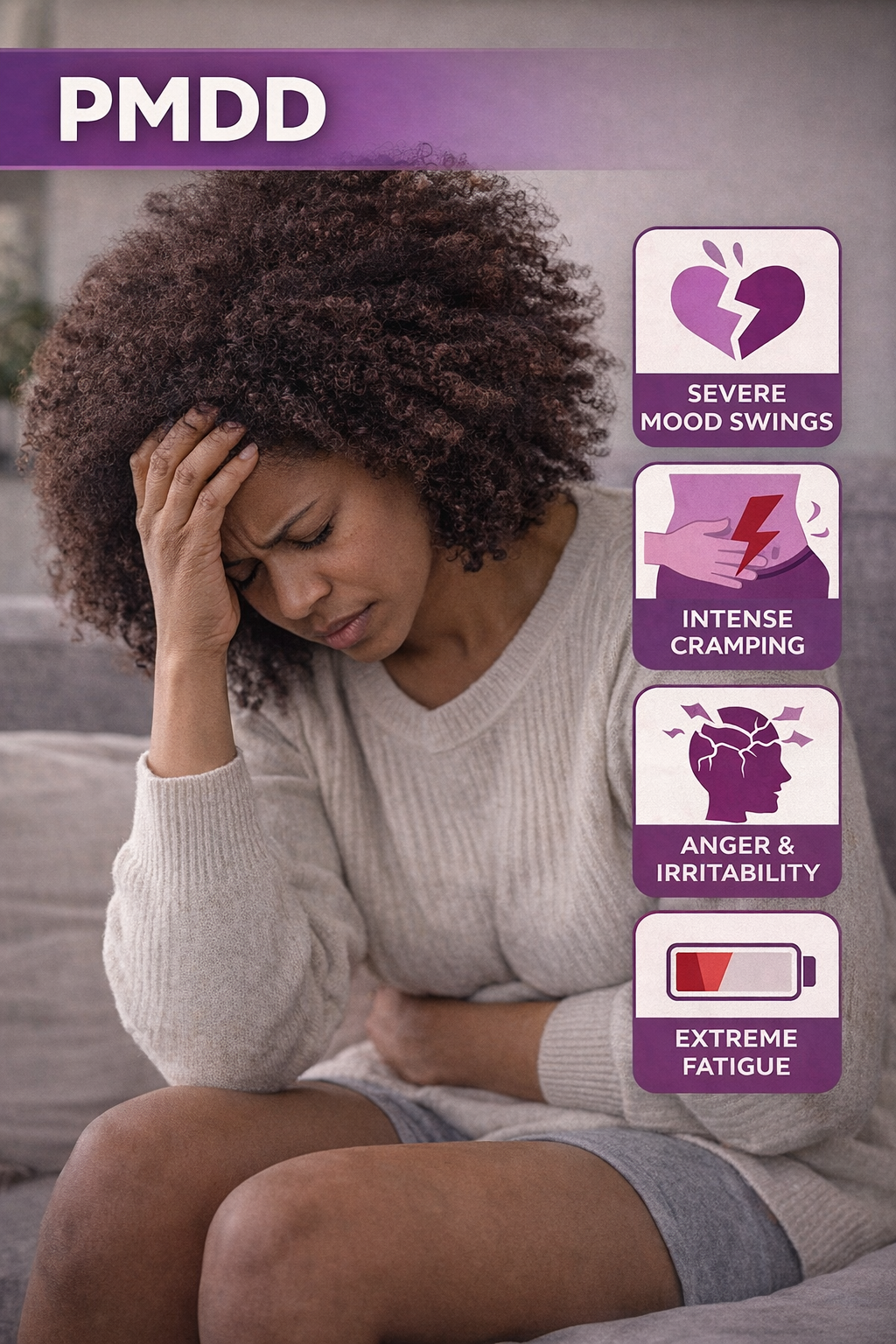
• severe mood swings
• irritability or anger
• anxiety
• sadness or hopelessness
• feeling overwhelmed
🔹 Physical symptoms
• fatigue
• bloating
• breast tenderness
• headaches
• sleep problems
👉 Symptoms typically occur in the days before menstruation and improve after it begins.
4️⃣ Symptom explanation
PMDD symptoms occur because:
• hormonal changes affect brain chemistry
• emotional regulation becomes more difficult
• stress response may increase
👉 This explains why symptoms feel intense and difficult to control.
5️⃣ Common causes / risk factors
• sensitivity to hormonal changes
• history of depression or anxiety
• stress
• genetic factors
👉 Not everyone experiences PMDD.
6️⃣ Comparison note
PMDD is different from:
• PMS → milder symptoms
• depression → not linked to menstrual cycle
👉 PMDD follows a clear cyclical pattern.
7️⃣ When it becomes serious
🚨 Seek medical help if:
• symptoms severely affect daily life
• difficulty functioning at work or in relationships
• persistent low mood or hopelessness
• thoughts of self-harm
⚠️ PMDD requires proper medical evaluation.
8️⃣ Management / support
🔹 Lifestyle support
• regular exercise
• balanced diet
• adequate sleep
🔹 Psychological support
• stress management
• therapy
🔹 Medical treatment
• medications (e.g. SSRIs in some cases)
• hormonal treatments
👉 Treatment should be individualized.
9️⃣ Diagnosis
Diagnosis is based on:
• symptom pattern
• timing in relation to menstrual cycle
• severity of symptoms
👉 Tracking symptoms over time is helpful.
🔟 Important message
PMDD is real and treatable.
👉 It is not “just PMS”.
👉 Seeking help can significantly improve quality of life.
🔹 FAQ
🔹 Is PMDD the same as PMS?
No, it is more severe.
🔹 Is it a mental health condition?
It affects both mental and physical health.
🔹 Can it be treated?
Yes.
🔹 Does it happen every month?
Often, yes.
🔹 When should I seek help?
If symptoms are severe.
Related Health Topics
🔹 PMS (Premenstrual Syndrome)
🔹 Depression – Symptoms
🔹 Anxiety – Symptoms
🔹 Emotional Regulation Difficulties
Medical References
• World Health Organization
• American College of Obstetricians and Gynecologists
• National Health Service
• Mayo Clinic
• American Psychiatric Association
Medical Disclaimer
This article is for educational purposes only and does not replace professional medical advice, diagnosis or treatment.
If you experience severe emotional symptoms or thoughts of self-harm, seek medical help immediately.