Read in: English | Pidgin English
🩺 Medically reviewed by the Health Decoded Guide Editorial Team · Last reviewed: July 2026.
🔎 Quick Summary
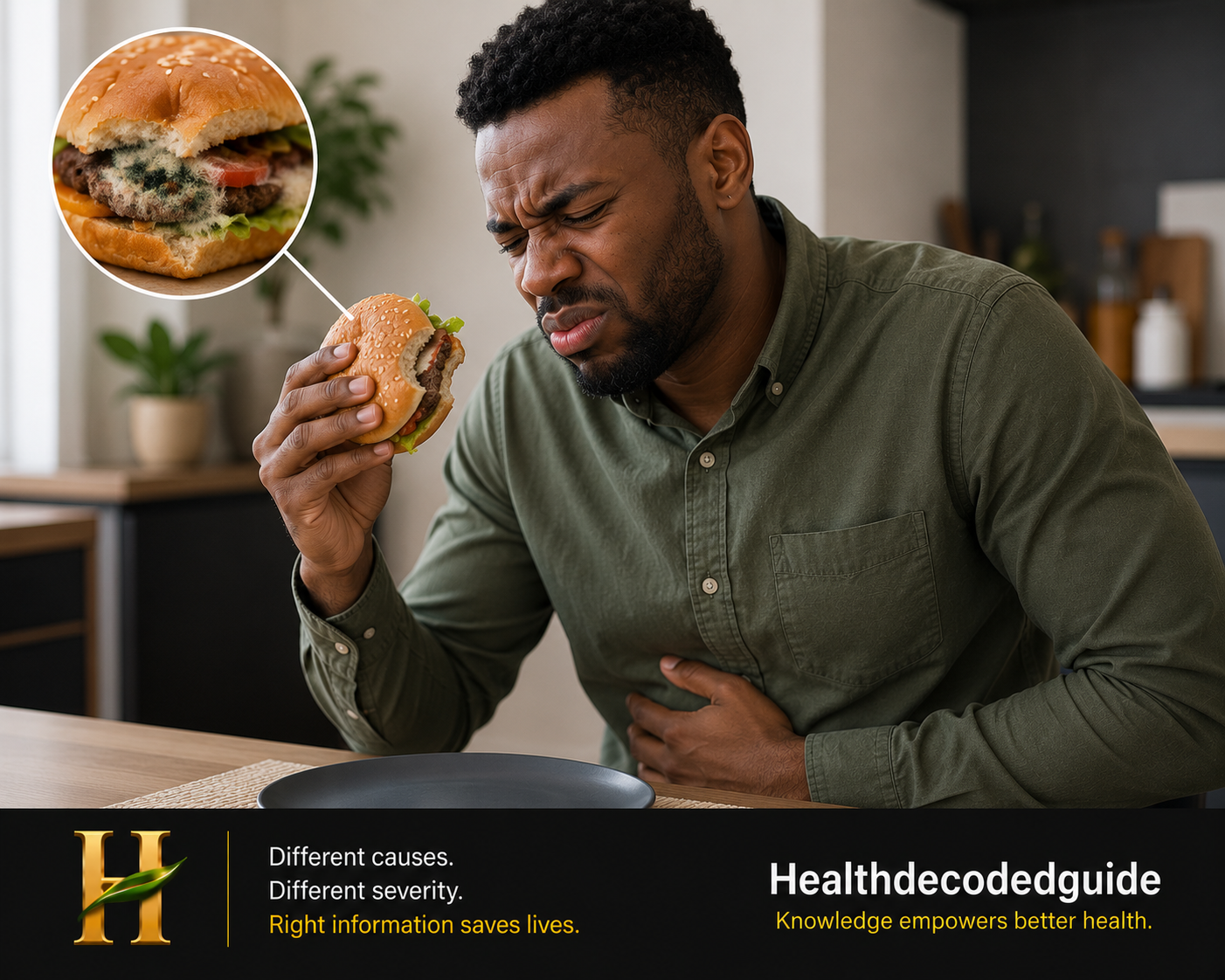
Food poisoning is a common illness caused by eating food or drinking water contaminated with harmful germs or toxins.
It often causes nausea, vomiting, diarrhea, and stomach cramps.
Most people recover within a few days, but severe vomiting or diarrhea can lead to dehydration if fluids are not replaced.
1️⃣ Introduction
Food poisoning is a common condition that affects the digestive system. It occurs when a person eats food contaminated with bacteria, viruses, or toxins.
Most people recover without complications.
However, young children, older adults, pregnant women, and people with weakened immune systems are at greater risk of dehydration and may require medical care.
2️⃣ How the condition develops
Food poisoning occurs when harmful germs or toxins enter the body through contaminated food.
Common sources include:
• undercooked food
• contaminated water
• improperly stored food
• poor hygiene during food preparation
Once these germs or toxins enter the digestive system, they irritate the stomach and intestines.
This causes the body to react with nausea, vomiting, diarrhea, and stomach cramps as it tries to eliminate the harmful substances.
3️⃣ Early symptoms
Symptoms usually begin within hours to a few days after eating contaminated food.
Common symptoms include:
• nausea
• vomiting
• diarrhea
• stomach cramps
• weakness
• fever
• loss of appetite
4️⃣ Symptom explanation
The biggest concern with food poisoning is dehydration.
Repeated vomiting and diarrhea cause the body to lose large amounts of water and important minerals (electrolytes).
If these losses are not replaced, dehydration can develop.
Signs include:
- intense thirst
- dizziness
- dry mouth
- reduced urine output
- severe weakness
👉 Young children and older adults can become dehydrated more quickly.
5️⃣How food poisoning differs from other illnesses
- Cholera usually causes large amounts of watery diarrhea and rapid dehydration.
- Gastroenteritis is often caused by viruses and may spread from person to person.
- Food poisoning often develops after eating contaminated food, and symptoms may begin within hours
👉 Because these illnesses can look similar, medical assessment may sometimes be needed to identify the exact cause.
6️⃣ When it becomes dangerous
Seek medical care if:
• symptoms are severe
• inability to keep fluids down
• high fever
• vomiting does not stop
• signs of dehydration appear
• diarrhea lasts more than 2–3 days
• there is blood in stool
• confusion
7️⃣ Prevention / management
To prevent food poisoning:
• wash hands before eating
• cook food properly
• store food safely
• avoid contaminated water
If food poisoning develops:
- drink plenty of fluids
- use Oral Rehydration Solution (ORS) if vomiting or diarrhea is severe
- rest
- eat light foods as symptoms improve
👉 Replacing lost fluids is the most important part of treatment.
8️⃣ Diagnosis / testing
Doctors diagnose food poisoning based on:
• symptoms
• history of food intake
• stool tests (in severe cases)
Doctors may also ask about:
- recent meals
- travel
- whether other people who ate the same food became ill
🟢 Important message
Most people recover completely from food poisoning within a few days.
The biggest risk is dehydration, especially if vomiting or diarrhea is severe.
Early fluid replacement and medical care when needed can help prevent serious complications.
FAQ
• How long does food poisoning usually last?
Most mild cases improve within 1–3 days, although some infections may last longer.
• Do I need antibiotics?
Not usually. Most cases improve without antibiotics, but some bacterial infections may require treatment.
• Can food poisoning spread to other people?
Yes. Some infections can spread through poor hand hygiene or contaminated food.
• When should I go to the hospital?
Seek medical care if you cannot keep fluids down, develop signs of dehydration, have bloody diarrhea, or your symptoms are severe or persistent.
• Can food poisoning cause fever?
Yes. Some types of food poisoning can cause fever, especially bacterial infections.
🔗 Related Health Topics
• Cholera
• Diarrhea
• Dehydration
• Gastroenteritis
• Cholera vs Food Poisoning
• Cholera vs Gastroenteritis
📚 Medical References
• World Health Organization (WHO) – Food safety: https://www.who.int/health-topics/food-safety
• Centers for Disease Control and Prevention (CDC) – Foodborne Germs and Illnesses: https://www.cdc.gov/foodborne-germs/
• U.S. Food & Drug Administration (FDA) – Food Safety for Consumers: https://www.fda.gov/food
• MSD Manual Consumer Version – Gastroenteritis: https://www.msdmanuals.com/home/digestive-disorders/gastroenteritis/overview-of-gastroenteritis • NHS (National Health Service, UK) – Food poisoning: https://www.nhs.uk/conditions/food-poisoning/
• MSD Manual Consumer Version – Overview of Food Poisoning: https://www.msdmanuals.com/home/injuries-and-poisoning/poisoning/overview-of-food-poisoning
⚠️ Medical Disclaimer
This article is for educational purposes only and does not replace professional medical advice.