Read in: English | Pidgin English
🩺 Medically reviewed by the Health Decoded Guide Editorial Team· Last reviewed: July 2026
🔎 Quick Summary
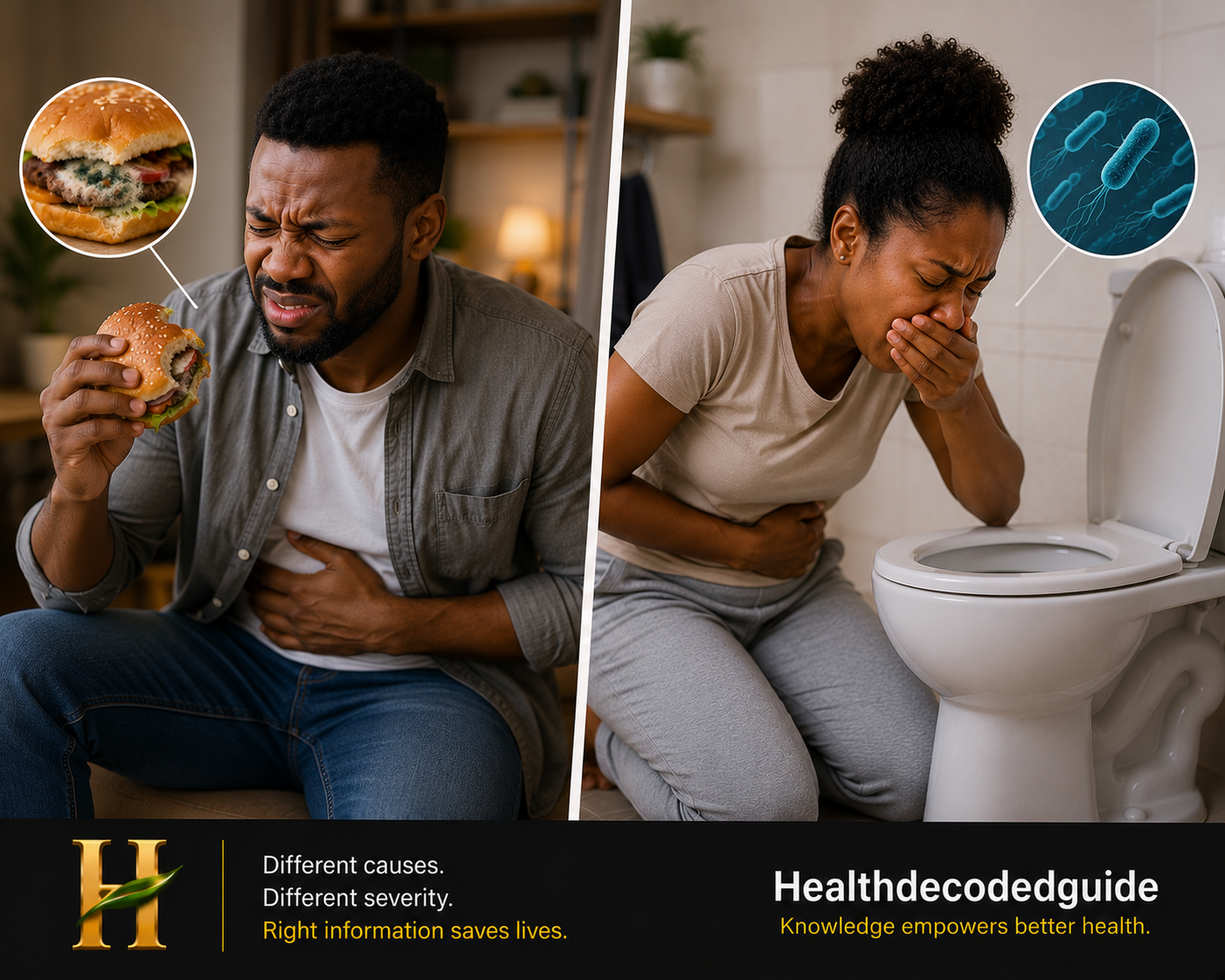
Cholera and food poisoning can both cause diarrhoea, vomiting and dehydration, making them easy to confuse.
However, cholera is a specific bacterial infection that usually causes sudden, severe watery diarrhoea and rapid fluid loss. Food poisoning is a general term for illnesses caused by contaminated food and can result from bacteria, viruses or toxins.
Because the symptoms can overlap, it is not always possible to tell the difference based on symptoms alone.
If you develop severe diarrhoea, signs of dehydration or become seriously unwell, seek medical care immediately.
| Feature | Cholera | Food Poisoning |
|---|---|---|
| Cause | Vibrio cholerae bacteria | Bacteria, viruses or toxins in contaminated food |
| How it spreads | Contaminated water or food | Contaminated food or drinks |
| How symptoms begin | Usually sudden | Usually within hours to a few days after eating contaminated food |
| Main symptom | Profuse watery diarrhoea | Nausea, vomiting, diarrhoea and stomach cramps |
| Vomiting | Common | Very common |
| Fever | Usually absent or mild | May occur depending on the cause |
| Severe dehydration | Very common | Can occur, especially in severe cases |
| Main treatment | Rapid rehydration ± antibiotics | Fluids, rest and treatment depending on the cause |
🟦 What Is Cholera?
Cholera is a bacterial infection caused by Vibrio cholerae.
It is usually spread through contaminated drinking water or food, particularly in areas with poor sanitation.
The hallmark symptom is profuse watery diarrhea, which can lead to severe dehydration within hours if fluids are not replaced promptly.
Common symptoms include:
Without rapid treatment, cholera can become life-threatening.
🟦 What Is Food Poisoning?
Food poisoning is a general term for illnesses caused by eating contaminated food.
Depending on the cause, it may result from bacteria, viruses, parasites or toxins.
Symptoms often begin within hours to a few days after eating contaminated food.
Common symptoms include:
Most cases are mild and improve within a few days, although some people may develop severe dehydration or other complications.
🟦 Why Are They Often Confused?
Both cholera and food poisoning can cause:
-
Diarrhoea
-
Vomiting
-
Stomach discomfort
-
Weakness
Because these symptoms overlap, many people assume they have ordinary food poisoning when they actually have another infection such as cholera.
Healthcare professionals may need laboratory tests to determine the exact cause, especially during outbreaks or severe illness.
🟦 How Do Doctors Tell the Difference?
Healthcare providers ask about:
-
Your symptoms
-
Foods you have recently eaten
-
Recent travel
-
Exposure to unsafe drinking water
-
Whether other people around you are also sick
Tests may include:
For cholera:
-
Stool testing for Vibrio cholerae
For food poisoning:
-
Stool tests to identify bacteria, viruses or parasites when appropriate
-
Blood tests in selected cases if severe infection is suspected
These investigations help identify the cause and guide the most appropriate treatment.
🟦 Can Food Poisoning Cause Severe Dehydration?
Yes.
Most cases of food poisoning are mild, but severe vomiting and diarrhoea can lead to dehydration, particularly in young children, older adults and people with weakened immune systems.
However, cholera is much more likely to cause rapid and severe dehydration because of the large volume of watery diarrhoea it produces.
🟦 When Should You Seek Medical Care?
Seek medical care immediately if you develop:
-
Severe or persistent diarrhoea
-
Repeated vomiting
-
Signs of dehydration, such as extreme thirst, very little urine, dizziness or confusion
-
Blood in the stool
-
High fever
-
Difficulty drinking fluids
-
Severe weakness
Prompt treatment can help prevent serious complications.
🟦 Key Takeaway
Cholera and food poisoning can cause similar symptoms, but they are not the same condition.
Cholera is a specific bacterial infection that commonly causes severe watery diarrhoea and rapid dehydration, while food poisoning is a broad term that includes many different illnesses caused by contaminated food.
If you develop severe diarrhoea or signs of dehydration, seek medical care promptly.
🔗 Related Articles
📚 Medical References
• World Health Organization (WHO) – Cholera: https://www.who.int/news-room/fact-sheets/detail/cholera
• Centers for Disease Control and Prevention (CDC) – Cholera: https://www.cdc.gov/cholera/
• Centers for Disease Control and Prevention (CDC) – Food Poisoning (Foodborne Illnesses): https://www.cdc.gov/foodborneburden/index.html
• CDC Yellow Book – Travelers' Diarrhea (foodborne/waterborne illness): https://www.cdc.gov/yellow-book/hcp/preparing-international-travelers/travelers-diarrhea.html
• CDC Yellow Book – Cholera: https://www.cdc.gov/yellow-book/hcp/travel-associated-infections-diseases/cholera.html
⚠️ Medical Disclaimer
This article is for educational purposes only and is not a substitute for professional medical advice, diagnosis or treatment. Although every effort has been made to ensure the information is accurate and up to date, medical knowledge continues to evolve.
Always seek advice from a qualified healthcare professional if you have concerns about your health.