Read in: English | Pidgin English
🩺 Medically reviewed by the Health Decoded Guide Editorial Team · Last reviewed: July 2026
🔍Quick Summary
Cholera and gastroenteritis can both cause diarrhea, vomiting and dehydration, making them easy to confuse.
However, they are not the same illness.
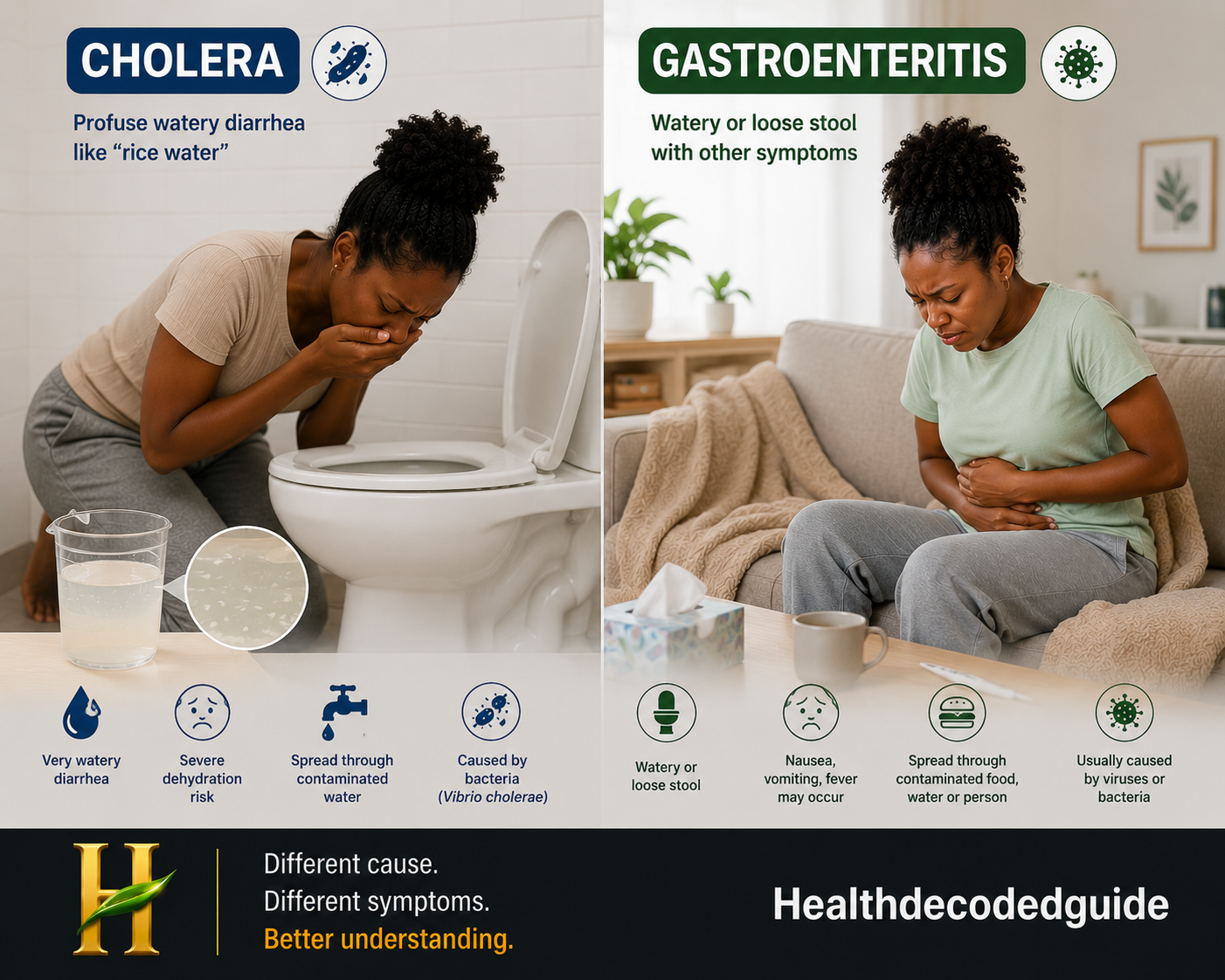
Cholera is a specific bacterial infection that can rapidly become life-threatening because of severe dehydration. Gastroenteritis is a general term for inflammation of the stomach and intestines caused by viruses, bacteria or parasites.
Although the symptoms may overlap, the causes, severity and treatment can differ.
| Feature | Cholera | Gastroenteritis |
|---|---|---|
| Cause | Bacteria (Vibrio cholerae) | Viruses, bacteria or parasites |
| How it spreads | Contaminated food or drinking water | Contaminated food, water or close contact with an infected person |
| How symptoms begin | Often sudden | Can be sudden or gradual, depending on the cause |
| Diarrhea | Profuse watery diarrhoea ("rice-water" stools) | Watery diarrhoea, sometimes with blood or mucus depending on the cause |
| Vomiting | Common | Common |
| Fever | Usually absent or mild | Common, especially with viral or bacterial infections |
| Abdominal cramps | Usually mild | Common |
| Main concern | Rapid, severe dehydration | Dehydration, especially in young children, older adults and vulnerable individuals |
| Treatment | Oral rehydration solution (ORS), IV fluids if severe, and antibiotics in selected cases | ORS, fluids, rest, and treatment depending on the cause |
🟦 What Is Cholera?
Cholera is an acute diarrhoeal disease caused by the bacterium Vibrio cholerae.
People usually become infected by drinking contaminated water or eating contaminated food.
Many people with cholera have mild symptoms or no symptoms at all. However, some develop severe diarrhoea and vomiting, which can lead to dangerous dehydration within hours if not treated promptly.
Common symptoms include:
-
Profuse watery diarrhoea
-
Intense thirst
-
Dry mouth
-
Muscle cramps
-
Signs of dehydration such as dizziness or reduced urination
Without rapid treatment, severe cholera can become life-threatening.
🟦 What Is Gastroenteritis?
Gastroenteritis is inflammation of the stomach and intestines, often referred to as a "stomach bug."
Unlike cholera, gastroenteritis is not one specific disease. It is a broad term that describes infections caused by many different viruses, bacteria and parasites.
Depending on the cause, symptoms may include:
Most people recover within 5-6 days with rest and adequate fluid replacement, although some infections may require medical treatment.
🟦 Why Are They Often Confused?
Both cholera and gastroenteritis can cause:
-
Vomiting
-
Weakness
Because these symptoms overlap, it can be difficult to tell them apart without medical assessment.
One important difference is that cholera typically causes very large amounts of watery diarrhoea with rapid dehydration, while gastroenteritis is more likely to cause abdominal cramps, fever and milder diarrhoea, depending on the underlying infection.
🟦 How Do Doctors Tell the Difference?
Healthcare providers consider several factors, including:
-
Your symptoms
-
How severe the diarrhoea is
-
Recent travel
-
Exposure to contaminated food or water
-
Whether there is a cholera outbreak in your area
In some cases, stool samples may be tested to identify the organism causing the infection.
Testing is especially important if symptoms are severe, prolonged or associated with an outbreak.
🟦 Can Cholera Be Mistaken for Gastroenteritis?
Yes.
In its early stages, cholera can look similar to other forms of gastroenteritis because both can cause diarrhoea and vomiting.
However, cholera often progresses much more rapidly, producing large volumes of watery diarrhoea that can quickly lead to severe dehydration.
This is why anyone with severe diarrhoea or signs of dehydration should seek medical care promptly rather than trying to determine the cause at home.
🟦 When Should You Seek Medical Care?
Seek urgent medical attention if you or someone else develops:
-
Severe or persistent diarrhoea
-
Frequent vomiting
-
Signs of dehydration, including extreme thirst, dizziness, dry mouth or reduced urination
-
Blood in the stool
-
Severe weakness
-
Confusion or difficulty staying awake
-
Inability to keep fluids down
Children, older adults and people with weakened immune systems may become dehydrated more quickly and should be assessed early.
🟦 Key Takeaway
Although cholera and gastroenteritis can cause similar symptoms, they are not the same condition.
Cholera is a specific bacterial infection that can rapidly become life-threatening because of severe dehydration, while gastroenteritis is a general term for infections affecting the stomach and intestines.
If you develop severe diarrhoea, persistent vomiting or signs of dehydration, seek medical care promptly. Early treatment can prevent serious complications and improve recovery.
🔗 Related Articles
-
Malaria vs Typhoid: How to Tell the Difference
📚 Medical References
• World Health Organization (WHO) – Cholera: https://www.who.int/news-room/fact-sheets/detail/cholera
• World Health Organization (WHO) – Diarrhoeal diseases: https://www.who.int/news-room/fact-sheets/detail/diarrhoeal-disease
• Centers for Disease Control and Prevention (CDC) – About cholera: https://www.cdc.gov/cholera/about/index.html
• MSD Manual Consumer Version – Gastroenteritis: https://www.msdmanuals.com/home/digestive-disorders/gastroenteritis/overview-of-gastroenteritis • NHS (National Health Service, UK) – Gastroenteritis: https://www.nhs.uk/conditions/gastroenteritis/
⚠️ Medical Disclaimer
This article is for educational purposes only and is not a substitute for professional medical advice, diagnosis or treatment. Although every effort has been made to ensure the information is accurate and up to date, medical knowledge continues to evolve.
Always seek advice from a qualified healthcare professional if you have concerns about your health or develop severe or persistent symptoms.