Read in: English | Pidgin English
🩺 Medically reviewed by the Health Decoded Guide Editorial Team · Last reviewed: July 2026
🔍 Quick Summary
Low blood sugar, also called hypoglycemia, happens when glucose levels in the blood drop too low.
The brain depends heavily on glucose for energy, so low blood sugar can quickly affect thinking, behavior, and body function.
Quick recognition and treatment can help prevent serious complications.
1️⃣ Introduction
Blood sugar helps provide energy for the body and brain.
• hypoglycemia happens when blood glucose falls below normal levels
• it is common in people with diabetes using insulin or certain medications
• low blood sugar can range from mild symptoms to severe emergencies
👉 The brain is especially sensitive to sudden drops in blood sugar.
2️⃣ How it happens
The body normally keeps blood sugar within a stable range.
• insulin lowers blood sugar levels
• skipping meals, excess medication, or intense exercise may reduce glucose too much
• low glucose affects normal brain and nerve function
👉 Without enough glucose, the brain struggles to function properly.
3️⃣ Types
• Mild hypoglycemia
- person remains awake and able to eat or drink
- symptoms improve after sugar intake
• Moderate hypoglycemia
- confusion or difficulty concentrating may occur
- assistance from another person may be needed
• Severe hypoglycemia
- seizures or unconsciousness may happen
- emergency treatment is required
👉 Symptoms may worsen quickly if blood sugar continues to fall.
4️⃣ Common causes
• Diabetes-related causes
- too much insulin
- diabetes medications lowering glucose excessively
• Lifestyle-related causes
- skipping meals
- heavy exercise without enough food intake
• Other contributing factors
- alcohol consumption
- prolonged fasting or illness
👉 Drinking alcohol without eating may increase hypoglycemia risk in some people.
5️⃣ Symptoms
• sweating and shaking
• hunger and dizziness
• confusion or difficulty concentrating
👉 These symptoms happen because the brain and body are reacting to low glucose levels.
6️⃣ Associated symptoms
• blurred vision
• Heart Palpitations
• irritability or unusual behavior
• weakness or fainting
👉 Severe hypoglycemia may sometimes resemble stroke, intoxication, or seizures.
7️⃣🩺 When it becomes dangerous 🚨
• seizures
• collapse
• inability to swallow safely
• unconsciousness or
• severe confusion
👉 These may indicate:
• severe hypoglycemia
• a life-threatening emergency needing urgent treatment immediately
8️⃣ Management / treatment
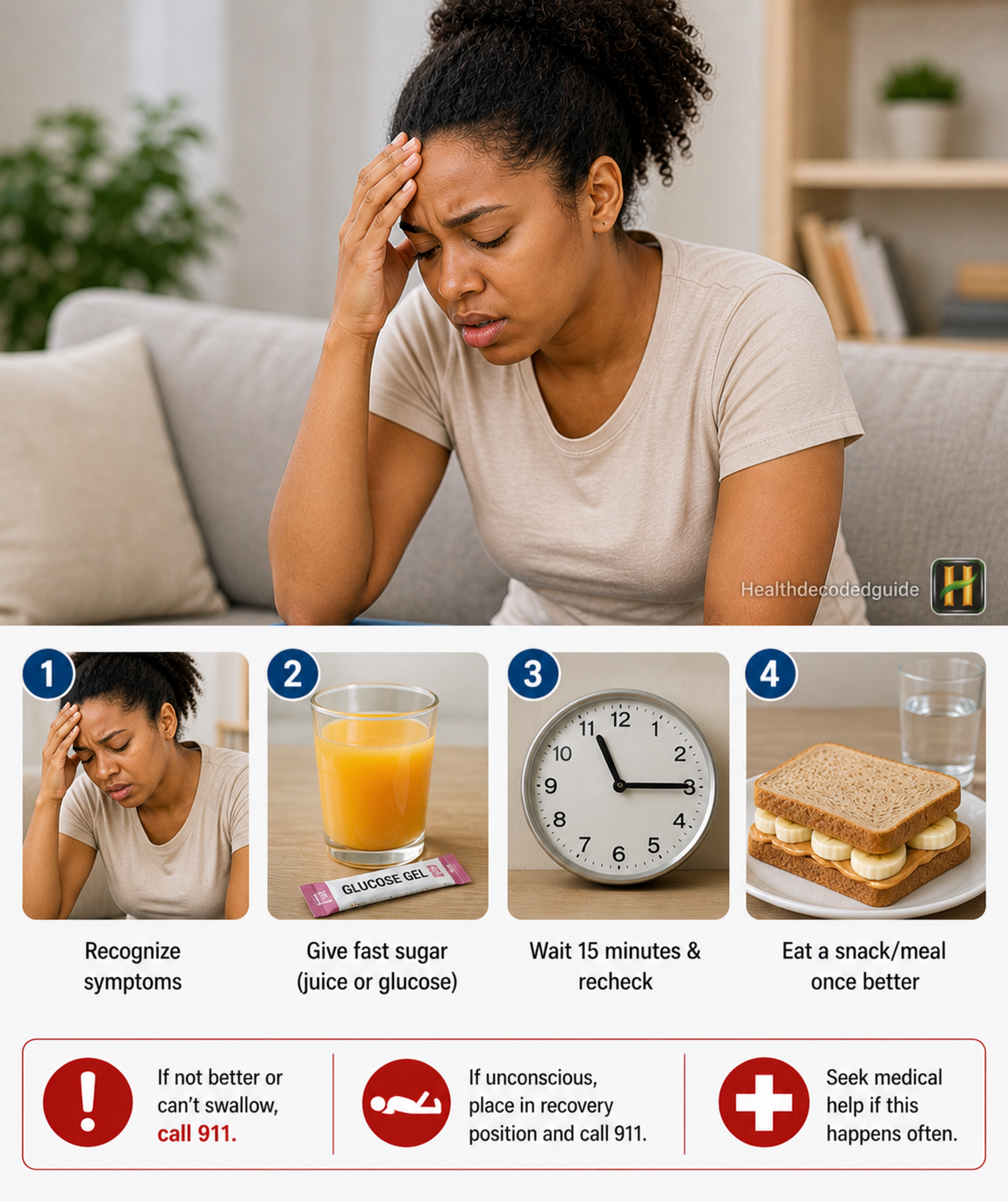
• give fast-acting sugar if the person is awake and able to swallow safely
• examples include glucose tablets, juice, or sugary drinks
• call emergency services if the person becomes unconscious or cannot swallow
Basic First Aid for Low Blood Sugar
• stay calm and check symptoms
• give quick sugar sources if safe
• recheck symptoms after improvement
• provide a snack or meal afterward if possible
• never force food or drink into an unconscious person’s mouth
👉 Quick sugar intake often improves mild hypoglycemia within minutes.
9️⃣ Diagnosis
• blood glucose testing
• review of symptoms and medication use
• further medical assessment if episodes repeat frequently
👉 Blood sugar meters can help confirm hypoglycemia quickly.
🟢 Important message
Low blood sugar can become serious quickly, but early recognition and treatment often prevent complications.
People with diabetes and those around them benefit from understanding hypoglycemia warning signs and first aid.
👉 Sudden confusion, shaking, or collapse should never be ignored in someone at risk of hypoglycemia.
FAQ
• What is hypoglycemia?
Hypoglycemia means blood sugar levels are too low.
• Can low blood sugar cause fainting?
Yes. Severe hypoglycemia may lead to collapse or unconsciousness.
• What should I give someone with low blood sugar?
Fast-acting sugar such as juice, glucose tablets, or sugary drinks if they are awake and able to swallow.
• Should insulin be taken during hypoglycemia?
No. Blood sugar should first be corrected and medical advice followed appropriately.
• When should emergency services be called?
If the person becomes unconscious, has seizures, or cannot swallow safely.
🔗 Related Health Topics
• Diabetes
• Fainting: What To Do
• Seizure First Aid
• Emergency Response Basics
• Heart Attack
📚 Medical References
• World Health Organization (WHO). Diabetes.
• National Health Service (NHS). Low blood sugar (hypoglycaemia).
• American Diabetes Association (ADA). Low Blood Glucose (Hypoglycemia).
• Mayo Clinic. Hypoglycemia.
• MedlinePlus. Hypoglycemia.
• National Institute for Health and Care Excellence (NICE). Type 1 diabetes in adults: diagnosis and management.
⚠️ Medical Disclaimer
This article is for educational purposes only and does not replace professional medical advice.
If you have symptoms or concerns, please consult a qualified healthcare professional.