Read in: English | Pidgin English
🩺 Medically reviewed by the Health Decoded Guide Editorial Team · Last reviewed: July 2026
🔍 Quick Summary
Emergency response basics involve simple actions that help protect life and reduce harm before professional medical help arrives.
Staying calm, ensuring safety, and recognizing danger signs are important during emergencies.
Basic first-aid knowledge can help people respond more confidently in stressful situations.
1️⃣ Introduction
Medical emergencies can happen suddenly at home, work, school, sports events, or public places.
• emergencies may involve breathing problems, injuries, seizures, or collapse
• quick response can improve survival and reduce complications
• ordinary people are often the first to witness emergencies
👉 You do not need to be a healthcare worker to provide helpful first aid.
2️⃣ How it happens
During emergencies, the body may struggle to maintain breathing, circulation, or consciousness.
• injuries or illness can reduce oxygen supply to organs
• severe emergencies may affect the brain, heart, or breathing quickly
• delays in response may worsen outcomes
👉 The first few minutes after an emergency are often very important.
3️⃣ Types
• Medical emergencies
• Injury-related emergencies
- bleeding
- burns, fractures, or accidents
• Breathing emergencies
- choking
- asthma attacks or drowning
👉 Different emergencies need different first-aid approaches, but calm action remains important in all situations.
4️⃣ Common causes
• Accidents and trauma
- road accidents
- falls or sports injuries
• Sudden illness
- heart disease
- severe infections or allergic reactions
• Environmental situations
- heat exhaustion
- drowning or electrical injuries
👉 Emergencies can affect people of any age, including healthy individuals.
5️⃣ Symptoms
• collapse or unresponsiveness
• difficulty breathing
• severe pain, bleeding, or confusion
👉 These symptoms may indicate the body is struggling to function normally.
6️⃣ Associated symptoms
• blue lips or pale skin
• seizures or shaking
• dizziness or fainting
• chest pain or weakness
👉 Sudden changes in breathing, awareness, or movement should always be taken seriously.
7️⃣🩺 When it becomes dangerous 🚨
• person stops breathing normally
• severe bleeding or collapse occurs
• chest pain, stroke signs, or seizures last too long
👉 These may indicate:
• life-threatening emergencies
• conditions needing urgent medical treatment immediately
8️⃣ Management / treatment
• ensure the area is safe before helping
• call emergency services quickly
• provide appropriate first aid based on the situation
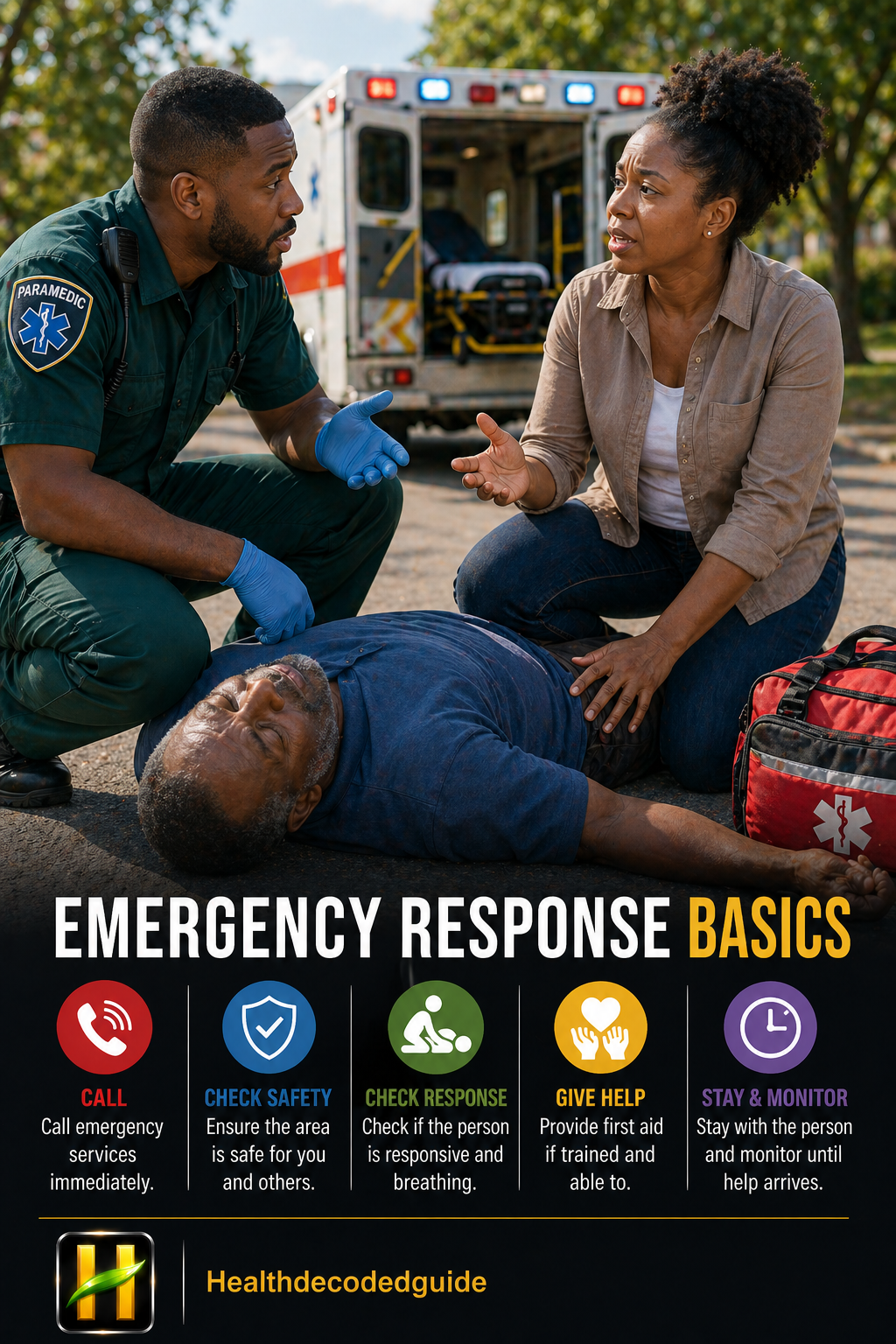
Basic Emergency Response Steps
• stay calm and assess the situation
• check if the person responds
• look for breathing problems or major bleeding
• call for emergency help early
• begin CPR or first aid if needed
• stay with the person until professionals arrive
👉 Personal safety matters too. Avoid entering dangerous environments without proper protection.
9️⃣ Diagnosis
• emergency response itself is not a diagnosis
• healthcare teams later assess the cause of the emergency
• investigations depend on symptoms and injuries involved
👉 Fast recognition and early action can significantly affect survival and recovery.
🟢 Important message
Emergencies can feel overwhelming, but simple calm actions can make a major difference.
Recognizing warning signs early and calling for help quickly may help save lives.
👉 Basic first-aid knowledge is a practical skill that can benefit families, workplaces, and communities.
FAQ
• What is the first thing to do during an emergency?
Ensure the scene is safe and check if the person responds.
• When should emergency services be called?
Immediately during severe breathing problems, collapse, chest pain, stroke signs, severe bleeding, or unconsciousness.
• Should I move an injured person?
Avoid unnecessary movement unless there is immediate danger, such as fire or traffic.
• Why is staying calm important?
Calm thinking helps people make safer and faster decisions during emergencies.
• Can ordinary people perform first aid?
Yes. Basic first-aid actions from bystanders can help before professionals arrive.
🔗 Related Health Topics
• CPR for Adults
• Choking First Aid Adults
• Choking First Aid Children
• Heart attack
• Seizure First Aid
• Stroke Warning Signs
• Bleeding Control and First Aid
📚 Medical References
• World Health Organization (WHO). Emergency care.
• American Red Cross. First Aid Steps.
• National Health Service (NHS). First aid.
• Mayo Clinic. First aid.
• European Resuscitation Council (ERC). European Resuscitation Council Guidelines 2021: First Aid.
• MedlinePlus. First Aid.
⚠️ Medical Disclaimer
This article is for educational purposes only and does not replace professional medical advice.
If you have symptoms or concerns, please consult a qualified healthcare professional.