Read in: English | Pidgin English
🩺 Medically reviewed by the Health Decoded Guide Editorial Team · Last reviewed: July 2026
🔍 Quick Summary
CPR (cardiopulmonary resuscitation) is an emergency procedure used when a person's heart stops beating effectively or they stop breathing normally.
Starting CPR immediately can help keep blood and oxygen flowing to the brain until emergency medical help arrives.
Even hands-only CPR can save lives.
1️⃣ Introduction
CPR is a first-aid emergency procedure used during cardiac arrest or severe breathing emergencies.
• CPR combines chest compressions with breathing support when needed
• it helps circulate oxygen-rich blood through the body
• early CPR improves survival chances significantly
👉 The first few minutes during cardiac arrest are extremely important.
2️⃣ How it happens
When the heart stops pumping effectively, the brain and organs stop receiving enough oxygen.
• brain damage can begin within minutes
• chest compressions help move blood through the body manually
• rescue breathing may help provide oxygen when breathing has stopped
👉 CPR does not restart every heart immediately, but it helps keep the body alive until advanced help arrives.
3️⃣ Types of CPR
• Hands-only CPR
- chest compressions without rescue breaths
- commonly recommended for untrained bystanders
• Conventional CPR
- chest compressions plus rescue breaths
- often used by trained responders or healthcare workers
👉 Any CPR is usually better than doing nothing during cardiac arrest.
4️⃣ Common causes
• Heart-related emergencies
- heart attack
- dangerous heart rhythm problems
• Breathing emergencies
- drowning
- choking or drug overdose
• Severe trauma or medical emergencies
- major accidents
- severe allergic reactions
👉 Cardiac arrest can happen suddenly, even in people who previously appeared well.
5️⃣ Signs that CPR may be needed
• person becomes unresponsive
• absent or abnormal breathing
• no normal signs of circulation or consciousness
👉 Some people may make gasping sounds during cardiac arrest. This is not normal breathing.
6️⃣ Associated symptoms
• sudden collapse
• blue or pale skin color
• no response to shaking or calling
• seizures in some cases
👉 Sudden collapse with absent normal breathing should always be treated seriously.
7️⃣🩺 When it becomes dangerous 🚨
• person stops breathing normally
• no pulse or response
• collapse with loss of consciousness
👉 These may indicate:
• cardiac arrest
• a life-threatening emergency requiring immediate CPR and emergency services
8️⃣ Management / treatment
• call emergency services immediately
• begin chest compressions quickly
• use an automated external defibrillator (AED) if available
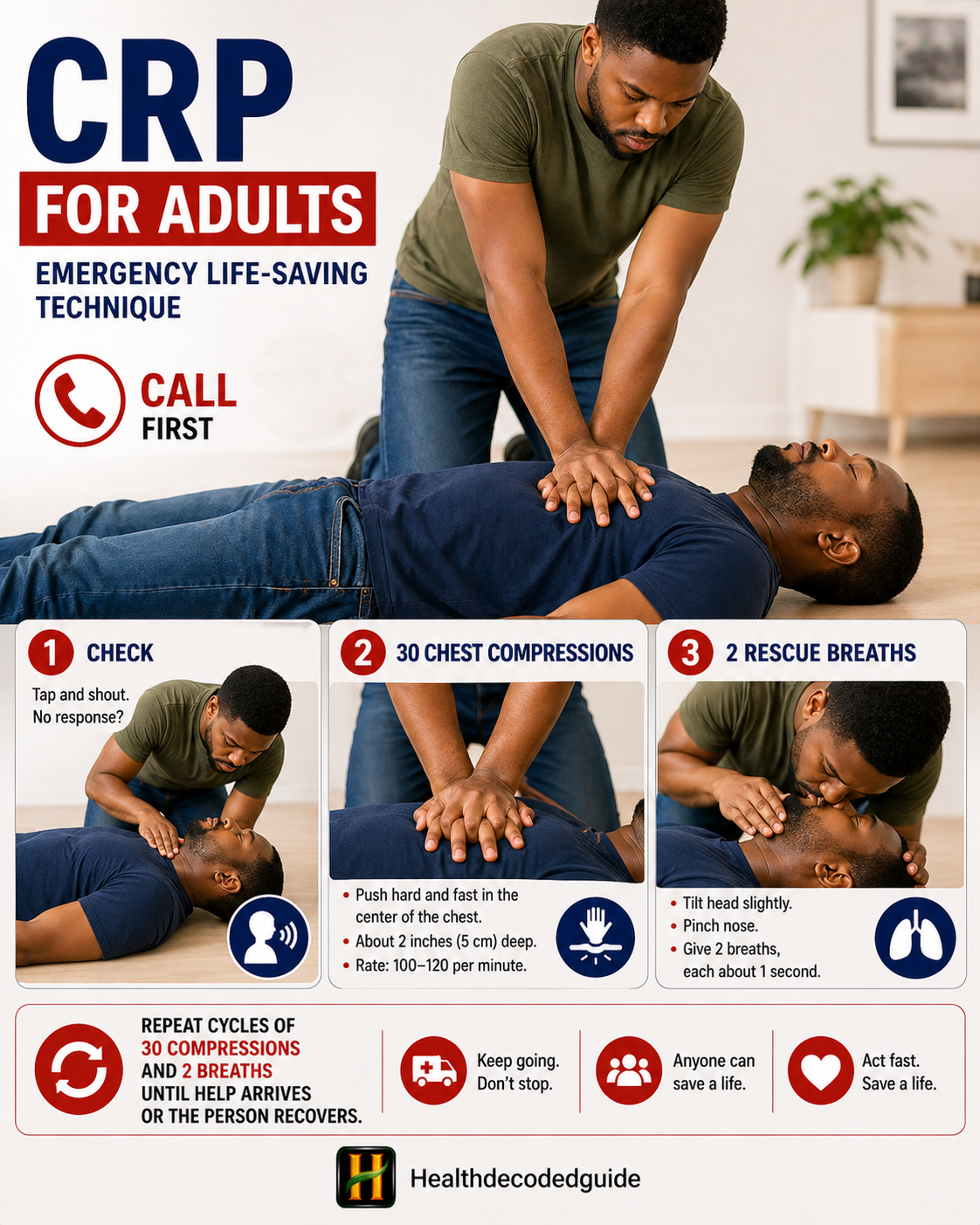
Basic Adult CPR Steps
•🔷 ensure the area is safe
•🔷 lay the person flat on their back on a firm surface
• 🔷check if the person responds
→ tap and shout gently
• 🔷check whether the person is breathing normally
→ occasional gasping is not normal breathing
• 🔷call emergency services or ask someone nearby to call
• 🔷place the heel of one hand in the center of the chest
→ place the other hand on top
→ keep your arms straight
→ this helps you press deep enough and use your body weight properly during compressions
• 🔷start chest compressions
→ compress hard and fast
→ about 100–120 compressions per minute
• 🔷allow the chest to fully rise between compressions
• 🔷if an AED (defibrillator) is available, use it as soon as possible
→ the device fit help restore a dangerous abnormal heart rhythm
👉 Continue CPR until emergency help arrives or the person starts responding
9️⃣ Diagnosis
• CPR itself is not a diagnosis
• healthcare teams assess the cause of cardiac arrest afterward
• tests may include ECG, blood tests, or imaging scans
👉 Early recognition and immediate action are often more important than perfect technique.
🟢 Important message
CPR is one of the most valuable first-aid skills anyone can learn.
Starting CPR immediately can double or even triple the chance of survival in some cases of cardiac arrest.
👉 Even if you are not perfectly trained, doing something is often far better than doing nothing while waiting for emergency medical services.
FAQ
• What does CPR stand for?
CPR stands for cardiopulmonary resuscitation.
• Can CPR restart the heart?
Sometimes CPR helps maintain blood flow until defibrillation or advanced treatment can restart the heart.
• Can untrained people do CPR?
Yes. Hands-only CPR is recommended for many untrained bystanders during emergencies.
• What if I break a rib during CPR?
Rib injuries can happen, but effective CPR is more important during cardiac arrest.
• Should CPR stop if the person gasps?
No. Occasional gasping is not normal breathing and CPR may still be needed.
🔗 Related Health Topics
• Choking First Aid for Adults
• Heart Attack
• Stroke Warning Signs: FAST
• Emergency First Aid
• Bleeding Control and First Aid
• Drowning Emergencies
📚 Medical References
• World Health Organization (WHO). Emergency care systems: https://www.who.int/teams/integrated-health-services/clinical-services-and-systems/emergency-critical-and-operative-care/emergency-care
• American Heart Association (AHA). CPR & ECC Guidelines: https://cpr.heart.org/en/resuscitation-science/cpr-and-ecc-guidelines
• European Resuscitation Council (ERC). Guidelines 2025: https://www.erc.edu/science-research/guidelines/guidelines-2025/
• National Health Service (NHS). How to do CPR: https://www.nhs.uk/conditions/first-aid/cpr/
• Mayo Clinic. Cardiopulmonary resuscitation (CPR): First aid: https://www.mayoclinic.org/first-aid/first-aid-cpr/basics/art-20056600
• American Red Cross. Hands-Only CPR: https://www.redcross.org/take-a-class/cpr/performing-cpr/hands-only-cpr
⚠️ Medical Disclaimer
This article is for educational purposes only and does not replace professional medical advice.
If you have symptoms or concerns, please consult a qualified healthcare professional.