Read in: English | Pidgin English
🩺 Medically reviewed by the Health Decoded Guide Editorial Team· Last reviewed: July 2026
🔍 Quick Summary
CPR for children is an emergency life-saving technique used when a child stops breathing normally or becomes unresponsive.
Quick action may help maintain oxygen flow to the brain and body until emergency medical help arrives.
Children often experience cardiac arrest because of breathing problems rather than heart disease.
1️⃣ Introduction
Child CPR is adapted slightly differently from adult CPR because children’s bodies are smaller and their emergencies are often related to breathing.
• CPR helps support breathing and circulation during emergencies
• rescue breaths are especially important in children
• fast recognition and early action improve survival chances
👉 In children, oxygen problems often happen before the heart stops completely.
2️⃣ How it happens
When a child stops breathing effectively, oxygen levels fall quickly.
• low oxygen affects the brain and heart
• chest compressions help move blood through the body
• rescue breaths help provide oxygen to the lungs
👉 Early breathing support can be especially important during pediatric emergencies.
3️⃣ Types
• Hands-only CPR
- chest compressions without breaths
- may still help if rescue breathing is not possible
• Conventional child CPR
- chest compressions plus rescue breaths
- preferred for most children when possible
👉 Because many childhood emergencies involve breathing problems, rescue breaths are often emphasized.
4️⃣ Common causes
• Breathing emergencies
- choking
- drowning or severe asthma attacks
• Severe illness or infections
- respiratory infections
- seizures or allergic reactions
• Trauma or accidents
- head injuries
- severe accidents
👉 Children can deteriorate quickly during breathing emergencies.
5️⃣ Symptoms
• child becomes unresponsive
• absent or abnormal breathing
• blue lips or pale skin color
👉 Gasping or irregular breathing should not be considered normal breathing.
6️⃣ Associated symptoms
• sudden collapse
• seizures in some cases
• choking signs before collapse
• limp body or no movement
👉 In children, CPR emergencies are often linked to oxygen deprivation.
7️⃣🩺 When it becomes dangerous 🚨
• child stops breathing normally
• no response when touched or called
• collapse with loss of consciousness
👉 These may indicate:
• respiratory failure
• cardiac arrest needing immediate CPR and emergency services
8️⃣ Management / treatment
• call emergency services immediately
• begin CPR quickly
• use an AED if available and appropriate pediatric settings exist
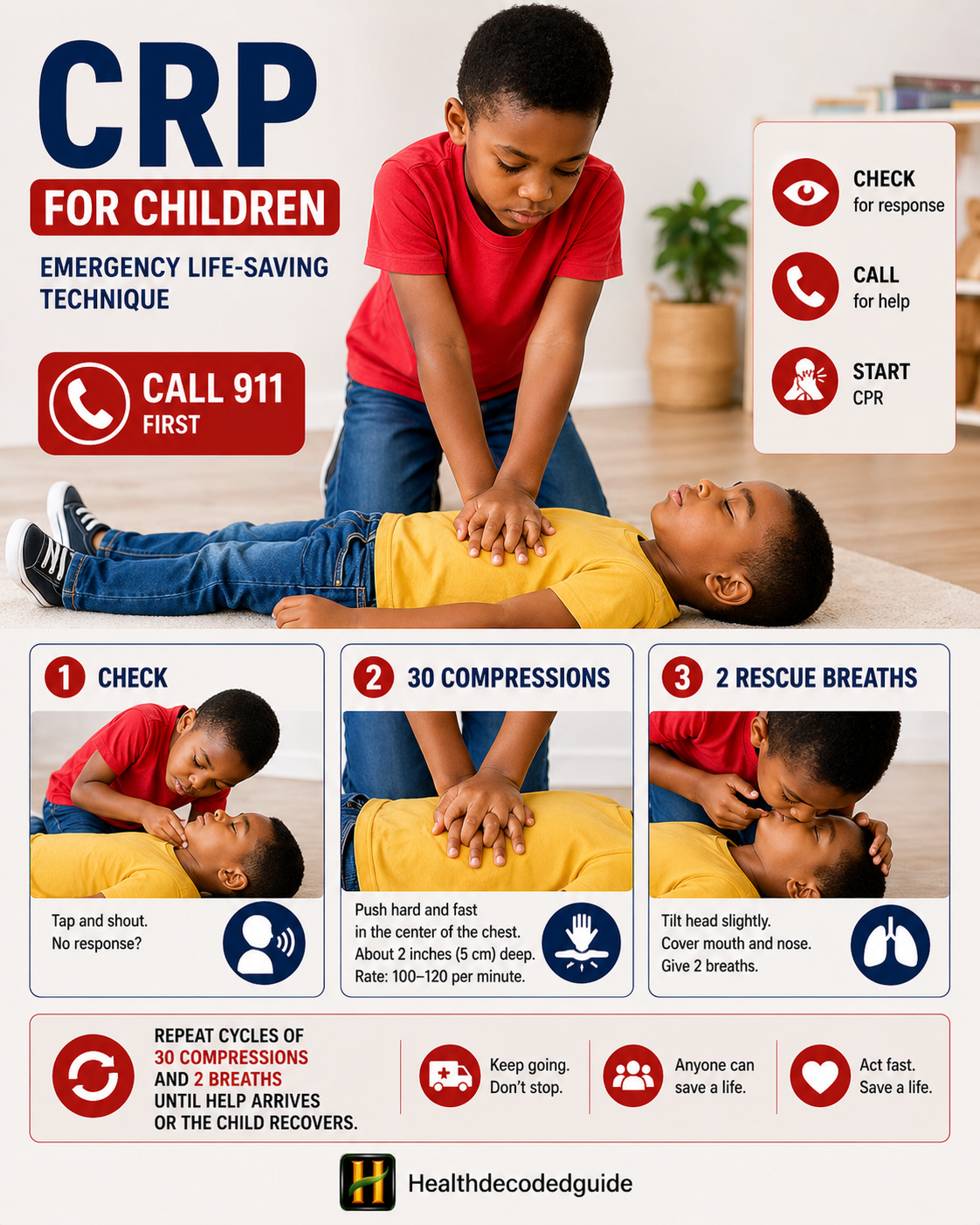
Basic Child CPR Steps
•🔷 ensure the area is safe
•🔷lay the child flat on their back on a firm surface
•🔷check if the child responds
→ tap gently and shout their name
•🔷 call for emergency help or ask someone nearby to call
•🔷 if trained and able, give rescue breaths
→ watch for the chest to rise
•🔷place one or two hands in the center of the chest
→ depending on the size of the child
•🔷keep your arms straight while pressing
→ this helps make compressions stronger and more effective
•🔷 begin chest compressions
→ compress about one-third the depth of the chest
→ push hard and fast, then allow the chest rise fully again
•🔷 continue cycles of breaths and compressions until help arrives or the child responds
👉 Quick action and early CPR can improve survival chances greatly
9️⃣ Diagnosis
• CPR itself is emergency support, not a diagnosis
• healthcare teams later assess the cause of collapse
• further tests depend on the suspected cause
👉 Quick recognition and immediate response can significantly affect survival and recovery.
🟢 Important message
Child CPR can feel frightening, but learning the basics may help save a child’s life during an emergency.
Simple actions taken quickly can make an important difference before medical professionals arrive.
👉 Staying calm and acting early is often more important than being perfect.
FAQ
• Is child CPR different from adult CPR?
Yes. Children are smaller, and rescue breaths are often more important in pediatric emergencies.
• Should rescue breaths be given to children?
Yes, when possible and if the rescuer is trained or comfortable doing so.
• Can CPR hurt a child?
Chest injuries can happen, but untreated cardiac arrest is far more dangerous.
• What causes cardiac arrest in children?
Breathing problems, choking, drowning, severe illness, or trauma are common causes.
• Can ordinary people perform child CPR?
Yes. Basic CPR training is encouraged for parents, teachers, and caregivers.
🔗 Related Health Topics
• Choking First AID for Children
• Febrile Seizures
• Drowning Emergencies
• Asthma
• Emergency First Aid
📚 Medical References
• American Heart Association (AHA). Part 6: Pediatric Basic Life Support.
• European Resuscitation Council (ERC). European Resuscitation Council Guidelines 2021: Paediatric Life Support.
• National Health Service (NHS). How to resuscitate a child.
• Resuscitation Council UK. How to do CPR. (includes dedicated sections on baby and child CPR)
• British Red Cross. Learn first aid for a child who is unresponsive and not breathing.
⚠️ Medical Disclaimer
This article is for educational purposes only and does not replace professional medical advice.
If you have symptoms or concerns, please consult a qualified healthcare professional.