Read in: English | Pidgin English
🩺 Medically reviewed by the Health Decoded Guide Editorial Team · Last reviewed: July 2026
🔍 Quick Summary
Bleeding happens when blood escapes from damaged blood vessels after injury or trauma.
Small cuts may stop bleeding on their own, but severe bleeding can quickly become life-threatening.
Knowing basic bleeding control first aid can help reduce blood loss and support survival until medical help arrives.
1️⃣ Introduction
Bleeding emergencies can happen at home, work, sports activities, or accidents.
• bleeding may occur externally from cuts or internally after trauma
• severe blood loss can reduce oxygen delivery to organs
• fast first aid is important during major bleeding emergencies
👉 Heavy bleeding can become dangerous within minutes if not controlled.
2️⃣ How it happens
Blood vessels carry oxygen and nutrients throughout the body.
• injuries can damage blood vessels and cause bleeding
• larger blood vessel injuries may lead to rapid blood loss
• severe bleeding can lower blood pressure and affect organ function
👉 The body naturally tries to form clots, but severe injuries may overwhelm this process.
3️⃣ Classification
• Minor bleeding
- small cuts or scrapes
- usually stops with simple pressure
• Moderate bleeding
- deeper wounds with steady bleeding
- may need medical attention or stitches
• Severe bleeding
- heavy or uncontrolled blood loss
- medical emergency needing urgent action
👉 Bright red spurting blood may suggest artery injury and requires immediate emergency care.
4️⃣ Common causes
• Accidental injuries
- cuts from sharp objects
- falls or sports injuries
• Major trauma
- road accidents
- deep wounds or crush injuries
• Medical conditions
- blood clotting disorders
- medications that thin the blood
👉 People using blood thinners may bleed more heavily after injuries.
5️⃣ Symptoms
• visible blood loss
• swelling or pain around the injury
• dizziness or weakness during severe bleeding
👉 Significant blood loss may reduce oxygen supply to the brain and organs.
6️⃣ Associated symptoms
• pale or cold skin
• rapid heartbeat
• confusion or fainting
• shortness of breath
👉 These symptoms may suggest shock from severe blood loss.
7️⃣🩺 When it becomes dangerous 🚨
• bleeding does not stop with pressure
• large amounts of blood loss
• fainting, confusion, or difficulty breathing
👉 These may indicate:
• severe blood loss
• shock or life-threatening injury needing emergency treatment immediately
8️⃣ Management / treatment
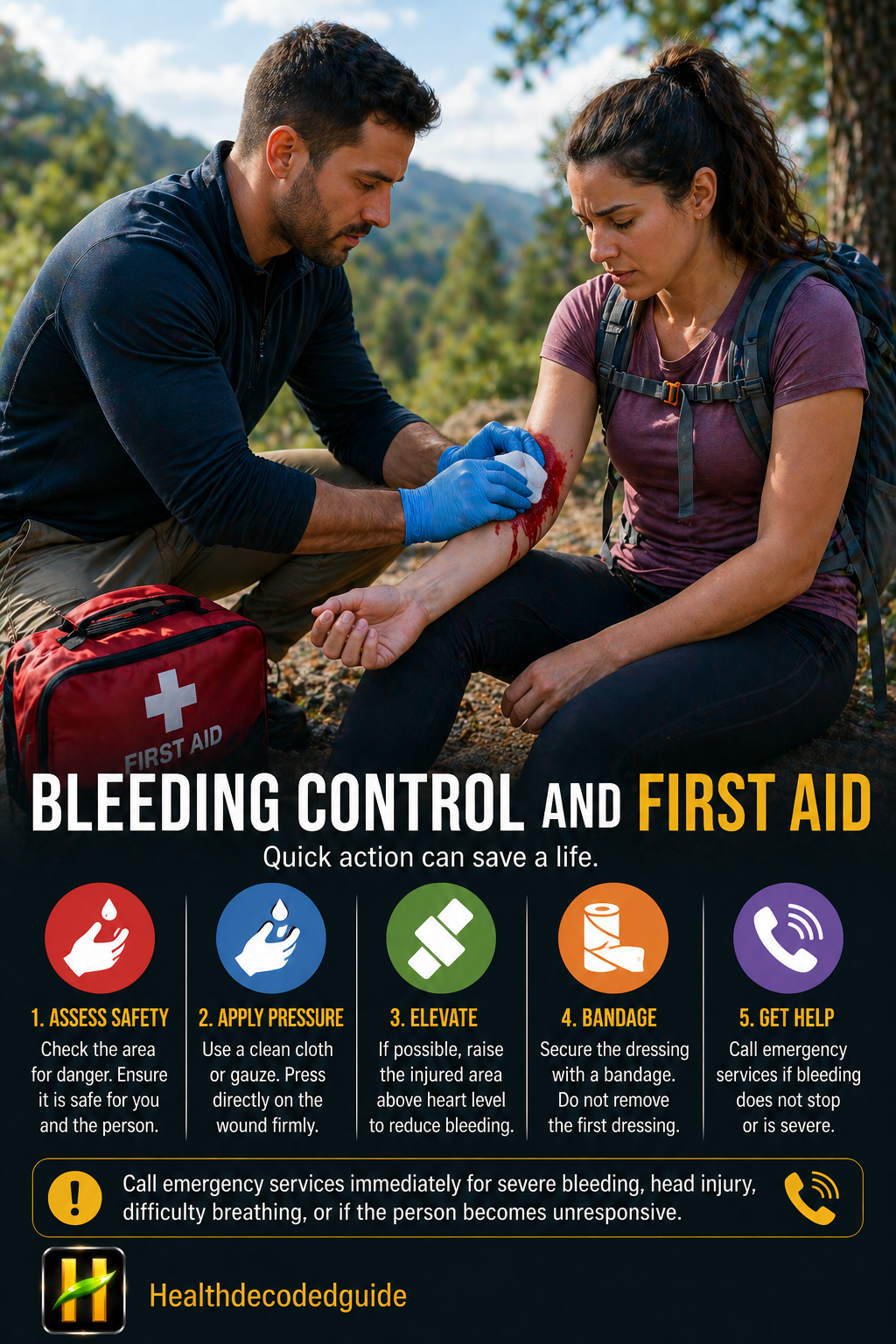
• apply firm direct pressure to the wound
• use clean cloth, gauze, or bandage if available
• call emergency services for severe bleeding
Basic Bleeding Control First Aid
• ensure the area is safe before helping
• wear gloves if available
• apply steady pressure directly on the wound
• elevate the injured area if appropriate and safe
• avoid removing deeply embedded objects
• continue pressure until bleeding slows or stops
👉 If blood soaks through cloth or bandage, add more layers instead of removing the original covering.
9️⃣ Diagnosis
• healthcare teams assess the amount and source of bleeding
• severe injuries may need imaging scans or surgery
• blood tests may assess blood loss and clotting function
👉 Internal bleeding may not always be visible from the outside.
🟢 Important message
Bleeding first aid is a simple but important emergency skill.
Fast pressure and calm action can help reduce blood loss and support survival during emergencies.
👉 Severe bleeding should never be ignored, especially if the person becomes weak, pale, or confused.
FAQ
• What is the first step during severe bleeding?
Apply firm direct pressure to the wound immediately.
• Should I remove objects stuck inside a wound?
No. Embedded objects should usually remain in place until medical professionals assess them.
• Can severe bleeding cause fainting?
Yes. Significant blood loss can reduce blood flow to the brain.
• Should I wash a heavily bleeding wound first?
During severe bleeding, controlling blood loss is more important initially than cleaning the wound.
• When should emergency services be called?
If bleeding is heavy, uncontrolled, or associated with weakness, breathing difficulty, or confusion.
🔗 Related Health Topics
• CPR for Adults
• Fainting: What To Do
• Emergency Response Basics
• CPR for Infant
• CPR for Children
• Seizure First Aid
• Fainting vs Seizures
📚 Medical References
• World Health Organization (WHO). Emergency care.
• American Red Cross. Bleeding, Life-Threatening External.
• National Health Service (NHS). First aid. (see "Bleeding heavily")
• Mayo Clinic. Severe bleeding: First aid.
• ACS STOP THE BLEED®. How to Control Bleeding.
• European Resuscitation Council. European Resuscitation Council Guidelines 2021: First Aid.
⚠️ Medical Disclaimer
This article is for educational purposes only and does not replace professional medical advice.
If you have symptoms or concerns, please consult a qualified healthcare professional.