Read in: English | Pidgin English
🩺 Medically reviewed by the Health Decoded Guide Editorial Team · Last reviewed: July 2026
🔍 Quick Summary
Fainting happens when a person temporarily loses consciousness due to reduced blood flow to the brain.
Many fainting episodes are brief and recover quickly, but some may signal a more serious medical problem.
Knowing simple first-aid steps can help keep the person safe and support recovery.
1️⃣ Introduction
Fainting is also called syncope.
• it usually causes sudden temporary loss of consciousness
• many people recover within seconds or minutes
• fainting can happen in both healthy people and those with medical conditions
👉 Some people experience warning symptoms before fainting occurs.
2️⃣ How it happens
The brain needs a constant oxygen and blood supply to function normally.
• sudden drops in blood pressure can reduce brain blood flow temporarily
• dehydration, stress, pain, or standing too long may trigger fainting
• some medical conditions can also affect blood circulation or heart rhythm
👉 Reduced blood flow to the brain usually causes brief loss of consciousness.
3️⃣ Types
• Vasovagal fainting
- triggered by stress, pain, fear, or standing long periods
- one of the most common types
• Orthostatic fainting
- happens after standing up quickly
- linked to sudden blood pressure drops
• Cardiac-related fainting
- related to heart rhythm or circulation problems
- may require urgent medical evaluation
👉 Not all fainting episodes have the same cause or level of seriousness.
4️⃣ Common causes
• Lifestyle or body-related causes
- dehydration
- heat exhaustion
• Emotional triggers
- fear or anxiety
- seeing blood or severe pain
• Medical causes
- low blood sugar
- heart rhythm abnormalities
- anemia
👉 Skipping meals, illness, or poor hydration can increase fainting risk in some people.
5️⃣ Symptoms
• dizziness
• lightheadedness
• blurred vision
• tinnitus (ringing in the ears)
• sudden loss of consciousness
👉 Warning symptoms happen because the brain is temporarily receiving less blood and oxygen.
6️⃣ Associated symptoms
• sweating
• nausea
• pale skin
• weakness after recovery
👉 Some people feel tired or shaky for a short time after fainting.
7️⃣🩺 When it becomes dangerous 🚨
• fainting during exercise
• chest pain or breathing difficulty
• prolonged unconsciousness or repeated fainting episodes
👉 These may indicate:
• heart-related problems
• serious medical conditions needing urgent evaluation
8️⃣ Management / treatment
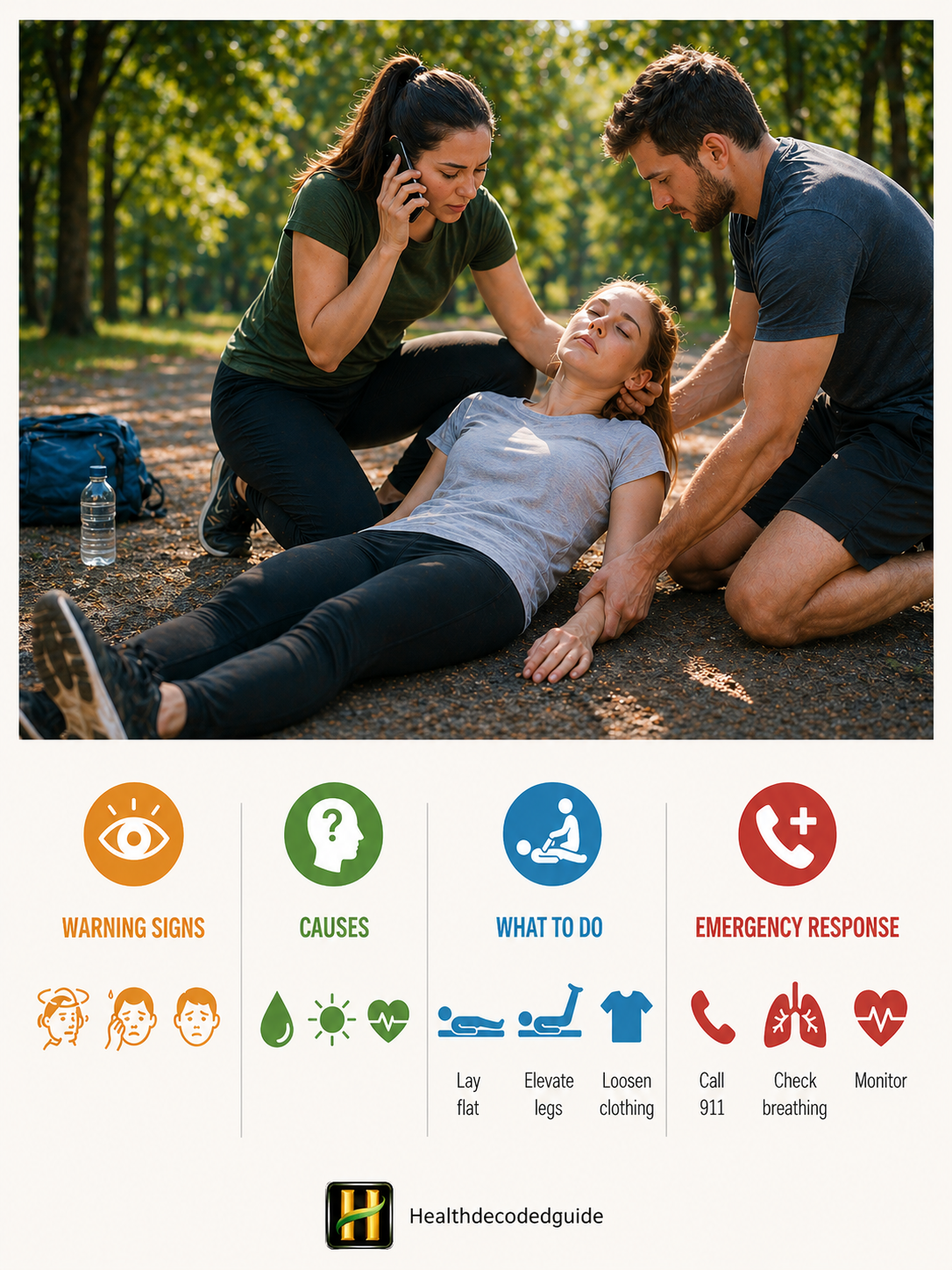
• help the person lie flat safely
• raise the legs slightly if possible
• loosen tight clothing and ensure fresh air
Basic First Aid During Fainting
• stay calm and check responsiveness
• protect the person from injury during collapse
• avoid giving food or drink until fully awake
• monitor breathing and recovery
• call emergency services if recovery is delayed or symptoms are severe
👉 Most people recover within a few minutes, but monitoring is important.
9️⃣ Diagnosis
• medical history and symptom review
• blood pressure and heart assessment
• blood tests, ECG, or other investigations if needed
👉 Doctors may look for triggers, heart problems, or other medical causes behind repeated fainting.
🟢 Important message
Many fainting episodes are temporary and improve quickly, but some may need medical assessment.
Recognizing warning signs and knowing simple first aid can help keep people safer during these situations.
👉 Repeated fainting, chest symptoms, or collapse without warning should never be ignored.
FAQ
• Is fainting always serious?
No. Many episodes are harmless, but some may signal underlying medical problems.
• What should I do if someone faints?
Help them lie flat safely, raise the legs slightly, and monitor breathing and recovery.
• Can dehydration cause fainting?
Yes. Low fluid levels can reduce blood pressure and blood flow to the brain.
• Should I give water immediately after fainting?
Wait until the person is fully awake and alert before giving food or drinks.
• When should emergency services be called?
If breathing problems, chest pain, prolonged unconsciousness, or injury occur.
🔗 Related Health Topics
• Stroke Warning Signs
• Heart Attack Warning Signs
• CPR for Adults
• Low Blood Sugar
• Dehydration
• Dehydration vs Heat Exhaustion
📚 Medical References
• National Health Service (NHS). Fainting.
• Mayo Clinic. Fainting: First aid.
• American Heart Association (AHA). Syncope (Fainting).
• National Institute for Health and Care Excellence (NICE). Transient loss of consciousness ('blackouts') in over 16s.
• MedlinePlus. Fainting.
⚠️ Medical Disclaimer
This article is for educational purposes only and does not replace professional medical advice.
If you have symptoms or concerns, please consult a qualified healthcare professional.