Read in: English | Pidgin English
🩺 Medically reviewed by the Health Decoded Guide Editorial Team · Last reviewed: July 2026
🔍 Quick Summary
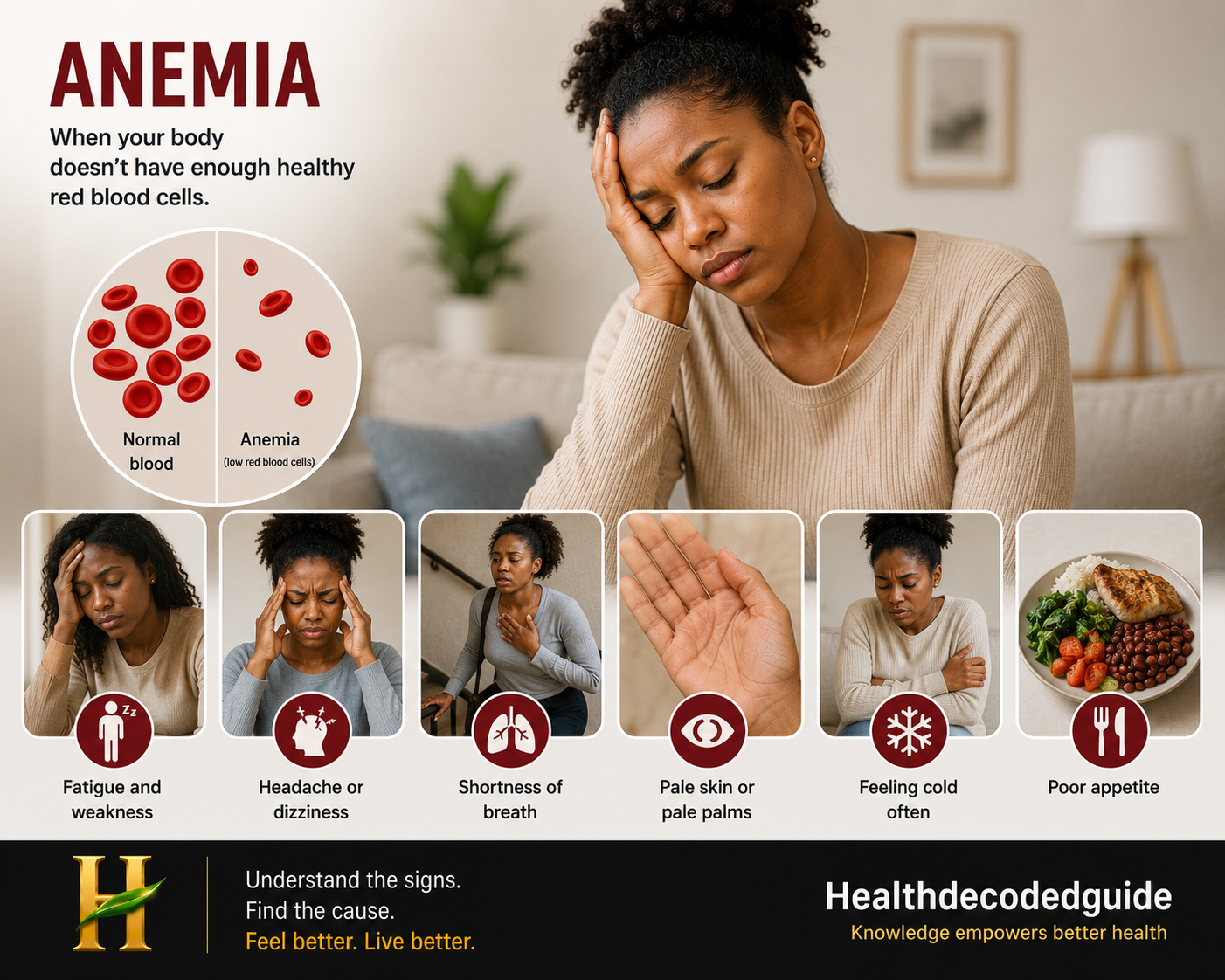
Anemia happens when your body does not have enough healthy red blood cells to carry oxygen effectively.
This can lead to fatigue, weakness, and shortness of breath.
👉 Anemia is common and treatable—but it should not be ignored
1️⃣ Introduction
Anemia is a condition affecting the blood’s ability to carry oxygen.
• red blood cells contain hemoglobin
• hemoglobin carries oxygen from the lungs to the body
• low levels reduce oxygen delivery
👉 Less oxygen means the body cannot function at full capacity
2️⃣ How it happens/causes
Anemia develops when the body does not have enough healthy red blood cells
or enough haemoglobin to carry oxygen around the body. This can happen because:
• the body does not produce enough red blood cells
→ often due to iron, vitamin B12 or folate deficiency, or long-term illnesses such as kidney disease.
• red blood cells are lost
→ from heavy menstrual bleeding, stomach ulcers, internal bleeding, surgery, or other sources of blood loss.
• red blood cells are destroyed faster than normal
→ this can occur in inherited conditions such as sickle cell disease or thalassaemia, or in some autoimmune and other medical conditions.
• the body's iron needs increase
→ during pregnancy, the body requires more iron to support the growing baby, increasing the risk of anemia if iron intake is insufficient.
3️⃣ How common/Who it affects
Anemia is very common worldwide.
• women of reproductive age
• pregnant women
• children
• people with chronic illness
👉 Women are particularly at risk due to menstrual blood loss
4️⃣ When it is NOT a problem
Mild anemia may:
• cause no symptoms
• develop gradually
• be detected incidentally
👉 Early or mild cases may not feel serious—but still need understanding
5️⃣ When to worry 🚨
• persistent or worsening fatigue
• shortness of breath with minimal activity
• dizziness or fainting
• rapid or irregular heartbeat
• heavy or prolonged bleeding
👉 Symptoms affecting daily life should always be evaluated
6️⃣ Symptoms
Common symptoms include:
• persistent fatigue
• weakness
• dizziness
• pale skin
• shortness of breath
• rapid heartbeat
• headaches
• cold hands and feet
👉 Symptoms often develop gradually and may be subtle at first
7️⃣ What you should do
• seek medical evaluation if symptoms persist
• check blood levels (hemoglobin, iron, etc.)
• identify the underlying cause
👉 Treatment depends on the cause—not just the symptoms
🟡 When to see a doctor
• fatigue that does not improve with rest
• breathlessness with light activity
• heavy menstrual bleeding
• dizziness or fainting
• persistent or unexplained symptoms
🟢 Final reassurance
Anemia is common—and in most cases, treatable. Early diagnosis can restore energy and prevent complications
👉 Understanding the cause is key to effective treatment
🔗 Related Health Topics
• Iron deficiency
• Fatigue
• Heavy Menstrual Bleeding
• Endometriosis
• Diet and nutrition
• Test results explained
👉 Keep exploring to understand your health better
📚 MEDICAL REFERENCES
• World Health Organization (WHO) – Anaemia: https://www.who.int/news-room/fact-sheets/detail/anaemia
• Centers for Disease Control and Prevention (CDC) – Iron Deficiency: https://www.cdc.gov/iron-deficiency/
• National Heart, Lung, and Blood Institute (NHLBI) – Iron-Deficiency Anemia:https://www.nhlbi.nih.gov/health/anemia/iron-deficiency-anemia
• NHS (National Health Service, UK) – Iron Deficiency Anaemia:https://www.nhs.uk/conditions/iron-deficiency-anaemia/
• MSD Manual Consumer Version – Anemia: https://www.msdmanuals.com/home/blood-disorders/anemia/anemia-overview
• Mayo Clinic – Iron Deficiency Anemia: https://www.mayoclinic.org/diseases-conditions/iron-deficiency-anemia/symptoms-causes/syc-20355034
• Merck Manual Professional Edition – Overview of Anemia: https://www.merckmanuals.com/professional/hematology-and-oncology/approach-to-the-patient-with-anemia/overview-of-anemia
⚠️ MEDICAL DISCLAIMER
This article is for educational purposes only and is not a substitute for professional medical advice. Always consult a qualified healthcare professional regarding your health concerns.