Read in: English | Pidgin English
🩺 Medically reviewed by the Health Decoded Guide Editorial Team · Last reviewed: July 2026
🔍 Quick Summary
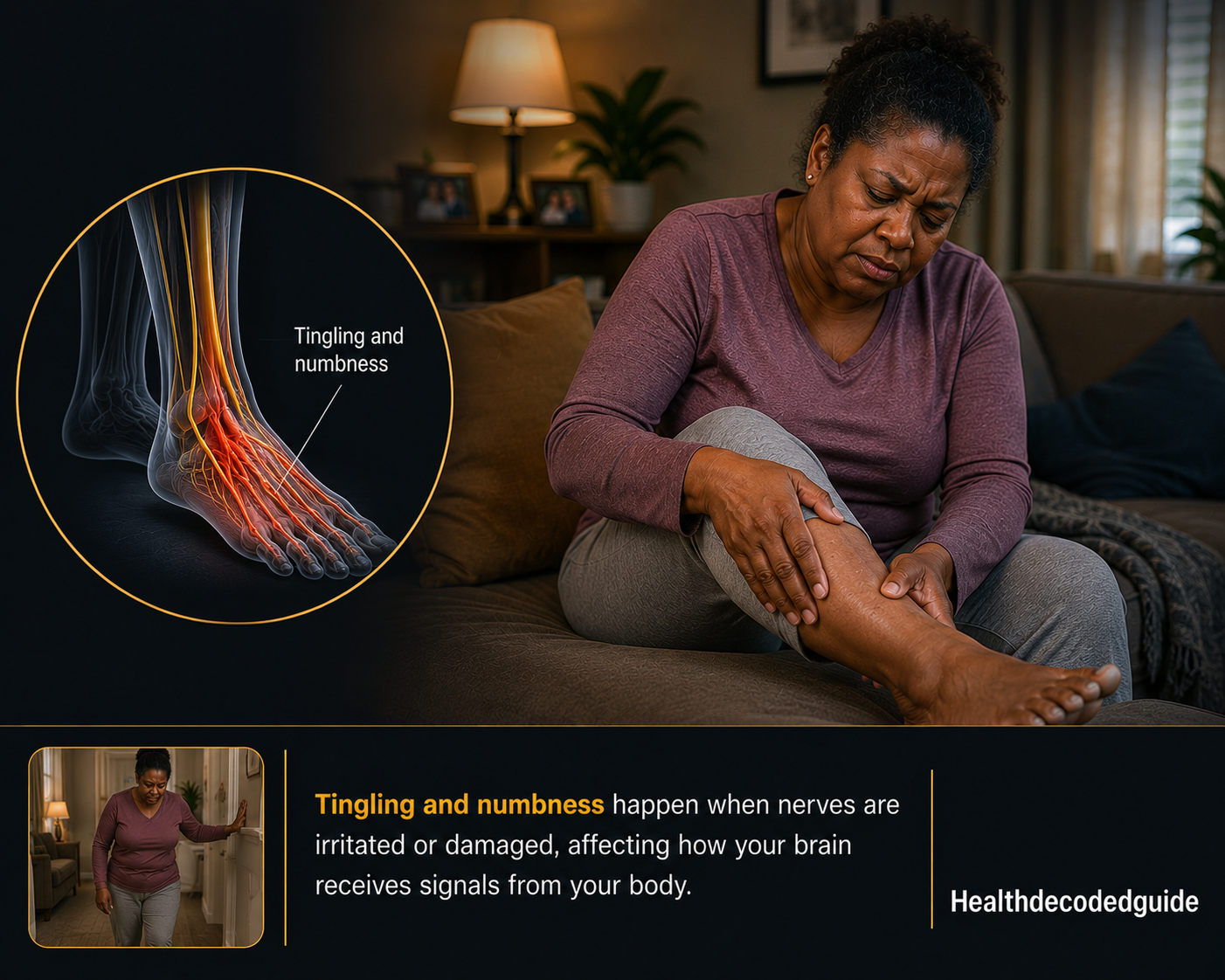
Tingling and numbness are abnormal sensations often described as “pins and needles” or loss of feeling.
They may be temporary (like when a limb “falls asleep”) or persistent due to nerve or medical conditions.
Some cases are harmless, while others may signal serious neurological problems.
1️⃣ Introduction
Tingling and numbness affect how the body feels touch and sensation.
• can occur in hands, feet, face, or any body part
• may be brief or long-lasting
• often linked to nerve function
👉 Persistent, spreading, or one-sided numbness should not be ignored.
2️⃣ How it happens
Nerves carry signals between the body and brain.
• pressure on nerves can block normal signals
• reduced blood flow can affect nerve function
• brain or spinal cord problems can disrupt sensation
👉 When signals are interrupted, the brain may interpret abnormal sensations like tingling.
3️⃣ Types
• Temporary tingling
- caused by sitting or sleeping in one position
- resolves after movement
• Peripheral neuropathy
- nerve damage affecting hands and feet
- often linked to diabetes or deficiencies
• Central causes
- brain or spinal cord involvement
- may affect one side of the body
👉 The pattern and duration of symptoms help guide the cause.
4️⃣ Common causes
• Nerve compression
- poor posture
- repetitive movements
• Medical conditions
- diabetes
- vitamin B deficiency
- thyroid problems
• Neurological causes
👉 Chronic conditions can cause long-term nerve damage if untreated.
5️⃣ Symptoms
• “pins and needles” sensation
• numbness or reduced feeling
• burning or crawling sensation
👉 These symptoms occur when nerve signals are disrupted or altered.
6️⃣ Associated symptoms
• muscle weakness
• balance problems
• pain or discomfort
• coordination difficulty
👉 Tingling with weakness or imbalance suggests deeper nerve or brain involvement.
7️⃣🩺 When it becomes dangerous 🚨
• sudden numbness on one side of the body
• tingling with speech difficulty or facial drooping
• inability to move a limb
👉 These may indicate:
• stroke or neurological emergency
• serious brain or nerve condition requiring urgent care
8️⃣ Management / treatment
• treat underlying cause (e.g., diabetes, deficiency)
• reduce nerve pressure
• medications or physiotherapy if needed
9️⃣ Diagnosis
• medical history and neurological exam
• blood tests for underlying conditions
• imaging or nerve studies if needed
👉 Doctors use the pattern, timing, and location of symptoms to guide diagnosis.
🟢 Important message
Tingling and numbness are common and often temporary, but persistent or sudden symptoms can signal serious conditions.
👉 If symptoms are new, worsening, or linked to weakness or speech changes, seek urgent medical care.
FAQ
• What causes tingling in hands and feet?
Often nerve pressure, diabetes, vitamin deficiency, or circulation issues.
• Is numbness always serious?
No. Temporary numbness is common, but persistent symptoms need evaluation.
• Can anxiety cause tingling?
Yes. Stress can trigger temporary tingling sensations.
• Can vitamin deficiency cause numbness?
Yes. Especially vitamin B deficiencies affecting nerve health.
🔗 Related Health Topics
• Diabetes
• Stroke Warning Signs
• Multiple Sclerosis
• Balance Problems
• Vitamin Deficiency
• Chronic back pain
📚 Medical References
- World Health Organization (WHO). Neurological disorders.
- National Health Service (NHS). Pins and needles.
- Mayo Clinic. Peripheral neuropathy.
- National Institute of Neurological Disorders and Stroke (NINDS). Peripheral Neuropathy.
- Centers for Disease Control and Prevention (CDC). Diabetes and Nerve Damage.
⚠️ Medical Disclaimer
This article is for educational purposes only and does not replace professional medical advice.
If you have symptoms or concerns, please consult a qualified healthcare professional.