Read in: English | Pidgin English
🩺 Medically reviewed by the Health Decoded Guide Editorial Team · Last reviewed: July 2026
🔍 Quick Summary
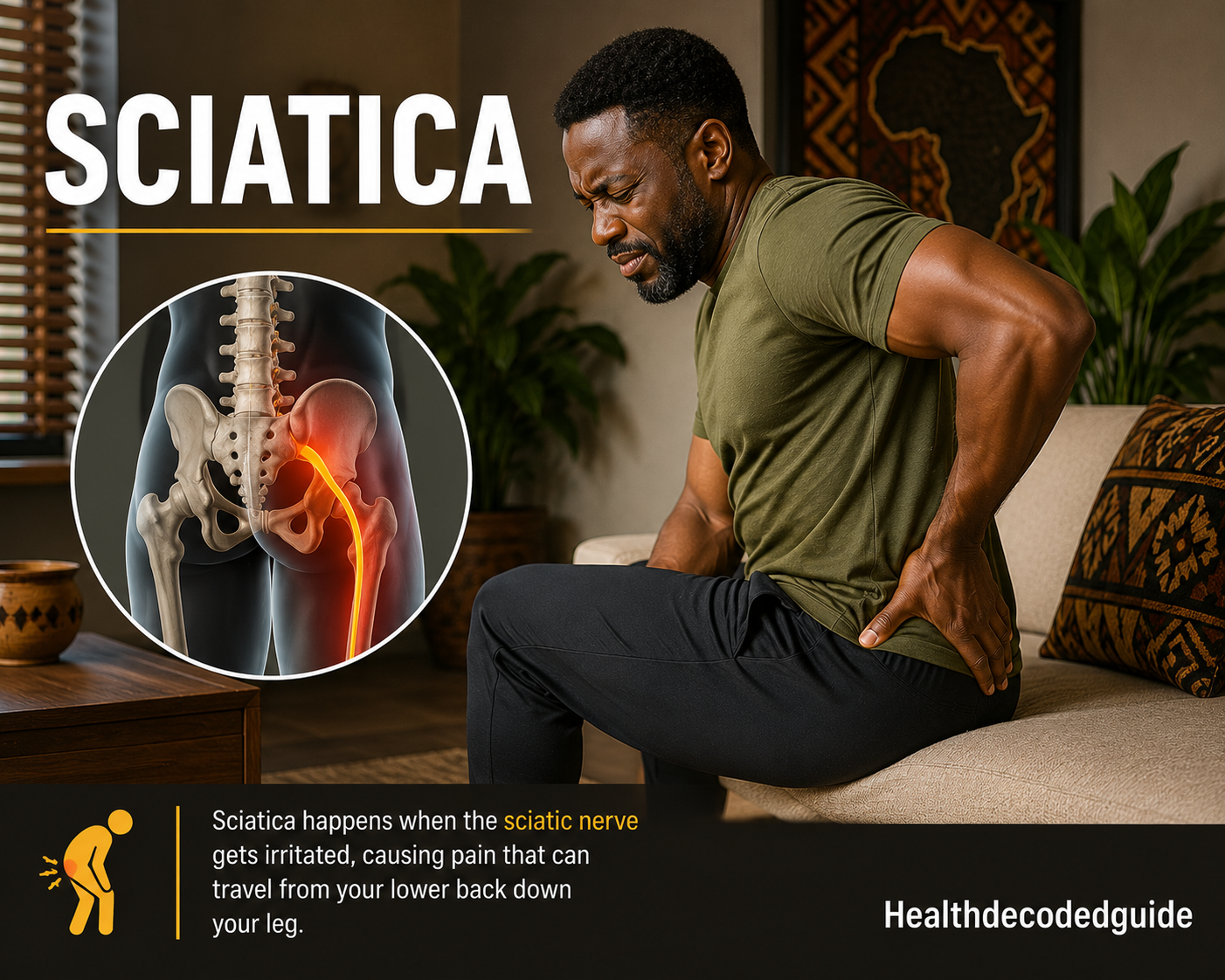
Sciatica is pain that travels along the sciatic nerve, usually from the lower back down the leg.
It often causes sharp, burning, or shooting pain, sometimes with tingling or numbness.
Many cases improve with time, but some may require medical evaluation and treatment.
1️⃣ Introduction
The sciatic nerve is the largest nerve in the body.
• it runs from the lower back through the hips and down each leg
• irritation or compression of this nerve causes sciatica
• symptoms usually affect one side of the body
👉 Sciatica is a symptom of nerve irritation, not a disease on its own.
2️⃣ How it happens
The sciatic nerve can be affected by pressure or inflammation.
• a slipped (herniated) disc can press on the nerve
• tight muscles may irritate the nerve
• spinal changes can narrow spaces where nerves pass
👉 When the nerve is compressed, pain can travel along its entire path.
3️⃣ Types
• Acute sciatica
- short-term symptoms lasting days to weeks
- often improves with rest and simple treatment
• Chronic sciatica
- symptoms last longer than 3 months
- may need ongoing management
• Severe sciatica
- includes weakness or significant nerve symptoms
- may require specialist assessment
👉 The severity depends on how much the nerve is affected.
4️⃣ Common causes
• Spinal causes
- herniated disc
- spinal stenosis (narrowing of spinal canal)
• Muscle-related causes
- piriformis muscle irritation
- muscle tightness
• Lifestyle factors
- prolonged sitting
- poor posture or heavy lifting
👉 Repetitive strain and inactivity can increase the risk.
5️⃣ Symptoms
• pain radiating from lower back to leg
• burning, shooting, or electric-like pain
• tingling or numbness in the leg or foot
👉 Symptoms follow the path of the sciatic nerve.
6️⃣ Associated symptoms
• muscle weakness in the leg
• difficulty walking or standing
• reduced reflexes
• lower back discomfort
👉 Weakness or loss of control may suggest more severe nerve involvement.
7️⃣🩺 When it becomes dangerous 🚨
• loss of bladder or bowel control
• severe weakness in the leg
• numbness in the groin or saddle area
👉 These may indicate:
• cauda equina syndrome
• a serious spinal emergency needing urgent medical treatment
8️⃣ Management / treatment
• gentle movement and activity (avoid prolonged bed rest)
• pain relief medications when needed
• physiotherapy and stretching exercises
Supportive Measures
• maintain good posture
• avoid heavy lifting during recovery
• use heat or cold therapy for symptom relief
• strengthen core muscles gradually
👉 Staying active within limits often helps recovery more than complete rest.
9️⃣ Diagnosis
• medical history and physical examination
• neurological assessment of strength and sensation
• imaging (MRI or CT scan) if symptoms are severe or persistent
👉 Doctors often diagnose sciatica based on symptom pattern and nerve involvement.
🟢 Important message
Sciatica can be painful and limiting, but many people improve with time and conservative treatment.
Recognizing warning signs helps identify when urgent care is needed.
👉 Severe symptoms such as weakness or loss of bladder control should never be ignored.
FAQ
• What does sciatica feel like?
Sharp, burning, or shooting pain traveling from the lower back down the leg.
• Can sciatica go away on its own?
Yes. Many cases improve within weeks.
• Is bed rest recommended?
No. Gentle movement is usually better than prolonged rest.
• Can exercise help sciatica?
Yes. Guided exercises and physiotherapy may improve symptoms.
• When should emergency help be sought?
If there is severe weakness, numbness in the groin, or loss of bladder or bowel control.
🔗 Related Health Topics
• Chronic Back Pain
• Tingling and Numbness
• Physiotherapy and Rehabilitation
• Leg Pain Causes
• Herniated Disc
📚 Medical References
• World Health Organization (WHO). Musculoskeletal conditions.
• National Health Service (NHS). Sciatica.
• Mayo Clinic. Sciatica.
• National Institute for Health and Care Excellence (NICE). Low back pain and sciatica in over 16s: assessment and management (NG59).
• MedlinePlus. Sciatica.
⚠️ Medical Disclaimer
This article is for educational purposes only and does not replace professional medical advice.
If you have symptoms or concerns, please consult a qualified healthcare professional.