Read in: English | Pidgin English
🩺 Medically reviewed by the Health Decoded Guide Editorial Team · Last reviewed: July 2026
🔍 Quick Summary
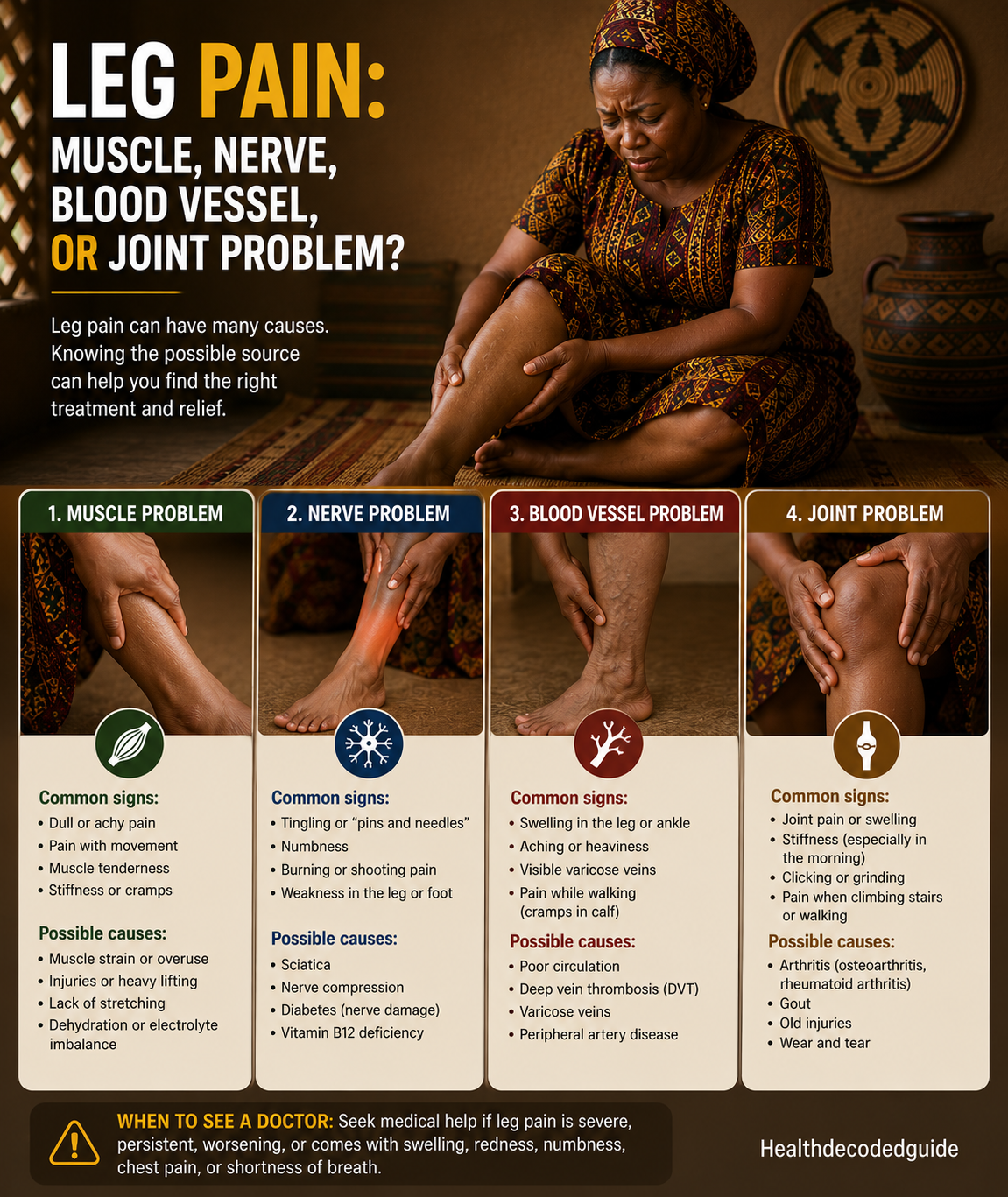
Leg pain can come from muscles, nerves, blood vessels, or joints.
The pattern of pain—when it starts, where it spreads, and what triggers it—often gives clues to the cause.
Some causes are minor, while others may need urgent medical attention.
1️⃣ Introduction
Leg pain is a common symptom with many possible sources.
• it may affect one or both legs
• pain can be sharp, dull, burning, or cramping
• symptoms may be constant or triggered by movement
👉 Understanding the pattern of pain helps identify the likely cause.
2️⃣ How it happens
Different body systems contribute to leg function.
• muscles generate movement and can strain or cramp
• nerves carry signals and may become irritated or compressed
• blood vessels supply oxygen and nutrients
• joints allow movement and may become inflamed or damaged
👉 Pain often reflects which system is affected.
3️⃣ Types
• Muscle-related pain
- soreness, cramping, or tightness
- often after activity or exercise
• Nerve-related pain
• Blood vessel-related pain
- cramping during walking (claudication)
- may improve with rest
• Joint-related pain
- stiffness, swelling, or pain with movement
- often affects knees or hips
👉 The quality of pain (sharp vs burning vs cramping) gives important clues.
4️⃣ Common causes
• Muscle causes
- overuse or strain
- dehydration or electrolyte imbalance
• Nerve causes
- nerve compression (e.g., sciatica)
- diabetes-related nerve damage
• Blood vessel causes
- poor circulation (peripheral artery disease)
- blood clots (deep vein thrombosis)
• Joint causes
- arthritis
- injury or inflammation
👉 More than one cause can sometimes contribute to leg pain.
5️⃣ Symptoms
• aching, cramping, or sharp pain
• pain during walking or activity
• pain radiating down the leg
👉 Symptoms vary depending on whether muscles, nerves, blood flow, or joints are involved.
6️⃣ Associated symptoms
• swelling or redness
• numbness or tingling
• weakness
• skin color changes
👉 Swelling and warmth may suggest vascular issues, while tingling suggests nerve involvement.
7️⃣🩺 When it becomes dangerous 🚨
• sudden leg swelling with pain
• chest pain or shortness of breath with leg symptoms
• severe weakness or loss of movement
👉 These may indicate:
• blood clots (deep vein thrombosis or pulmonary embolism)
• neurological emergencies or severe circulation problems
8️⃣ Management / treatment
• rest and gradual return to activity for muscle pain
• physiotherapy for movement and strength
• medications or procedures for circulation or nerve conditions
Supportive Measures
• stay hydrated
• stretch regularly
• maintain healthy weight
• avoid prolonged sitting
👉 Early treatment may prevent complications and improve recovery.
9️⃣ Diagnosis
• medical history and physical examination
• blood tests or imaging when needed
• nerve or circulation studies in specific cases
👉 Doctors often use symptom patterns and triggers to guide diagnosis.
🟢 Important message
Leg pain can have many causes, from simple muscle strain to serious circulation or nerve problems.
Recognizing warning signs and patterns helps guide appropriate care.
👉 Sudden swelling, severe pain, or breathing symptoms should never be ignored.
FAQ
• How can I tell if leg pain is muscular?
Muscle pain often follows activity and improves with rest.
• What does nerve pain feel like?
Burning, tingling, or shooting pain that may travel along the leg.
• Can poor circulation cause leg pain?
Yes. It may cause cramping during walking that improves with rest.
• When is leg pain serious?
If there is swelling, chest pain, breathing difficulty, or sudden weakness.
• Should I exercise with leg pain?
Light movement may help, but severe or unexplained pain should be assessed first.
🔗 Related Health Topics
• Chronic Back Pain
• Sciatica
• Peripheral Vascular Disease
• Deep Vein Thrombosis
• Arthritis
• Physiotherapy and Rehabilitation
📚 Medical References
• World Health Organization (WHO). Musculoskeletal conditions.
• National Health Service (NHS). Pain in the leg.
• Mayo Clinic. Leg pain: Causes.
• American Heart Association (AHA). Peripheral Artery Disease (PAD).
• Centers for Disease Control and Prevention (CDC). About Peripheral Arterial Disease (PAD).
• National Institute for Health and Care Excellence (NICE). Peripheral arterial disease: diagnosis and management (CG147).
⚠️ Medical Disclaimer
This article is for educational purposes only and does not replace professional medical advice.
If you have symptoms or concerns, please consult a qualified healthcare professional.