Read in: English | Pidgin English
🩺 Medically reviewed by the Health Decoded Guide Editorial Team · Last reviewed: July 2026
🔍 Quick Summary
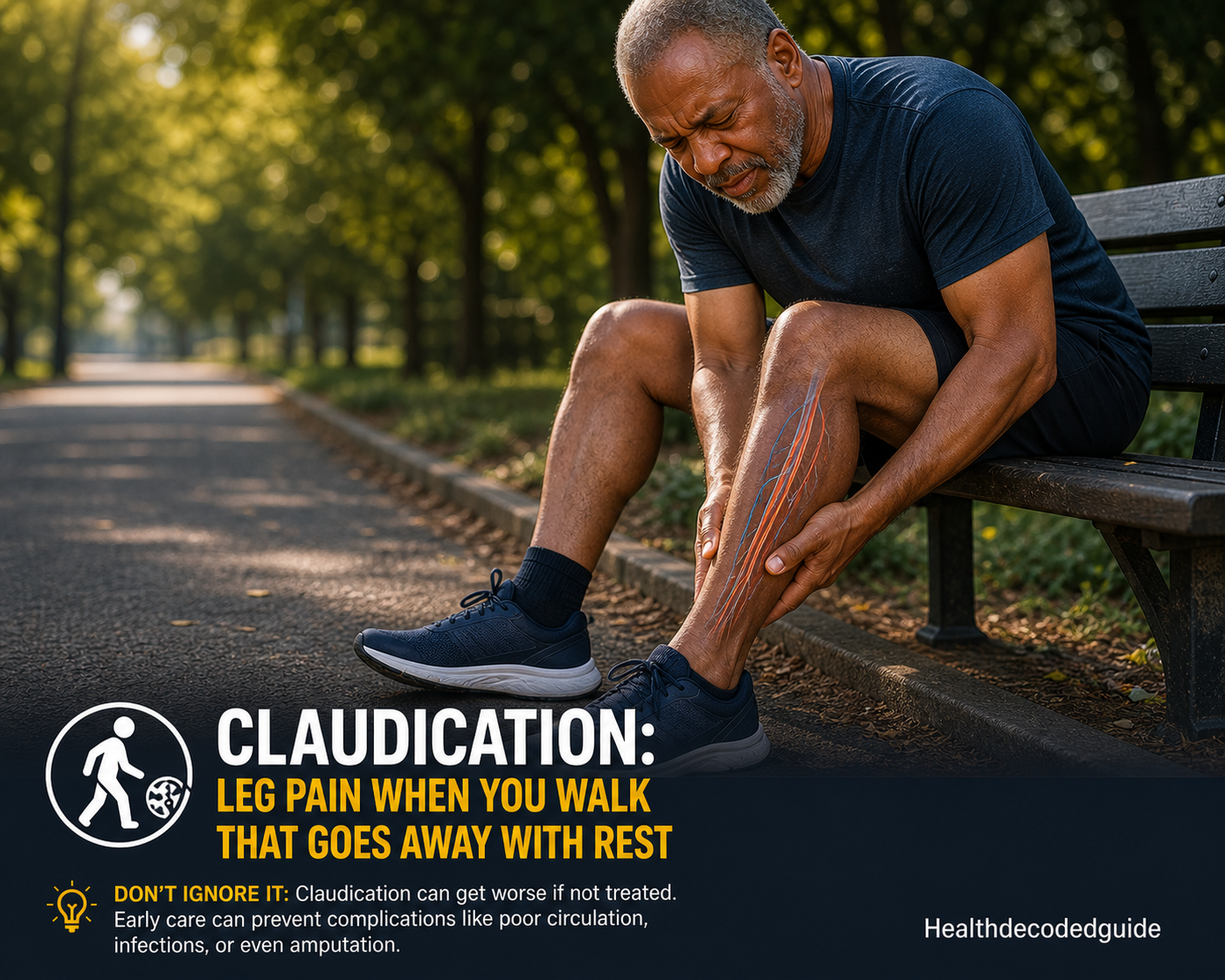
Claudication is pain in the leg that happens during walking or activity due to reduced blood flow.
The pain usually improves with rest and returns when activity resumes.
It is commonly linked to poor circulation, especially peripheral artery disease (PAD).
1️⃣ Introduction
Claudication is a symptom, not a disease itself.
• it often affects the calf, thigh, or buttock
• pain is triggered by activity and relieved by rest
• it is commonly associated with circulation problems
👉 Claudication can be an early warning sign of blood vessel disease.
2️⃣ How it happens
Muscles need oxygen-rich blood during activity.
• narrowed or blocked arteries reduce blood flow
• muscles do not get enough oxygen during exercise
• this leads to cramping or pain
👉 When you stop walking, oxygen demand drops, and the pain improves.
3️⃣ Types
• Intermittent claudication
- pain comes and goes with activity
- improves with rest
• Critical limb ischemia
- severe circulation problem
- pain may occur even at rest
👉 Persistent pain at rest is more serious and needs urgent evaluation.
4️⃣ Common causes
• Peripheral artery disease (PAD)
- narrowing of arteries due to plaque build up
- most common cause
• Risk factors
• Other causes
- arterial injury
- rare vascular conditions
👉 Atherosclerosis (plaque build up) is a major underlying cause.
5️⃣ Symptoms
• cramping or aching leg pain during walking
• pain that stops with rest
• reduced walking distance over time
👉 Symptoms happen because muscles are not receiving enough oxygen during activity.
6️⃣ Associated symptoms
• cold or pale legs
• weak or absent pulses
• slow wound healing
• hair loss on legs
👉 These signs suggest reduced blood circulation to the limbs.
7️⃣🩺 When it becomes dangerous 🚨
• leg pain at rest
• non-healing wounds or ulcers
• sudden severe leg pain with cold, pale limb
👉 These may indicate:
• critical limb ischemia
• severe circulation blockage needing urgent treatment
8️⃣ Management / treatment
• supervised exercise programs
• medications to improve blood flow
• treatment of underlying conditions (diabetes, hypertension)
Supportive Measures
• stop smoking
• maintain healthy weight
• follow a heart-healthy diet
• take prescribed medications consistently
👉 Regular walking programs can improve symptoms over time.
9️⃣ Diagnosis
• medical history and physical examination
• ankle-brachial index (ABI) test
• imaging such as ultrasound or angiography
👉 Blood flow tests help confirm circulation problems.
🟢 Important message
Claudication is often a sign of underlying blood vessel disease.
Early lifestyle changes and treatment can improve symptoms and reduce complications.
👉 Leg pain during walking should not be ignored, especially if it improves with rest.
FAQ
• What does claudication feel like?
Cramping or aching pain in the leg during walking that improves with rest.
• Is claudication dangerous?
It can indicate underlying circulation problems that may worsen over time.
• Can claudication improve?
Yes. Exercise, lifestyle changes, and treatment can improve symptoms.
• What causes claudication?
Most commonly, narrowing of arteries due to plaque buildup (PAD).
• When should medical help be sought?
If pain occurs at rest, wounds do not heal, or symptoms worsen.
🔗 Related Health Topics
• Peripheral Artery Disease
• Leg Pain Causes
• Deep Vein Thrombosis
• Heart Disease
• Stroke Warning Signs
• Health Lifestyle and Weight Management
📚 Medical References
• World Health Organization (WHO). Cardiovascular diseases (CVDs).
• National Health Service (NHS). Peripheral arterial disease (PAD).
• Mayo Clinic. Claudication: Symptoms and causes.
• American Heart Association (AHA). Peripheral Artery Disease (PAD).
• Centers for Disease Control and Prevention (CDC). About Peripheral Arterial Disease (PAD).
• National Institute for Health and Care Excellence (NICE). Peripheral arterial disease: diagnosis and management (CG147).
⚠️ Medical Disclaimer
This article is for educational purposes only and does not replace professional medical advice.
If you have symptoms or concerns, please consult a qualified healthcare professional.