Read in: English | Pidgin English
🩺 Medically reviewed by the Health Decoded Guide Editorial Team · Last reviewed: July 2026
🔍 Quick Summary
A stroke happens when blood flow to part of the brain is blocked or when bleeding occurs in the brain.
Recognizing stroke symptoms quickly can help reduce brain damage and improve survival.
The FAST method is a simple way to identify common stroke warning signs.
1️⃣ Introduction
Stroke is a medical emergency affecting the brain.
• the brain needs a constant blood and oxygen supply
• blocked blood flow or bleeding damages brain tissue
• early treatment can greatly improve outcomes
👉 During a stroke, “time is brain” because brain cells can become damaged within minutes.
2️⃣ How it happens
The brain controls movement, speech, sensation, and many body functions.
• blocked blood vessels can stop oxygen from reaching brain tissue
• bleeding inside the brain can damage surrounding areas
• symptoms depend on which part of the brain is affected
👉 Stroke symptoms often start suddenly.
3️⃣ Types
• Ischemic stroke
- caused by blocked blood vessels
- the most common type of stroke
• Hemorrhagic stroke
- caused by bleeding in the brain
- may happen when blood vessels rupture
• Transient ischemic attack (TIA)
- temporary stroke-like symptoms
- warning sign requiring urgent medical attention
👉 Even temporary stroke symptoms should never be ignored.
4️⃣ Common causes
• Cardiovascular risk factors
• Blood vessel problems
- blood clots
- narrowed arteries
• Lifestyle factors
- smoking
- alcohol misuse
- physical inactivity
👉 Controlling blood pressure is one of the most important ways to reduce stroke risk.
5️⃣ Symptoms
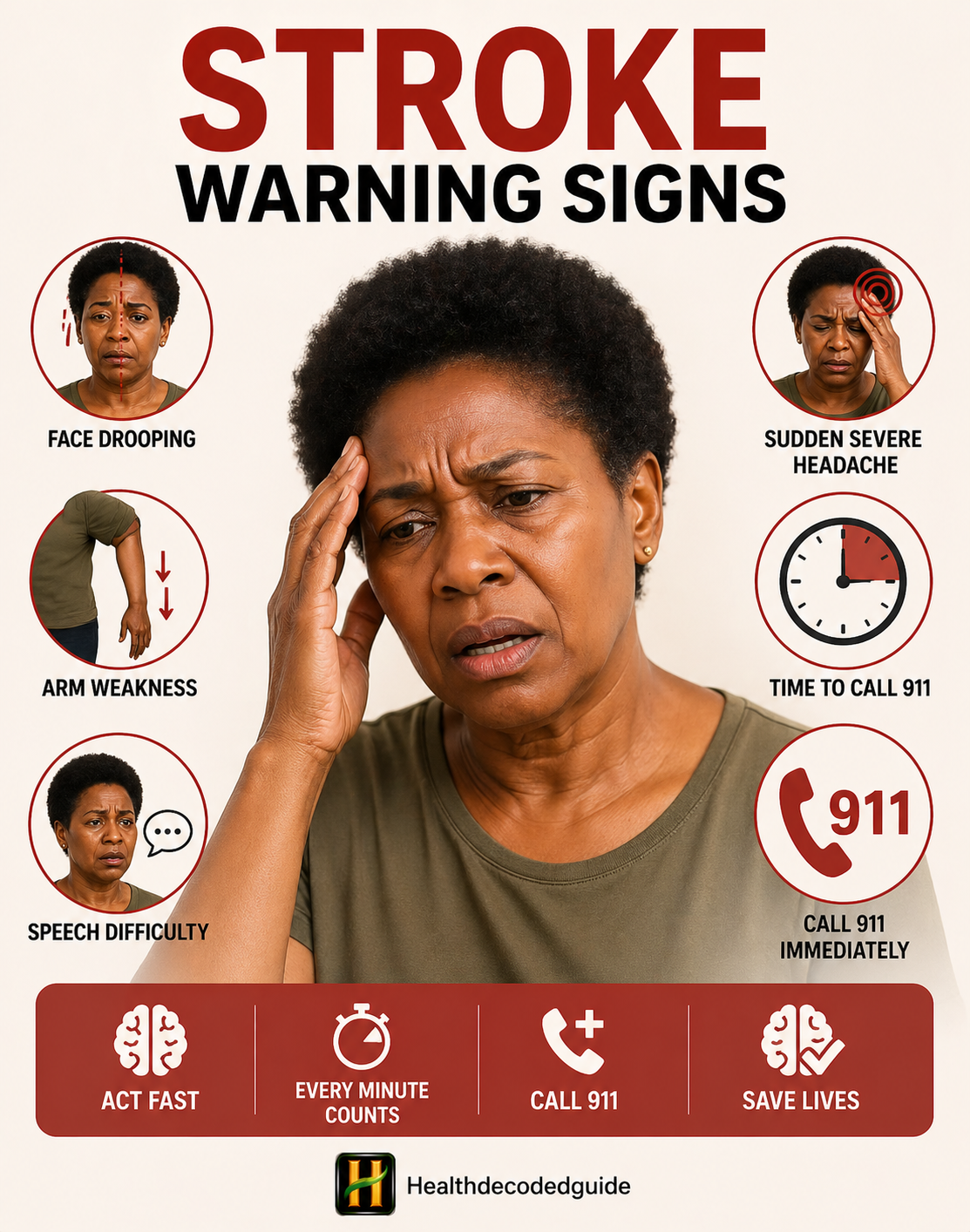
FAST Stroke Warning Signs
🔷 F — Face drooping
- one side of the face may droop or look uneven
🔷 A — Arm weakness
- one arm may feel weak or drift downward
🔷 S — Speech difficulty
- speech may become slurred or confused
🔷 T — Time to call emergency services
- immediate medical help is critical
👉 FAST helps people recognize common stroke symptoms quickly during emergencies.
6️⃣ Associated symptoms
• sudden severe headache
• dizziness or balance problems
• vision changes
• numbness or weakness on one side of the body
👉 Stroke symptoms often appear suddenly rather than gradually.
7️⃣🩺 When it becomes dangerous 🚨
• sudden facial drooping or weakness
• difficulty speaking or understanding speech
• sudden collapse, confusion, or loss of consciousness
👉 These may indicate:
• an active stroke
• severe brain injury needing emergency treatment immediately
8️⃣ Management / treatment
• call emergency services immediately
• note the time symptoms started if possible
• keep the person safe and calm while waiting for help
👉 Do not delay emergency care hoping symptoms will improve on their own.
9️⃣ Diagnosis
• medical history and neurological examination
• brain imaging such as CT or MRI scans
• blood tests and heart investigations
👉 Brain scans help doctors determine the type of stroke and safest treatment options.
🟢 Important message
Stroke is a medical emergency, but fast recognition and treatment can save brain function and lives.
Many people recover better when emergency care happens early.
👉 Remembering FAST may help you recognize stroke symptoms in yourself or someone else.
FAQ
• What does FAST stand for?
Face drooping, Arm weakness, Speech difficulty, and Time to call emergency services.
• Can stroke symptoms come and go?
Yes. Temporary symptoms may happen during a transient ischemic attack (TIA), which still needs urgent medical care.
• Is stroke only a problem in older adults?
No. Although more common in older adults, strokes can happen at younger ages too.
• Should I wait to see if symptoms improve?
No. Stroke symptoms require immediate medical attention.
• Can high blood pressure increase stroke risk?
Yes. High blood pressure is one of the strongest stroke risk factors.
🔗 Related Health Topics
• High Blood Pressure
• Heart Attack
• CPR for Adults
• Diabetes
• High Cholesterol
• Stroke Prevention
📚 Medical References
- National Health Service (NHS). Stroke.
- American Stroke Association. Stroke Symptoms.
- Centers for Disease Control and Prevention (CDC). About Stroke.
- Mayo Clinic. Stroke.
- National Institute for Health and Care Excellence (NICE). Stroke and transient ischaemic attack in over 16s: diagnosis and initial management.
⚠️ Medical Disclaimer
This article is for educational purposes only and does not replace professional medical advice.
If you have symptoms or concerns, please consult a qualified healthcare professional.