Read in: English | Pidgin English
🩺 Medically reviewed by the Health Decoded Guide Editorial Team· Last reviewed: July 2026
🔍 Quick Summary
Stroke happens when blood flow to the brain is interrupted.
Many strokes can be prevented by managing key risk factors.
1️⃣ Introduction
Stroke is a serious medical emergency affecting the brain.
• occurs when blood supply is blocked or reduced
• can cause permanent brain damage
• often preventable
👉 Prevention focuses on controlling risk factors early.
2️⃣ How it happens
Blood flow to part of the brain is interrupted.
• blockage (ischemic stroke)
• bleeding (hemorrhagic stroke)
• brain cells begin to die
👉 Prevention targets these underlying causes.
3️⃣ Types (risk-related)
• Ischemic stroke
- caused by blood clots
- most common
• Hemorrhagic stroke
- caused by bleeding
- often linked to high blood pressure
👉 Risk factors differ slightly but overlap.
4️⃣ Common risk factors
• Medical conditions
• Lifestyle factors
- smoking
- inactivity
- unhealthy diet
5️⃣ Why prevention matters
• stroke can cause disability
• may affect speech, movement, memory
👉 Prevention reduces long-term complications.
6️⃣ Warning signs (FAST)
• Face drooping
• Arm weakness
• Speech difficulty
• Time to act
👉 Immediate action saves brain cells.
7️⃣🩺 When it becomes urgent 🚨
• sudden weakness on one side
• difficulty speaking
• vision problems
• severe headache
👉 These may indicate:
• stroke
• need for emergency care immediately
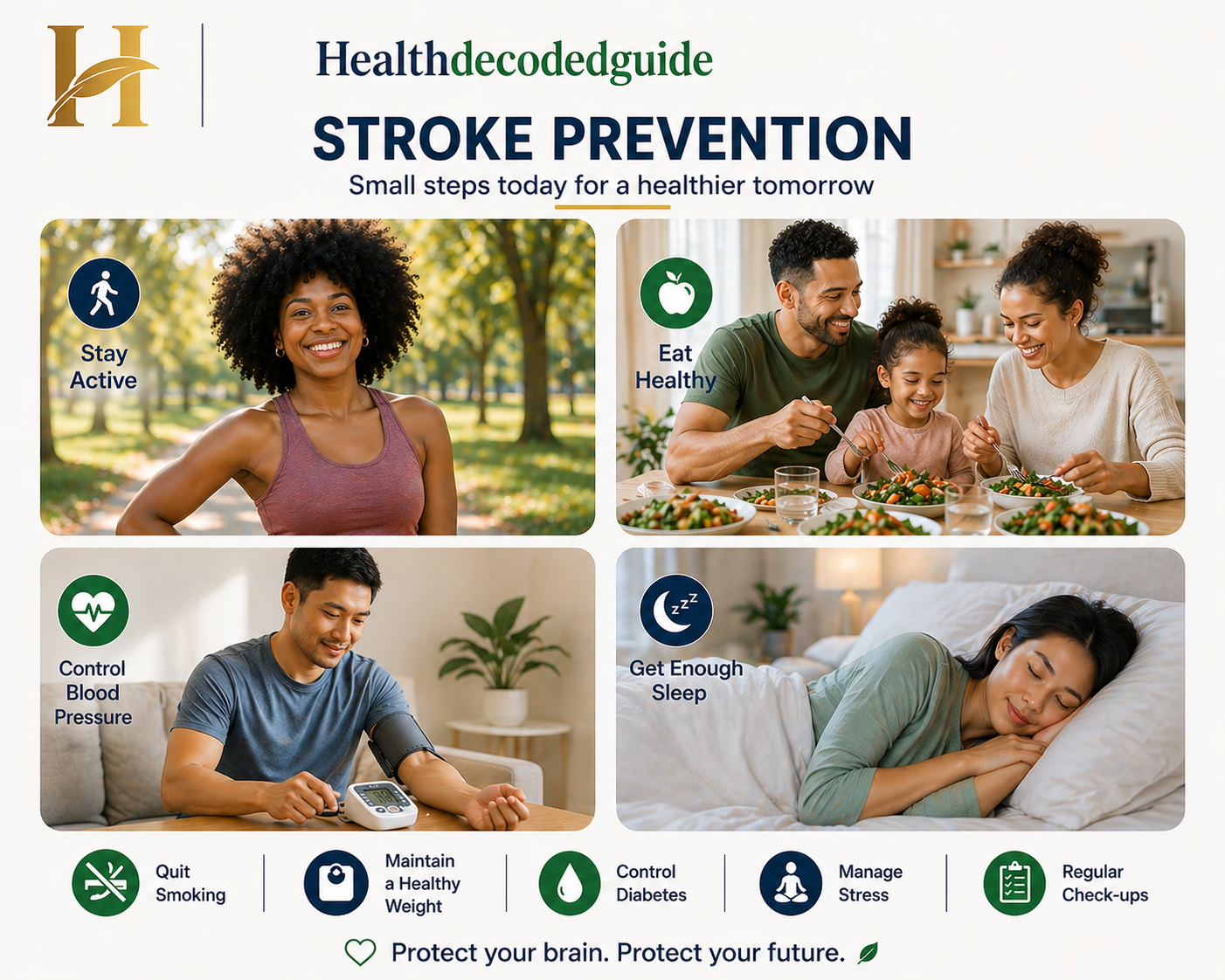
8️⃣ Prevention strategies
• control blood pressure
• manage diabetes and cholesterol
• stop smoking
9️⃣ Daily protective habits
• regular physical activity
• healthy diet (low salt, balanced)
• maintain healthy weight
• limit alcohol
👉 Consistency is key.
🟢 Important message
Many strokes are preventable.
👉 Small daily changes can significantly reduce risk.
FAQ
• Can stroke be prevented completely?
Risk can be greatly reduced, though not always eliminated.
• Who is at risk?
Older adults and those with medical conditions—but prevention applies to everyone.
🔗 Related Health Topics
• High blood pressure
• Diabetes
• Heart Disease Prevention
• Sleep and Recovery
• Exercise and Health
• Stress and Burnout
• Healthy Lifestyle and Weight Management
📚 Medical References
• World Health Organization (WHO). Stroke.
• National Health Service (NHS). Stroke.
• Centers for Disease Control and Prevention (CDC). Preventing Stroke.
• Mayo Clinic. Stroke.
• National Institute for Health and Care Excellence (NICE). Stroke and transient ischaemic attack in over 16s: diagnosis and initial management.
• American Heart Association (AHA). Life's Essential 8™ for Heart Health.
⚠️ Medical Disclaimer
This article is for educational purposes only and does not replace professional medical advice.
If you have risk factors or symptoms, consult a healthcare professional.