Read in: English | Pidgin English
🩺 Medically reviewed by the Health Decoded Guide Editorial Team · Last reviewed: July 2026
🔍 Quick Summary
Stress is your body's normal response to challenges or pressure.
Burnout is a state of emotional, physical, and mental exhaustion caused by prolonged or overwhelming stress.
👉 Burnout doesn't happen overnight. It usually develops when stress continues for a long time without enough rest or support.
1️⃣ What are stress and burnout?
Stress
Stress is how your body reacts when it faces pressure, challenges, or demands.
A small amount of stress can sometimes be helpful by improving focus and motivation.
Burnout
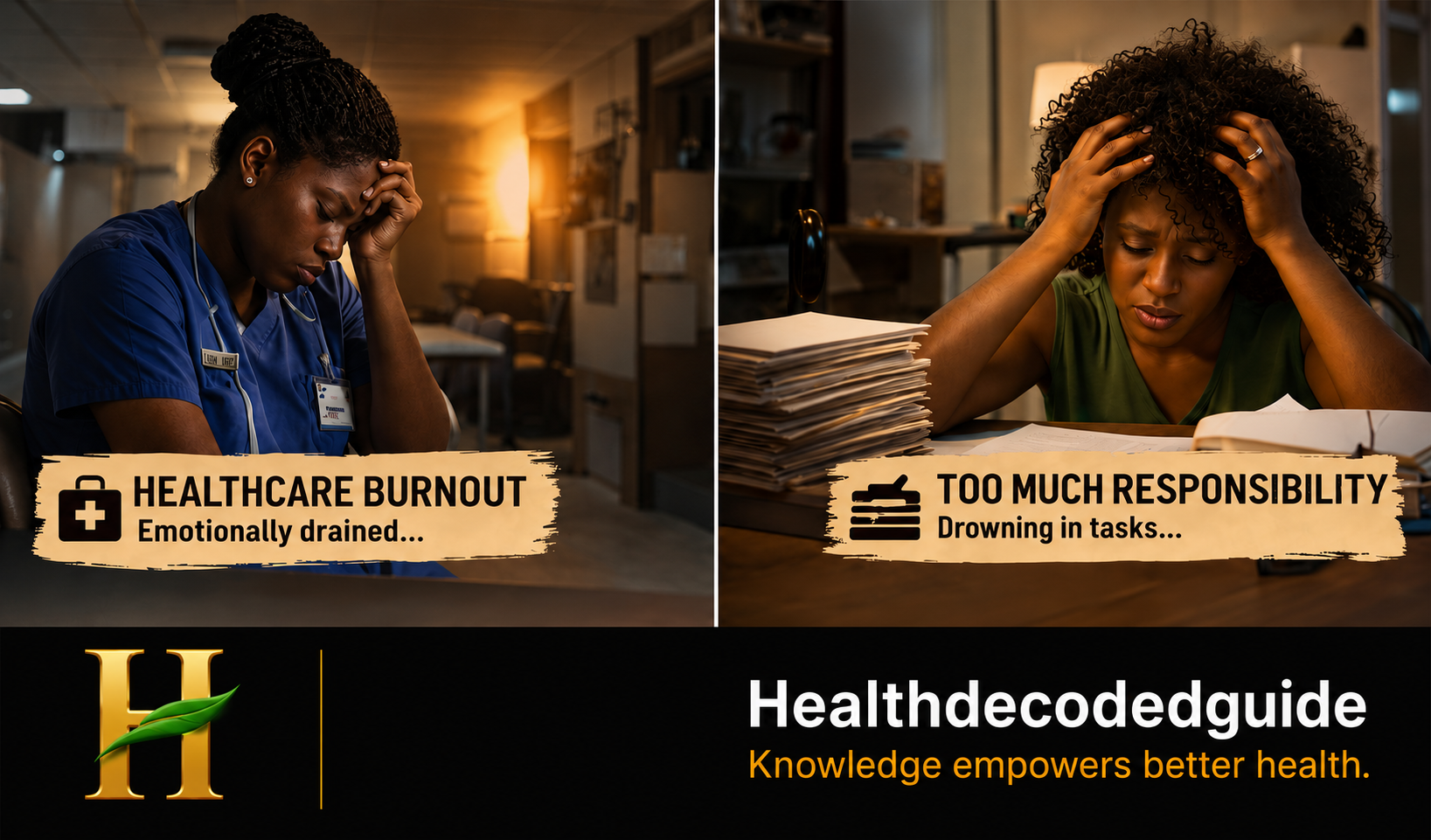
Burnout happens when long-term stress overwhelms your ability to cope.
It often leaves people feeling emotionally drained, exhausted, and disconnected from work or daily life.
👉 Burnout is more than simply feeling tired after a busy day.
2️⃣ What happens in the body?
When you experience stress, your brain releases stress hormones such as adrenaline and cortisol.
These hormones cause:
• faster heartbeat
• increased breathing
• higher blood pressure
• increased alertness
👉 This is your body's natural "fight or flight" response.
If stress continues for weeks or months without recovery, these constant changes can affect both physical and mental health.
3️⃣ Common causes
Stress and burnout may result from:
Work-related
• excessive workload
• long working hours
• unrealistic deadlines
• poor work-life balance
• lack of support
Personal
• financial difficulties
• family responsibilities
• relationship problems
• caring for a sick relative
• major life changes
Health-related
• chronic illness
• poor sleep
• ongoing pain
👉 Often, several stressors occur at the same time.
4️⃣ Symptoms
Physical symptoms
• constant tiredness
• headaches
• muscle tension
• poor sleep
• stomach problems
• frequent illness
Emotional symptoms
• feeling overwhelmed
• irritability
• anxiety
• sadness
• loss of motivation
Thinking symptoms
• poor concentration
• forgetfulness
• difficulty making decisions
Behavioural changes
• avoiding work
• reduced productivity
• withdrawing from family and friends
• increased alcohol or drug use
👉 Burnout usually affects many parts of life—not just work.
5️⃣ Who is at higher risk?
Anyone can experience stress or burnout, but the risk is higher in people who:
• work long hours
• have demanding jobs
• care for children or elderly relatives
• rarely take breaks
• struggle to set healthy boundaries
• have perfectionist tendencies
6️⃣ How can stress and burnout be managed?
Lifestyle changes often help.
These include:
• getting enough sleep
• regular exercise
• eating a balanced diet
• taking breaks during the day
• spending time with family and friends
• relaxation techniques
• mindfulness or meditation
• prayer or spiritual support if meaningful to you
👉 Small daily habits can make a big difference over time.
7️⃣ When should you seek medical help? 🚨
See a healthcare professional if:
• symptoms last several weeks
• you cannot cope with daily activities
• you develop anxiety or depression
• you are using alcohol or drugs to cope
• you have thoughts of harming yourself
👉 Early support often leads to faster recovery.
8️⃣ How is burnout treated?
Treatment depends on the cause.
It may include:
• identifying sources of stress
• counseling or psychotherapy
• cognitive behavioural therapy (CBT)
• stress management techniques
• improving work-life balance
• treatment for anxiety or depression if present
👉 There is no single medicine that cures burnout. Recovery usually involves addressing the underlying causes
🩷 Why We Delay
Many people don't realise they are burning out because the symptoms often build up slowly.
Common thoughts include:
• "It's just stress. It will go pass."
• "I just need to work harder."
• "I will rest when this busy period finishes."
• "Everybody is stressed these days."
Some people also worry that asking for help means they are weak or not coping well.
👉🏽 The earlier burnout is recognised, the easier it is to recover and prevent more serious physical and mental health problems.
🟢 Important Message
Stress is part of life. Burnout is a warning sign that your mind and body need attention.
👉 Looking after your mental health is just as important as caring for your physical health.
📚 Medical References
• World Health Organization (WHO). Burn-out an "occupational phenomenon".
• National Health Service (NHS). Get help with stress
• Mayo Clinic. Job burnout: How to spot it and take action.
• National Institute for Health and Care Excellence (NICE). Mental wellbeing at work (NG212).
• American Psychological Association (APA). Managing Stress.
⚠️ Medical Disclaimer
This article is for educational purposes only and does not replace professional medical advice.
If stress is affecting your daily life or mental health, consult a qualified healthcare professional.
🔗 Related Health Topics
• Anxiety
• Depression
• Stress management
• Sleep Problems
• Fatigue
• Work-Life Balance
• Heart Palpitations
• Anxiety vs Panic Attack